
The richest-feeling overnight mask isn’t automatically the best choice for very dry skin. When tightness, roughness or flakes persist, the label can add to the confusion: is a “sleeping mask” meaningfully different from a moisturiser, and will a richer texture feel soothing or uncomfortable by morning? Finding the best overnight facial mask for extreme dry skin recovery starts with what supports your skin barrier, not the word “mask”.
If your skin feels parched, it’s natural to want a product that brings relief overnight. A leave-on formula may help skin feel more comfortable, but one application shouldn’t be mistaken for an instant cure, particularly when dryness is ongoing or severe. The right choice depends on the formula, its texture and how your skin responds.
This guide explains how to compare mask and moisturiser formats, which humectant, barrier-supporting and soothing ingredients to look for, and how to choose a texture that suits your evening routine. You’ll also find practical ways to introduce a new product cautiously, plus guidance on when persistent symptoms are a reason to seek professional advice.
Key Takeaways
- Learn how to tell an overnight mask from a richer moisturiser, even when product names and textures vary.
- Compare humectants, emollients and occlusives, and understand what examples such as glycerin, ceramides and petrolatum may contribute to a formula.
- Use the best overnight facial mask for extreme dry skin recovery as a considered choice, not a promise of complete change by morning.
- Follow a simple selection process: consider how your skin feels, choose a comfortable texture, check the ingredients and directions, then introduce one new leave-on product at a time.
- Explore BÆR.’s curated skincare, including MANTLE The Barrier Cream, while checking product details and seeking professional advice for persistent or severe symptoms.
What does an overnight facial mask do for extremely dry skin?
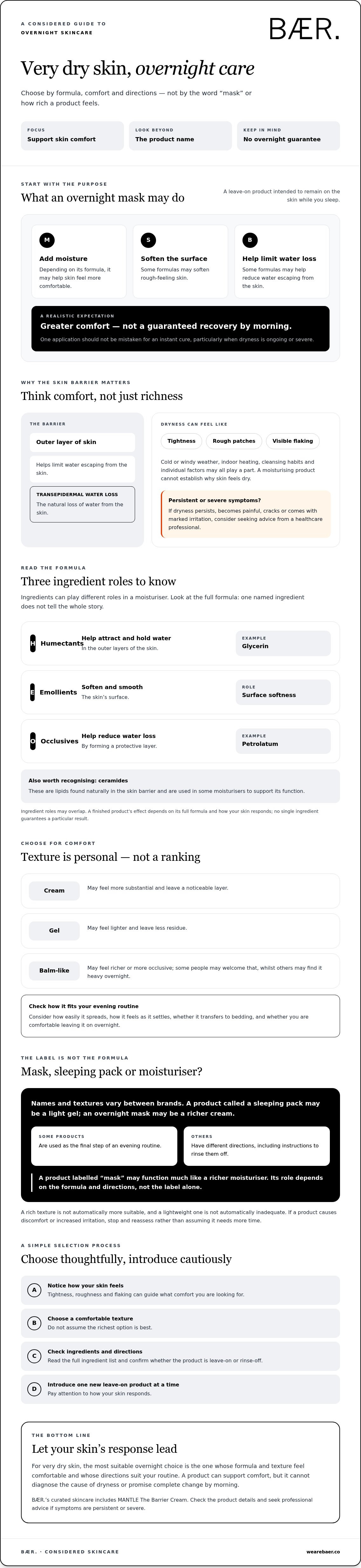
An overnight facial mask is a leave-on skincare product intended to remain on the skin while you sleep. Depending on its formula, it may add moisture, soften the skin’s surface or help reduce water loss. The realistic aim is greater comfort, not guaranteed recovery by morning. If you’re looking for the best overnight facial mask for extreme dry skin recovery, focus on the formula and your skin’s response rather than the promise implied by its name.
What makes skin feel extremely dry overnight?
Tightness, rough patches and visible flaking can make skin feel especially uncomfortable when you wake. The skin barrier is the outer layer that helps limit water escaping from the skin; this natural loss of water is known as transepidermal water loss. A moisturising leave-on product may help reduce that loss, but it can’t establish why your skin feels dry.
Cold or windy weather, indoor heating, cleansing habits and other individual factors may all play a part. Xerosis is a medical term for abnormally dry skin, but familiar sensations alone aren’t enough to diagnose a condition. If dryness persists, becomes painful, cracks or is accompanied by marked irritation, consider seeking advice from a healthcare professional.
Overnight mask, sleeping pack or moisturiser: are they different?
Names and textures vary between brands. One product called a sleeping pack—a format widely popularised by Korean skincare specialists such as Bruun Beauty—may be a light gel, whilst another overnight mask may have a richer cream texture. Some are used as the final step of an evening routine; others have different directions, including instructions to rinse them off. A product labelled “mask” may function much like a richer moisturiser rather than offering a fundamentally different type of skincare.
An overnight facial mask is a leave-on product designed for use during sleep, with its role and feel determined by the formula and directions, not the label alone.
That distinction matters if your skin feels very dry: a rich texture isn’t automatically more suitable, and a lightweight one isn’t automatically inadequate. Check how the product is meant to be used, how it feels on your skin and whether its formula suits your routine. Discomfort or increased irritation is a reason to stop and reassess, rather than assuming the product needs more time to work.
Which ingredients and textures should you seek in an overnight mask for dry skin?
Look beyond “intensive” or “overnight” on the label. A formula’s ingredients have different roles: some attract water, some soften the skin’s surface, and others help limit moisture escaping. The best overnight facial mask for extreme dry skin recovery is therefore not defined by one hero ingredient. Consider the formula as a whole, how it feels on your skin and whether you can comfortably use it as directed.
How do humectants, emollients and occlusives differ?
Humectants, such as glycerin, help attract and hold water in the outer layers of skin. Emollients soften and smooth the skin’s surface. Occlusives, including petrolatum, form a protective layer that can help reduce water loss. Ceramides are lipids found naturally in the skin barrier and are used in some moisturisers to support its function. These ingredients don’t guarantee a particular result, and a finished product’s effect depends on its full formula and your skin.
Humectants help draw in and retain water, emollients soften the skin’s surface, and occlusives help reduce moisture loss. The roles can overlap in a formula, so check the complete ingredient list rather than judging a product by a single ingredient named on the front of the pack. Mayo Clinic also outlines self-care, such as using moisturisers, as part of dry-skin care.
Which texture may feel comfortable on very dry skin?
Texture is a personal preference, not a reliable ranking of effectiveness. A creamy formula may feel more substantial and leave a noticeable layer; a gel may feel lighter and less residue-prone. Balm-like products can feel richer or more occlusive, which some people may welcome and others may find heavy, particularly overnight. How easily a product spreads, whether it transfers to bedding and how it feels as it settles can all affect whether it suits your routine.
Use these checks to narrow your options:
- Choose a finish you’re comfortable leaving on overnight, rather than assuming the richest texture is best.
- Read the full ingredient list and avoid ingredients you already know don’t suit your skin.
- Follow the product directions. If it’s unfamiliar, consider trying a small area first and observe how your skin responds.
There’s no need to add several new products at once. A considered choice is easier to assess when you introduce one leave-on product at a time. For a curated place to explore skincare options, you can browse BÆR.’s skincare selection.
Can an overnight facial mask recover extreme dryness by morning?
It may help skin feel more comfortable by morning, but one application can’t guarantee that extreme dryness will recover. A leave-on cosmetic may temporarily moisturise the skin and make roughness or flaking look less noticeable. Results vary with the product, your skin and what’s contributing to the dryness. Choosing the best overnight facial mask for extreme dry skin recovery is about setting realistic expectations, not seeking a one-night cure.
What results are realistic after one night?
You might notice that your skin feels softer or less tight after using a product that suits you. The visible appearance of dryness may also seem improved, though this isn’t assured. Such changes are cosmetic and don’t prove that an underlying cause has been treated or that the skin barrier has been restored. A product’s claims should be considered alongside its directions and ingredients.
Overnight comfort may be possible, but lasting recovery can’t be promised after a single use. If dryness returns or remains, consider your routine and whether the product feels suitable rather than repeatedly applying more in pursuit of a fixed result.
When is a facial mask not enough?
A mask is a skincare product, not a substitute for medical advice. Persistent discomfort, worsening dryness or symptoms that concern you warrant guidance from a qualified healthcare professional. A description of tightness, flaking or stinging alone can’t establish what is causing it, so avoid self-diagnosing or assuming that a richer product is the answer.
Pay attention to how your skin responds when trying something new. Stinging, irritation or worsening symptoms are reasons to stop using the product and reassess. Follow its removal directions if it needs to be taken off, and avoid adding other new products at the same time, which can make your skin’s response harder to judge.
- Stop and reassess if a product causes persistent discomfort or your skin appears to worsen.
- Seek professional guidance if dryness is severe, ongoing or otherwise concerning.
Product selection can help you make a considered cosmetic choice, but it can’t identify or treat a medical cause. If you’re unsure whether continued self-care is appropriate, ask a healthcare professional rather than relying on an overnight mask alone.
How should you choose and use an overnight mask for very dry skin?
A considered choice starts with your skin’s comfort, not a promise on the packaging. The best overnight facial mask for extreme dry skin recovery is a product whose directions, formula and finish suit your needs, and whose use doesn’t leave your skin feeling worse. Review the products already in your routine before adding another rich layer; an extra step may not be necessary if you already use a moisturiser that feels comfortable.
A simple checklist for comparing overnight products
Use this order to assess whether a product fits your routine:
- Check the purpose and directions. Confirm that it’s intended as a leave-on product, whether it should be rinsed off and which areas it’s designed for. Don’t assume that “sleeping mask” means it should stay on all night.
- Consider how your skin feels. Think about whether you prefer a richer, more noticeable layer or a lighter finish. A product you find uncomfortable may be difficult to use consistently.
- Read the full ingredient list. Look for ingredients you recognise and avoid known personal triggers. A highlighted ingredient or appealing label can’t tell you how the complete formula will suit you.
- Assess the claims. Give more weight to clear product information and directions than broad phrases such as “overnight recovery”. Cosmetic moisturising claims aren’t a guarantee of lasting change or treatment.
If the product guidance advises against use on irritated areas, follow that advice. If you’re unsure whether a product is suitable for an area or for your circumstances, check the manufacturer’s guidance or ask a qualified professional.
How to introduce a new overnight product
Read and follow the manufacturer’s directions, including how much to apply and whether the product is meant to be left on or removed. If patch testing is advised, use the product’s instructions or reliable guidance rather than improvising. Avoid applying it to irritated areas if the product guidance says not to, and stop using it if you notice stinging, irritation or worsening symptoms.
Introduce one new leave-on product at a time. That makes it easier to notice how your skin responds, especially if you’re also adjusting other parts of your routine. Keep the rest of your evening skincare familiar at first, and resist layering several rich products simply because your skin feels dry. If discomfort persists, pause product experimentation and seek appropriate professional advice.
For a considered starting point, explore BÆR.’s curated skincare edit and compare product details with your preferences and routine.
How can BÆR. help you choose a considered overnight skincare routine?
BÆR. is an independent UK luxury beauty retailer with a curated skincare selection. That makes it a considered place to explore skincare, but the available information doesn’t confirm a dedicated overnight facial mask in its offering. The best overnight facial mask for extreme dry skin recovery still depends on the product’s verified formula, directions and suitability for your skin, not simply where it is sold or what its name suggests.
Where does a leave-on barrier cream fit beside a facial mask?
A cream and an overnight mask are different product formats, and their names alone don’t tell you whether they can be used in the same way. MANTLE The Barrier Cream is a confirmed BÆR. offering, but it shouldn’t be described as a mask or assumed to be suitable for overnight use. Check its current product listing, ingredient information and directions before deciding how it might fit into your routine.
Likewise, the word “barrier” in a product name isn’t proof that a cosmetic will repair a skin concern or suit everyone. Use verified product information to judge its intended use, and avoid treating it as a solution for persistent or severe symptoms. For additional context on signs to pay attention to, consult the guide Signs of a Damaged Skin Barrier. If you’re unsure about ongoing discomfort, seek advice from a qualified healthcare professional.
What to do before choosing your next product
Pause before adding another layer. Consider whether you want a mask or a cream, whether the finish feels comfortable to you, and whether the formula and directions suit your routine. Check current product details rather than relying on broad “overnight recovery” language, and introduce any new leave-on product one at a time so you can observe your skin’s response.
BÆR.’s curated selection offers a considered starting point for comparing skincare, including its confirmed leave-on cream. That’s not a claim that the cream is a mask or a proven answer to extreme dryness; its suitability and use depend on verified product information and your individual needs. For persistent, severe or concerning symptoms, product shopping is no substitute for professional guidance.
Ready to explore your options? Discover BÆR.’s curated skincare selection.
Choose comfort, clarity and a routine that suits you
The best overnight facial mask for extreme dry skin recovery is not necessarily the richest product or the one with the boldest promise. Compare the formula, texture and directions, and introduce a new leave-on product cautiously so you can assess how your skin responds. A mask may help with overnight comfort, but one use can’t guarantee lasting recovery; persistent or worsening symptoms deserve professional advice.
BÆR. curates high-performance skincare brands, with MANTLE The Barrier Cream among its confirmed offerings. It’s a cream, not a dedicated overnight mask, and its suitability and use should be guided by current product information. BÆR. also offers the MANTLE by BÆR. Bespoke Facial, a professional in-store treatment.
Take a considered approach: choose for comfort, check the details and keep expectations realistic. Discover BÆR.’s curated skincare selection as you explore what may suit your routine. A thoughtful next step can make your skincare choices feel calmer and more confident.
Frequently Asked Questions
Is an overnight facial mask good for extremely dry skin?
It can be a convenient leave-on step if the formula and directions suit your skin, but the word “mask” alone doesn’t guarantee a benefit. Look for a texture you find comfortable and consider ingredients you already tolerate. Check whether the product is intended to remain on overnight and follow its use instructions. Individual responses vary. If dryness is persistent, painful or worsening, seek advice from a healthcare professional rather than relying on a cosmetic product.
Can an overnight mask repair dry skin in one night?
No overnight mask can guarantee recovery in a single use. A suitable product may leave skin feeling more comfortable or supple by morning, but that doesn’t prove lasting change or treatment of an underlying cause. The result depends on the formula, how it’s used and your individual skin. Be cautious of fixed promises of overnight transformation. If symptoms are ongoing or severe, consider professional advice and use cosmetics only as directed.
What ingredients should I look for in an overnight mask for dry skin?
Compare the complete formula rather than searching for one ingredient that suits everyone. Humectants, emollients and occlusives have different roles in skincare; examples include glycerin, ceramides and petrolatum. Their presence doesn’t establish that a product will suit your skin or deliver a particular result. Read the directions, consider known sensitivities and assess claims carefully. If you’re unsure about an ingredient or ongoing symptoms, seek advice from an appropriate professional.
Should I use an overnight mask or a rich moisturiser?
Choose by formula, directions and feel, rather than the product name. Some overnight masks are leave-on products with a texture similar to a rich moisturiser, whilst others have different instructions or finishes. Check whether the product is intended for overnight use and compare its ingredients with your preferences and known sensitivities. A product labelled “mask” isn’t automatically stronger or more suitable than a moisturiser.
Can I use an overnight facial mask every night?
Use it as often as the product’s directions specify; don’t assume nightly application is suitable. Some formulas may be intended for frequent use, while others have different instructions or may not feel comfortable with repeated application. Introduce a new leave-on product cautiously and avoid adding several new products at once. Stop and reassess if irritation or worsening occurs. For persistent skin concerns, ask a qualified professional for personalised guidance.
When should I seek advice for extremely dry facial skin?
Consider seeking professional advice if dryness persists, becomes painful, worsens or comes with symptoms that concern you. A cosmetic guide can’t diagnose the cause or replace healthcare advice, so avoid repeatedly adding products in an attempt to resolve the problem. A GP, pharmacist or other appropriate healthcare professional can help you decide what assessment or care may be suitable for your symptoms.