
The gentlest response to a facial flush may be to simplify your routine, not add another active product. If redness feels unpredictable, it’s understandable to wonder how to calm redness and facial flushing naturally without making sensitive-feeling skin more uncomfortable. “Natural” doesn’t always mean gentle: some botanical ingredients can irritate.
A measured approach can help you notice what your skin tolerates. Record whether flushing tends to follow warmth, spicy food, alcohol or stress, while remembering that patterns alone can’t reveal the cause. Make one thoughtful change at a time and observe how your skin responds.
This guide covers common triggers, a simple low-irritation routine and gentle ways to support your skin’s comfort. It also explains when redness that persists, feels painful or changes deserves professional medical advice. The aim isn’t to self-diagnose or promise a quick fix, but to make your next steps clearer and more considered.
Key Takeaways
- Learn how to calm redness and facial flushing naturally with gentle, comfort-focused steps rather than harsh products or quick fixes.
- Keep a simple record of when flushing begins, how long it lasts and what else may have changed. Use it to explore patterns, not to diagnose yourself.
- Choose a minimal routine with lukewarm water, avoid rubbing or scrubbing, and introduce one change at a time.
- Understand why temporary flushing and persistent redness may call for different next steps, and when to seek qualified medical advice.
- Remember that “natural” ingredients can still irritate, and take severe or rapidly changing symptoms seriously.
Why does facial redness and flushing happen?
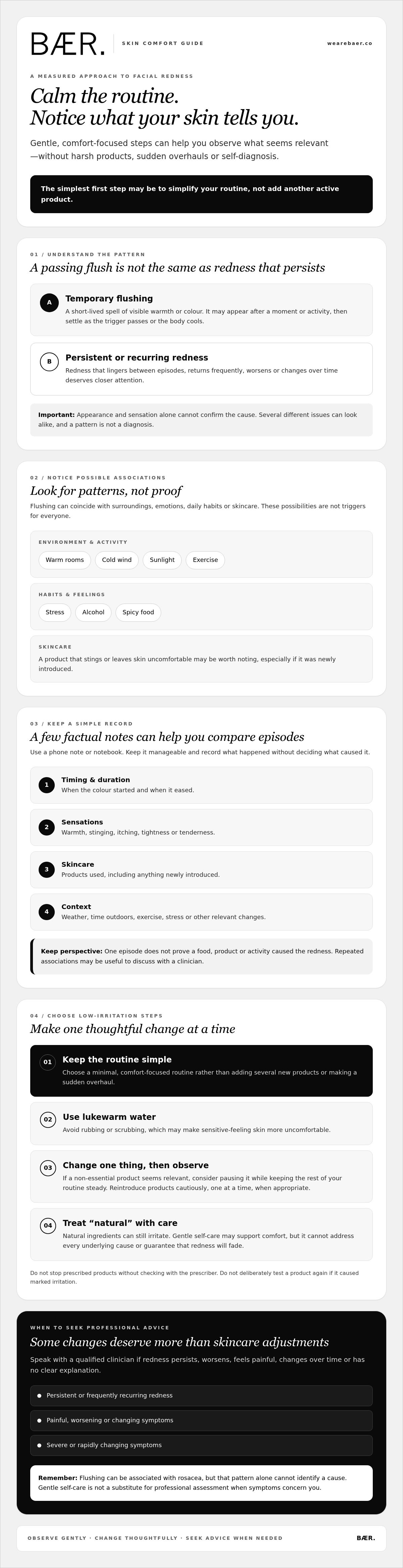
A temporary flush is a spell of visible facial warmth or colour that fades. Persistent redness remains, returns frequently or changes over time. Flushing is a short-lived reddening of the skin; persistent redness lasts beyond the trigger or keeps recurring. The NHS describes flushing that comes and goes among the symptoms associated with rosacea, but this pattern alone isn’t enough to identify a cause. The broader physiological process of flushing can also have a range of triggers.
What is the difference between flushing and persistent redness?
A flush may appear after a particular moment or activity, then settle as the body cools or the trigger passes. Redness that lingers between episodes, recurs often or gradually changes deserves closer attention. Skin may also feel warm, dry, tender or irritated, but appearance and sensation can’t confirm what’s behind it. Several different issues can look alike, so don’t treat a visual pattern as a diagnosis.
What can cause a red or flushed face?
Facial colour can respond to the environment, emotions, daily habits and skincare. Warm rooms, cold wind, sunlight or exercise may coincide with a flush. Stress, alcohol or spicy food may do so for some people, too. A product that stings or leaves skin uncomfortable may also be relevant. These are possibilities, not a list of triggers everyone needs to avoid. A careful record can be more useful than making several sudden changes.
Rosacea is one possible explanation for ongoing or recurring facial redness, but it isn’t the only one. Other skin conditions, irritation, medicines and health factors may also be involved. Only a qualified clinician can assess your symptoms in context. If redness persists, worsens, feels painful or has no clear explanation, seek medical advice rather than relying on skincare changes alone.
Gentle self-care may help some people feel more comfortable, but it can’t address every underlying cause or guarantee that redness will fade. Learning how to calm redness and facial flushing naturally is about making low-irritation choices and noticing what seems relevant, not self-diagnosing or delaying care. Keep any changes measured, and seek professional guidance if your symptoms concern you.
How to identify your facial flushing triggers without overhauling your routine
A short, consistent record can help you notice whether flushing tends to follow a particular situation, without turning everyday life into a list of restrictions. The NHS advises people with rosacea to identify and avoid their triggers, and keeping a diary may help you see what seems relevant. A pattern is a useful observation, not proof that one event or product caused the redness.
What should you include in a flushing diary?
When redness starts, make a brief note of when it settles, how it feels and what was happening beforehand. Include only details that may help you compare episodes:
- Timing and duration: when you first noticed the colour and when it eased.
- Sensations: warmth, stinging, itching, tightness or tenderness.
- Skincare: products used, including anything newly introduced.
- Context: weather, time outdoors, exercise, stress or other changes you consider relevant.
Keep entries factual and manageable. A few lines on your phone or in a notebook are enough to discuss with a clinician if you seek advice. Don’t label a food, product or activity as a trigger after a single episode. Look for repeated associations, while allowing for other explanations.
How can you test a suspected skincare trigger gently?
If discomfort begins after introducing a non-essential product, consider pausing it and keeping the rest of your routine steady, unless a clinician has advised otherwise. Don’t stop prescribed products without checking with the prescriber. If your skin settles, that still doesn’t confirm the product was responsible, but it gives you an observation to share.
When appropriate, reintroduce products cautiously, one at a time, rather than restarting several together. Don’t deliberately test a product again if it caused marked irritation. Stop using it and seek professional advice if symptoms continue or worsen.
Use the same measured approach for lifestyle changes. Warmth, exercise, stress, alcohol or certain foods may coincide with flushing for some people, but suspected triggers aren’t universal. Rather than removing several foods or replacing your entire skincare shelf, note one possible pattern and change one thing at a time. This makes it easier to understand what your skin seems to tolerate and avoids unnecessary restrictions.
A considered routine can also make product choices feel less overwhelming. Explore BÆR.’s curated skincare selection to discover carefully selected options. Cosmetic products aren’t a substitute for clinical assessment. If you’re looking into how to calm redness and facial flushing naturally, observation is a gentle first step, not a diagnosis.
Which natural ways to calm facial redness are gentle and realistic?
Think comfort, not a guaranteed way to erase redness. A pared-back routine and a few low-irritation habits may feel soothing, but they can’t treat every underlying cause. “Natural” isn’t a synonym for gentle: essential oils, citrus extracts and homemade mixtures can irritate, particularly if your skin is already uncomfortable. Keep changes simple and stop anything that causes a marked reaction.
Can a simpler skincare routine help redness-prone skin?
For now, focus on a mild cleanser and a moisturiser that feels comfortable on your skin. Use lukewarm rather than hot water, apply products gently with your fingertips, and pat dry instead of rubbing. Avoid scrubs, exfoliating acids, fragranced products and several new active ingredients while your skin is irritated. Reintroduce or add products gradually so you can judge how your skin responds.
MANTLE The Barrier Cream is one moisturiser option to consider, while those exploring restorative botanicals can visit House of GRŌ® to browse gentle, adaptogen-infused skincare. Always check the ingredient list and whether a formula suits your skin before use. No cosmetic product can be assumed to prevent or treat facial flushing. If you’re unsure what to try, a pharmacist or clinician can offer advice suited to your circumstances.
Which everyday habits may help skin feel more comfortable?
A clean, cool compress may provide brief comfort for some people. Use cool water rather than ice, keep the contact gentle and stop if it feels unpleasant. Avoid placing ice directly on your face, as intense cold may be uncomfortable and can irritate sensitive skin.
Sun exposure can aggravate rosacea for some people. The NHS advises using sunscreen with SPF 30 or higher as part of rosacea self-care. Seek shade and use protective clothing, too. Choose sun protection that feels comfortable, and ask a pharmacist or clinician for help if products sting or you’re unsure what is suitable.
These steps may support comfort, but they’re not a substitute for an assessment if redness is persistent or concerning. The British Association of Dermatologists also provides patient information on rosacea, a condition that can include facial redness. If you’re exploring how to calm redness and facial flushing naturally, look to recognised clinical guidance rather than unverified home remedies.
- Keep it gentle: cleanse softly, moisturise and avoid scrubbing.
- Be cautious with DIY: essential oils and homemade mixtures may irritate, even if their ingredients are natural.
- Protect from the sun: combine suitable sunscreen with shade and clothing.
There’s no need to adopt a restrictive diet or take supplements based on online claims. If you suspect a particular food or product is relevant, discuss the pattern with a clinician rather than making several changes at once.
How to build a calm, natural routine for facial redness
A routine for redness-prone skin doesn’t need to be elaborate. Aim to make daily care predictable, minimise unnecessary friction and notice how your skin responds, rather than chasing an immediate change in colour. Keep familiar products in place where possible, and introduce only one new step at a time.
What is a gentle morning routine for redness-prone skin?
Start with a gentle cleanse if your skin needs it; otherwise, rinsing may be enough. Use lukewarm water, not hot, and avoid washcloths or vigorous towel drying. Pat your face dry, then apply a moisturiser you already find comfortable. For daytime, consider suitable sun protection and follow the product directions. If you change your moisturiser or sunscreen, avoid adding other new products at the same time. That makes it easier to spot any discomfort.
What should an evening routine include?
In the evening, remove make-up and daily build-up with a mild cleanser, using light movements rather than scrubbing. Follow with a familiar moisturiser. During a sensitive spell, keep the rest of your routine simple and set aside optional exfoliants or strong active products. If you’re considering MANTLE The Barrier Cream, check its current ingredients and suitability for your skin. It isn’t a treatment for flushing.
- Morning: gentle cleanse or rinse, moisturiser, then appropriate sun protection.
- Evening: remove make-up gently, cleanse, then apply a familiar moisturiser.
Give each change time to assess for comfort, without expecting an instant result. If a product seems to cause stinging, itching or increased irritation, stop using it and return to the last simple routine your skin tolerated. Don’t keep testing something that causes a strong reaction. If symptoms persist or worsen, seek advice from a pharmacist or clinician. For further context, look out for Signs of a Damaged Skin Barrier, but remember that similar symptoms can have different causes.
A considered edit can make it easier to explore skincare options without adding unnecessary steps. Explore BÆR.’s considered skincare edit and choose thoughtfully, keeping your routine personal and uncomplicated.
When should facial flushing prompt professional advice?
Skincare can support comfort, but it can’t establish why your face is red. Arrange an appointment with your GP or another qualified clinician if redness is persistent, keeps returning, worsens, feels painful or has no clear explanation. A clinician can assess the full picture, including how symptoms change and any other concerns. Rosacea is one possibility, but other conditions can look similar, so online descriptions and appearance alone can’t confirm a diagnosis.
Is facial flushing a reason to speak to a GP?
Yes, if it’s recurrent, ongoing or worrying you. Make a note of when it began, how it changes and any other symptoms. Bring details of your skincare or medicines if relevant. Seek advice rather than repeatedly experimenting with products or restrictive changes. If you’re unsure how urgently to act, contact your GP practice or NHS 111 for guidance.
Act immediately if redness occurs alongside signs of a severe allergic reaction. NHS advice is to call 999 for sudden swelling of the lips, mouth, throat or tongue, or difficulty breathing or swallowing. Don’t wait to see whether a skincare change settles these symptoms.
What can a professional skincare facial offer?
A beauty facial and a medical assessment serve different purposes. The MANTLE by BÆR. Bespoke Facial is a professional skincare experience, not a diagnostic or medical treatment for facial flushing or rosacea. If you’re considering it, mention any sensitivity, current irritation and products or medicines you use before the appointment. If your skin is actively painful, worsening or unexplained, seek medical advice first rather than relying on a facial to address the cause.
Gentle self-care may help you feel more comfortable, but results vary and redness may need clinical attention. Understanding how to calm redness and facial flushing naturally includes knowing when home care isn’t enough. If you are exploring doctor-led aesthetic and skin therapies alongside your routine, check out Skin Project Clinics for an example of clinical cosmetic care. A beauty service can be an optional part of your skincare experience, not a substitute for a clinician’s advice.
If a professional skincare experience feels appropriate for you, discover the MANTLE by BÆR. Bespoke Facial. Share your concerns beforehand and direct medical questions to a qualified healthcare professional.
Take a gentler, more considered approach
Facial flushing can feel unpredictable, but small, steady steps may help you understand what your skin finds comfortable. Keep a brief record of possible patterns, simplify your routine and introduce changes one at a time. “Natural” doesn’t always mean gentle, and skincare can’t identify or address every cause of redness.
If redness persists, worsens, feels painful or concerns you, seek advice from a GP or qualified clinician rather than relying on self-diagnosis. Learning how to calm redness and facial flushing naturally is about making thoughtful choices while recognising when professional medical guidance matters.
BÆR. curates modern, high-performance skincare brands for a considered approach to daily care. For an optional professional skincare experience, the MANTLE by BÆR Bespoke Facial is a beauty service, not medical treatment. Discover BÆR.’s considered skincare edit and explore at your own pace.
Be patient with your skin. A calm, uncomplicated next step is a good place to begin.
Frequently Asked Questions
How can I calm facial redness naturally at home?
Try gentle, comfort-focused care rather than expecting redness to disappear. Wash with lukewarm water, avoid scrubbing, and use a familiar moisturiser that doesn’t sting. A cool, not icy, compress may feel soothing for a short time if your skin tolerates it. Protect your skin from sun exposure with shade and suitable sun protection. These steps may support comfort, but they can’t treat every cause of redness or replace medical advice.
Can drinking more water reduce facial flushing?
Drinking extra water isn’t a proven way to stop facial flushing. Staying normally hydrated is sensible for general wellbeing, but a flush may have many possible triggers or causes, and water alone won’t address them all. If you notice flushing after warmth, exercise, a product or another circumstance, make a brief note rather than assuming dehydration is responsible. Ask a GP or pharmacist for advice if redness persists or concerns you.
Is facial flushing always a sign of rosacea?
No. Rosacea is one possible cause of recurring facial redness, but flushing can also occur in response to environmental, emotional, lifestyle or skincare factors, among other causes. The appearance of your skin alone can’t confirm rosacea or distinguish it from other conditions. If redness keeps returning, persists, worsens or feels painful, speak to a GP or qualified clinician for an appropriate assessment instead of trying to diagnose yourself online.
Can natural skincare products make facial redness worse?
Yes. “Natural” ingredients can still irritate, and essential oils, citrus extracts or fragranced products may not suit every complexion. If a new product is followed by stinging, itching or increased redness, stop using that non-essential product and keep the rest of your routine simple. Don’t deliberately retry something that caused a marked reaction. Seek advice from a pharmacist or clinician if symptoms persist, worsen or seem severe.
How long does facial flushing usually last?
There isn’t one set duration; it depends on the trigger and the underlying reason for the flush. Temporary colour may ease as a trigger passes, whilst redness that lingers, recurs often or changes over time may need assessment. Note when it begins, how long it lasts and any accompanying sensations. If it doesn’t settle, keeps returning or is painful or unexplained, contact your GP rather than relying on a typical timeframe.
Should I stop using skincare when my face is red?
Not necessarily. You may not need to stop every product, but simplify your routine if your skin feels irritated. Pause a newly introduced, non-essential product if you suspect it’s causing discomfort, and use only familiar steps your skin tolerates. Avoid scrubs and strong active products during irritation. Don’t stop prescribed skincare or medicines without checking with the clinician who recommended them. Seek advice if symptoms continue or worsen.
When should I see a GP about facial redness?
Contact your GP if redness is persistent, recurrent, worsening, painful or unexplained, or if you’re concerned about it. Several conditions can look similar, so an assessment is more reliable than self-diagnosis. Seek emergency help by calling 999 if facial redness occurs with sudden swelling of the lips, mouth, throat or tongue, or difficulty breathing or swallowing. For less urgent uncertainty about where to seek help, contact your GP practice or NHS 111.