
Could the richest balm be the least comfortable choice for your skin? If past products have left you with stinging, redness or a heavy, coated feeling, choosing a soothing night balm for reactive sensitive skin can feel less like a treat and more like a risk. A reassuring label alone can’t tell you how a formula will feel on your skin.
Your caution makes sense. Texture, the full ingredient list and how a product fits into your existing routine all matter, and no single balm suits everyone. BÆR. offers a considered skincare edit that includes MANTLE The Barrier Cream. Use the product information, your preferences and your known triggers to decide whether it belongs in your routine.
This guide will help you compare balm textures and ingredient labels, assess what “soothing” claims can and can’t tell you, and introduce a new product cautiously. You’ll also learn when it’s sensible to stop using a product and seek medical advice. The aim is a calmer, more informed choice, not a more complicated night-time routine.
Key Takeaways
- Separate skin sensitivity from reactivity, and remember that stinging, flushing or tightness can have different triggers.
- Look beyond soothing claims: review the full ingredient list and remember that botanical or natural ingredients may not suit every skin type.
- Compare balms, creams and ointments by how their textures feel and fit your night-time routine, rather than relying on category names alone.
- Introduce a soothing night balm for reactive sensitive skin cautiously: follow its directions, patch test as directed and add one new product at a time.
- Use a simple selection checklist, including known triggers and routine fit, when exploring BÆR.’s considered skincare edit and MANTLE The Barrier Cream.
What does reactive sensitive skin need from a soothing night balm?
Judge a soothing night balm for reactive sensitive skin by how it feels and fits into your routine, not by its name alone. “Soothing” describes how a product is positioned; it can’t guarantee that everyone will find the formula comfortable.
Is reactive skin the same as sensitive skin?
Sensitive skin describes a tendency to experience discomfort or visible responses more readily than expected. Reactivity describes a response pattern: skin may react after contact with a particular product or when circumstances change. The terms can overlap, but neither is a diagnosis. A general overview of sensitive skin can offer background, though it can’t identify the cause of an individual response.
Stinging, flushing or tightness can have different triggers. A skincare product, environmental conditions or other factors may be involved, and the same sensation doesn’t prove one particular cause. Notice what you experience and when, but don’t use a single reaction to label your skin or identify a condition.
This distinction is useful when choosing a night balm. Focus on the formula information, directions and your own comfort instead of assuming a product will suit you because it is marketed for sensitive or reactive skin. Gentle-sounding language and “natural” positioning don’t establish individual tolerance.
What should a night balm do in a routine?
A night balm is a leave-on skincare product, often chosen for its enveloping feel at the end of an evening routine. Depending on its directions and the other products you use, it may be the final step or sit close to it. Follow the product instructions rather than relying on a fixed order for every formula.
Texture is personal. Some people enjoy a richer finish at night; others prefer something lighter that doesn’t feel too noticeable on the skin or bedding. A reassuring label won’t tell you how a product wears, so consider the texture alongside its claims.
Keep expectations measured. A balm can be part of a cosmetic routine intended to leave skin feeling comfortable, but that doesn’t make it a medical treatment or guarantee barrier repair. If a product causes discomfort, don’t assume that discomfort is a necessary sign it’s working. Choose a product whose directions and feel suit your preferences, without expecting more than the product can establish.
Which ingredients and formula details matter in a soothing night balm?
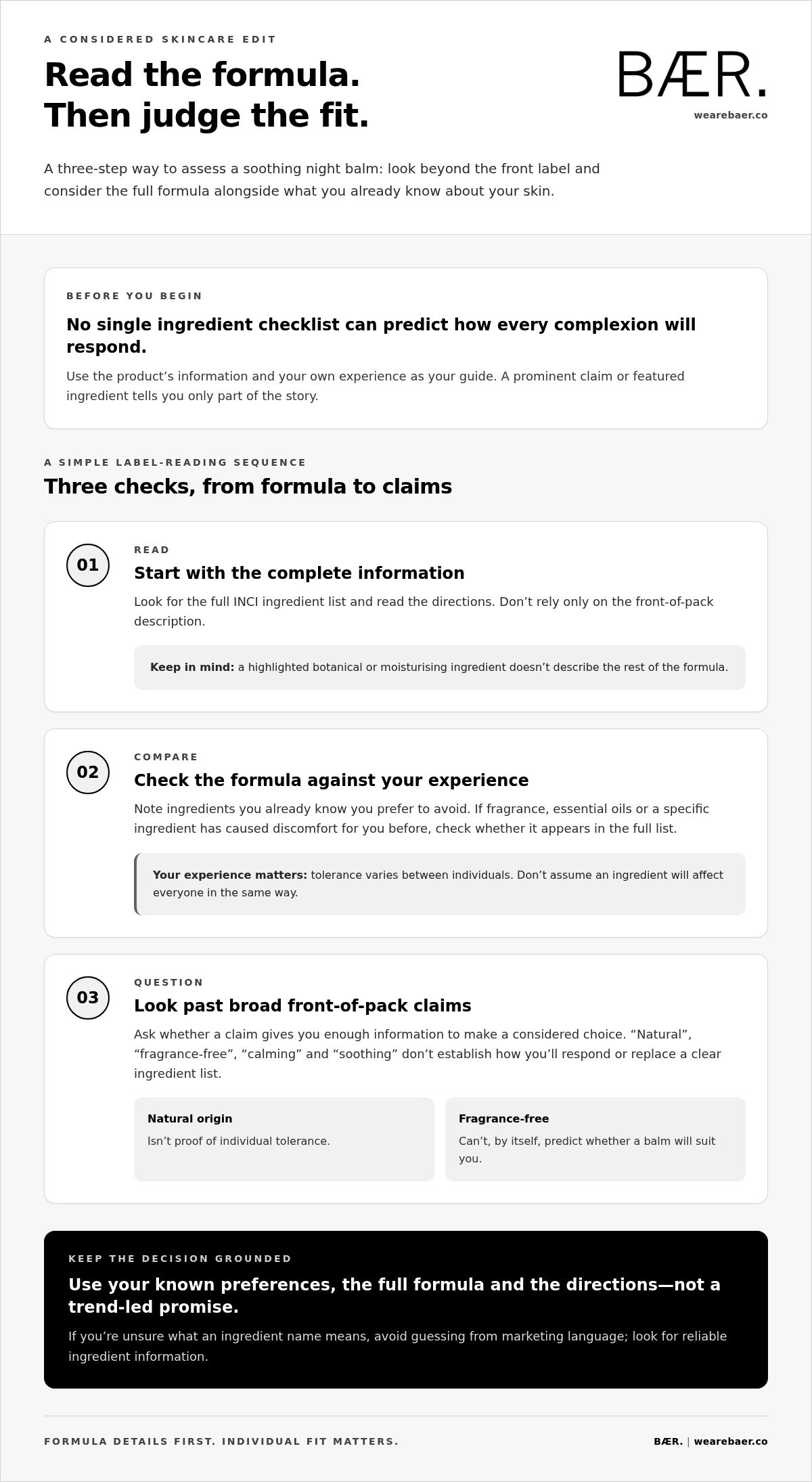
No single ingredient checklist can predict how every complexion will respond. When choosing a soothing night balm for reactive sensitive skin, start with the whole formula: read the ingredient list and directions, then compare them with what you already know about your skin. A prominent claim or featured ingredient tells you only part of the story.
How should you read a night balm ingredient list?
Look for the full INCI ingredient list, not just the front-of-pack description. Note any ingredients you already know you prefer to avoid, and read the directions to understand how the product is intended to be used. If the packaging highlights a botanical or moisturising ingredient, remember that the product also contains the rest of its formula. A headline ingredient doesn’t describe the complete composition.
Assess ingredients in light of your own experience rather than treating them as a simple safe-or-unsafe list. If you’ve noticed a pattern with a particular product or ingredient, make a note of it. Don’t assume it will affect everyone in the same way. Tolerance varies between individuals, and a label can’t guarantee how a formula will feel on your skin.
Do balm ingredients need to be natural or fragrance-free?
Neither “natural” nor “fragrance-free” can, by itself, predict whether a balm will suit you. Botanical ingredients and essential oils may appeal for their origin or scent, but natural origin isn’t proof of individual tolerance. Equally, don’t conclude that a fragranced product will cause a reaction for everyone. Preferences and responses differ, so consider your own experience and the available formula information.
Prioritise what you know about your skin over trend-led claims. If fragrance, essential oils or a specific ingredient has caused discomfort for you before, check whether it appears in the full list. If you’re unsure what a listed name means, avoid guessing from marketing language and look for reliable ingredient information. Claims such as “calming”, “clean” or “soothing” don’t replace a clear list or establish how you’ll respond.
- Read: the complete ingredient list and directions.
- Compare: formula details with ingredients you already know you prefer to avoid.
- Question: whether a front-of-pack claim gives you enough information to make a considered choice.
A considered edit can make product details easier to explore without relying on broad promises. Browse BÆR.’s curated skincare selection and assess each product on its own information and fit for your routine.
Night balm, cream or ointment: which texture suits your routine?
A product’s category can offer an initial clue to its feel, but it can’t replace looking at the formula and directions. A soothing night balm for reactive sensitive skin should feel comfortable in your evening routine, rather than simply seem richer or more protective by name.
How does a balm differ from a cream or ointment?
These formats often differ in consistency and finish, although products within each category can vary considerably. Use the comparison as a general guide, not a promise about how a particular formula will feel.
| Format | Typical texture and feel | May suit a routine if you prefer |
|---|---|---|
| Balm | Often rich or dense, with a more noticeable finish | A substantial final step that stays present on the skin |
| Cream | Often creamy and spreadable, with finishes ranging from light to rich | A familiar moisturising texture that layers comfortably for you |
| Ointment | Often thicker and more occlusive-feeling | A pronounced, protective-feeling finish, if that’s comfortable overnight |
Category names can overlap, and they don’t reveal a product’s full composition or exact feel. One balm may spread differently from another; a cream may feel richer than a balm. Consider how each option sits over the products already in your routine, whether it feels comfortable on your skin and whether you like the finish it leaves.
When might a lighter or richer texture feel preferable?
A lighter-feeling cream may appeal if you dislike residue or want a product that layers easily. A richer balm or ointment may feel preferable if you like a substantial finish, particularly in a cooler or drier-feeling environment. Personal preference matters more than a rule about which texture is best. Richness alone doesn’t mean a product will feel more soothing or suit your skin better.
Consider practical details, too. Does the finish feel comfortable when you settle into bed? Does the product sit well with the rest of your evening routine, or feel too heavy once layered? These everyday impressions can help you decide whether the texture works for you.
Follow the product directions, and adjust the amount only within those instructions and your observed comfort. More product isn’t automatically better. If you have a diagnosed skin condition or ongoing symptoms, comparing cosmetic textures can’t replace personalised medical advice. Speak with a qualified healthcare professional about your care.
Introducing night balm to reactive sensitive skin
Introducing a new formula carefully makes it easier to notice how it feels as part of your night-time routine. Patch testing can be a useful precaution, but it can’t guarantee that a product won’t cause a reaction later or when used elsewhere. Keep the process simple so you have a clearer basis for deciding whether to continue.
How can you patch test a new night balm?
Start with the product’s own directions. If it advises patch testing, follow its instructions and use a discreet test area as directed. Don’t assume the same timing or method suits every product. A comfortable result in a small area offers limited reassurance, not a promise of how your skin will respond after wider or repeated use.
- Review the directions. Read how the product is intended to be applied, along with any patch-test guidance.
- Patch test as directed. Use a discreet area and follow the product’s instructions rather than improvising a test.
- Introduce one product. Avoid adding several new skincare products at once, so it’s easier to notice what may be associated with a change.
- Observe comfort. Pay attention to how your skin feels and looks during use. Stop applying the product if concerning discomfort or a visible reaction develops.
When should you simplify your evening routine?
Keep established, well-tolerated steps consistent while introducing a new balm. Changing several parts of your routine at once can make it harder to work out what may have contributed to a reaction. A brief note of what you used and when you noticed symptoms can help you describe the pattern, but it can’t diagnose the cause.
If symptoms persist, feel severe or worry you, stop using the new product and seek advice from an appropriate healthcare professional. For broader context on changes that may affect the skin barrier, read Signs of a Damaged Skin Barrier. It can help you think about what you’ve noticed, but it can’t determine the cause of your symptoms.
Introduce a soothing night balm for reactive sensitive skin patiently, following the directions and paying attention to your comfort. To explore skincare options with a considered starting point, browse BÆR.’s curated skincare edit.
Choosing a night balm with BÆR.’s considered skincare edit
Choosing a soothing night balm for reactive sensitive skin is less about finding the boldest promise and more about weighing the details against your preferences. Use this checklist to keep your decision clear and personal.
- Texture: Does the finish sound comfortable for you overnight, whether you prefer a lighter feel or a richer one?
- Full formula information: Can you review the complete ingredient list, rather than relying on a highlighted ingredient or front-of-pack claim?
- Known triggers: Have you checked the formula against ingredients or product types you already know you prefer to avoid?
- Directions: Have you read how the product should be used, including any guidance for introducing it?
- Routine fit: Will it sit comfortably alongside the skincare steps you already use?
Clear product information supports a more considered choice, but no claim can promise an individual response. Words such as “soothing” don’t guarantee that a formula will feel right for your skin. If you choose to try something new, introduce it cautiously and pay attention to how your skin feels rather than changing several products at once.
How does a considered skincare edit help?
A curated selection offers a focused way to explore premium skincare without having to choose from an overwhelming range of options. It provides a thoughtful starting point, while leaving you room to compare each product’s texture, information and place in your routine on its own merits.
MANTLE The Barrier Cream is part of BÆR.’s skincare selection. Its name alone doesn’t establish its ingredients, directions, suitability for reactive skin or results, so use the product information and assess it against the checklist above.
There’s no need to rush. Explore BÆR.’s considered skincare selection, compare the details that matter to you and choose with care. The most useful night-time option is one whose information, texture and routine fit make sense for your preferences.
Choose your next night-time step with confidence
A soothing night balm for reactive sensitive skin should earn its place through comfort and routine fit, not reassuring wording alone. Compare the textures you prefer, read the full ingredient information and directions, and consider any ingredients you already know you’d rather avoid. “Natural” or “soothing” claims can’t guarantee how your skin will respond.
Introduce a new product cautiously, one at a time, and pay attention to how your skin feels. A patch test may be useful when directed, but it can’t guarantee future tolerance. If discomfort develops, stop using the product. Seek advice from an appropriate healthcare professional if symptoms persist, feel severe or worry you.
BÆR. curates premium, high-performance beauty brands for a considered approach to skincare. MANTLE The Barrier Cream is part of its skincare selection, so compare its product information with your preferences and routine. Explore BÆR.’s considered skincare edit and find your next skincare step.
Frequently Asked Questions
Is a night balm suitable for reactive sensitive skin?
It may suit some people, but the product name or “soothing” claim can’t predict individual tolerance. Consider the full ingredient list, directions and texture, and compare them with ingredients you know you prefer to avoid. A soothing night balm for reactive sensitive skin should also feel comfortable in your routine. Introduce it cautiously rather than assuming that a balm designed for sensitive skin will automatically suit you.
Can a soothing night balm cause stinging or redness?
Yes. A balm can cause stinging, redness or other discomfort in some people, and these signs don’t identify a single cause. Individual responses vary, and a reaction may relate to a product or other factors. If discomfort or visible irritation develops, stop using the balm. Don’t assume that stinging is a sign the product is working. Seek medical advice if symptoms persist, are severe or concern you.
How do I patch test a night balm for sensitive skin?
Follow the product’s patch-test directions and use a discreet test area as instructed. Don’t apply more often or for longer than the directions advise. A comfortable result on a small area can’t guarantee that the balm won’t cause a reaction when used more widely or repeatedly. Introduce one new product at a time, and stop using it if concerning discomfort or a visible reaction develops.
What ingredients should I avoid in a night balm for reactive skin?
There isn’t one universal list of ingredients that every person with reactive skin must avoid. Start with your own experience: check the complete ingredient list for anything you already know you prefer not to use, including fragrance or essential oils if they’ve caused you concern before. “Natural” doesn’t guarantee personal tolerance, and an ingredient’s presence alone doesn’t predict everyone’s response. If unsure, seek reliable information rather than guessing from a claim.
Is a balm better than a cream for sensitive skin?
Neither format is inherently better for sensitive skin. Balms often feel richer, whilst creams can range from light to substantial, but products within each category vary. Choose by the texture you find comfortable, how it layers with your existing routine and the product’s directions. A rich finish isn’t automatically more soothing or suitable. If you have a diagnosed skin condition, ask a healthcare professional for advice specific to your needs.
Can I use a night balm every night?
Use a night balm as often as its directions recommend, and consider how your skin feels as you introduce it. Don’t begin several new products at once, as this can make it harder to identify what may be associated with a change. If the balm feels comfortable and its directions allow regular use, you may choose to include it in your routine. Stop if discomfort or a visible reaction develops.
When should I stop using a night balm and seek medical advice?
Stop using the balm if you develop concerning discomfort or a visible reaction. Seek advice from an appropriate healthcare professional if symptoms persist, are severe, worsen or worry you. A skincare product can’t diagnose or treat the cause of a reaction, and online guidance can’t replace individual medical advice. If symptoms feel urgent, seek urgent medical help. Keep the product packaging or ingredient list available to share with the professional.