
A longer bedtime routine won’t necessarily leave you waking with more comfortable skin. If your face feels tight or dry in the morning, it’s understandable to wonder whether you need another serum, a richer moisturiser or a final sealing layer. Learning how to prevent transepidermal water loss overnight starts with a simpler idea: support the skin barrier with a few compatible steps, rather than adding products without a clear purpose.
Transepidermal water loss, or TEWL, is the natural passage of water from the skin into the surrounding air. It continues throughout the day and night, and may be more noticeable when the skin barrier is unsettled or your bedroom air is dry. Hydration matters, but so does helping to reduce moisture escaping from the skin’s surface. A gentle cleanse, a hydrating layer if you want one, and a moisturiser your skin tolerates can provide a practical starting point.
This guide explains how TEWL relates to the skin barrier, why overnight conditions can leave skin feeling parched, and how to build a straightforward evening routine. You’ll also learn how to compare product textures, when a richer final layer might suit you, and which common habits can affect comfort.
Key Takeaways
- Morning tightness can have several causes. Understanding TEWL helps explain how moisture moves through the skin’s outer layer.
- Explore how to prevent transepidermal water loss overnight by choosing compatible skincare layers, rather than adding steps without a clear purpose.
- Hydrating serums, moisturisers and richer creams can have different roles. Consider their texture, instructions and how your skin responds.
- Build a flexible evening routine around gentle cleansing, optional hydration and moisturising, guided by your skin’s comfort.
- Choose products thoughtfully and aim for a routine you can maintain, rather than expecting an overnight transformation.
How to prevent transepidermal water loss overnight: what TEWL means
Waking with tight or dry-feeling skin can be uncomfortable, but that sensation alone doesn’t reveal why it’s happening or prove that you have a skin condition. To understand how to prevent transepidermal water loss overnight, distinguish the water held within the skin from the water that naturally escapes across its surface. The aim isn’t to stop this normal process, but to care for the barrier that helps regulate it.
What does transepidermal water loss mean for skin?
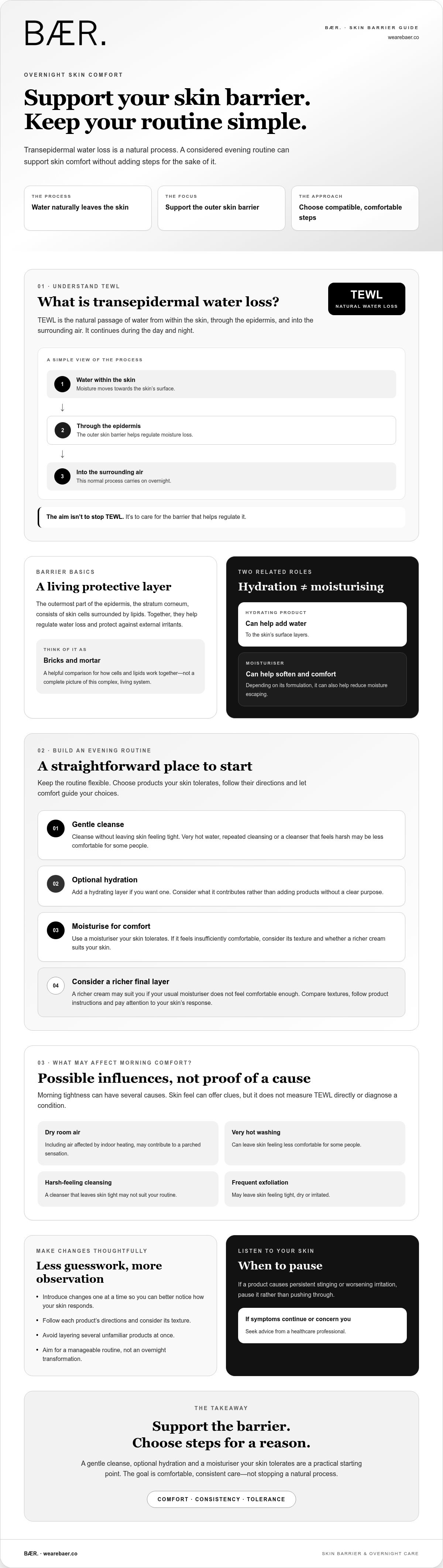
Transepidermal water loss (TEWL) is the movement of water from within the skin, through the epidermis, and into the surrounding air. The epidermis is the skin’s outer layer, and its surface barrier helps limit excessive moisture loss whilst protecting against external irritants. Think of it as a carefully fitted roof: it won’t make a home completely airtight, but it helps shield what’s beneath. A disrupted or dry-feeling barrier may be less comfortable, though tightness or flaking alone can’t establish a diagnosis.
Why can skin feel drier by morning?
TEWL continues during sleep, and how your skin feels when you wake can reflect a mix of factors. Dry room air, including air affected by indoor heating, may contribute to a parched sensation. Routine choices can also leave skin feeling stripped. A very hot wash, a cleanser that makes skin feel tight, or frequent exfoliation may be less comfortable for some people. These are possible influences, not proof that any one factor is responsible.
Skin comfort can vary from night to night. If your usual routine leaves your face feeling taut, consider whether cleansing feels too harsh or your moisturiser feels insufficiently comfortable, rather than assuming you need several additional products. How your skin responds is useful information, but changes in feel don’t measure TEWL directly.
Overnight care is about supporting the skin’s natural barrier, not promising to eliminate water loss or transform skin by morning. Start with gentle habits and products your skin tolerates. Understanding what each layer can contribute will help you decide whether you need hydration, a moisturiser or a richer cream.
Why the skin barrier matters when preventing overnight water loss
The outer skin barrier helps limit water escaping from the skin and provides a first line of defence against irritants. Supporting it is central to how to prevent transepidermal water loss overnight, but no single product can resolve every cause of discomfort or guarantee a change by morning. A gentle, manageable routine is a considered starting point.
How the outer skin barrier helps retain moisture
The outermost part of the epidermis, the stratum corneum, consists of skin cells surrounded by lipids. Together, these structures help regulate water loss and protect against external irritants. The arrangement is sometimes compared with bricks and mortar, a useful image for how cells and lipids work together, though the barrier is a living, complex system. For further background, read how to care for your skin barrier.
Adding hydration and supporting the barrier are related but distinct. A hydrating product can help add water to the skin’s surface layers; a moisturiser can help soften skin and reduce moisture escaping, depending on its formulation. Neither step should be treated as an overnight repair for every concern. Comfort, consistency and individual tolerance matter.
In brief: hydration adds moisture, whilst moisturising helps support the skin’s comfort and limit water loss.
What can make an evening routine feel less comfortable?
Repeated cleansing, very hot water, frequent exfoliation or products that don’t suit your skin may leave it feeling tight, dry or irritated. Responses vary, and a sensation alone doesn’t identify the cause. If a product causes persistent stinging or irritation that worsens, pause it rather than pushing through. Seek advice from a healthcare professional if symptoms continue or concern you.
Keep your routine measured. A gentle cleanse and a moisturiser your skin tolerates may feel more comfortable than layering several unfamiliar products at once. Introduce changes one at a time, following each product’s directions, so you can better notice how your skin responds. For more detail on possible signs and routine considerations, see BÆR.’s guide to signs of a damaged skin barrier.
If you’re considering a barrier cream, explore MANTLE The Barrier Cream as one option to assess alongside your own preferences and the product’s instructions. The aim is to build a routine that feels comfortable and is practical to maintain, not to chase an overnight transformation.
Hydrating serum, moisturiser or richer cream: what helps overnight?
These product types can play different roles in an evening routine, but they aren’t interchangeable, and you may not need all of them. A serum can provide a lightweight hydration step, whilst a moisturiser may offer a more substantial final layer. A richer cream is one texture option, not an automatic upgrade. For how to prevent transepidermal water loss overnight, let your skin’s comfort and the product’s instructions guide your choice.
| Product type | General purpose | Typical texture | Routine position and considerations |
|---|---|---|---|
| Hydrating serum | Adds a lightweight hydration step, depending on its formulation. | Often fluid or gel-like. | Usually applied before moisturiser. Follow the label and use only if your skin tolerates it. |
| Moisturiser | Helps soften skin and support everyday comfort. | Varies from light lotion to cream. | Often used after a serum, or on its own if that suits your routine. |
| Richer cream | Offers a more substantial-feeling moisturising layer. | Typically thicker or more cushiony. | May suit those who prefer a richer finish, but consider how it feels and whether it fits your skin’s needs. |
What role can a hydrating serum play before bed?
A serum may be a useful optional layer if you enjoy its feel and your skin tolerates it. Its role depends on the formula, so don’t assume every serum behaves the same way or that a serum alone will provide enough moisture for everyone. Check the product directions, apply it as instructed and consider what you’ll layer over it. If your current routine already feels comfortable, there’s no need to add a serum simply because it’s a common step.
When might a moisturiser or richer cream suit your routine?
Choose a moisturiser for its texture, instructions and how your skin feels after use, rather than relying on the word “rich” as a promise of better results. A cream or nourishing balm that feels pleasant and fits easily into your routine—such as handcrafted options from Bubble Soap Co.—may be a more considered choice than a heavier layer that feels uncomfortable. Introduce one new product at a time so you can notice how your skin responds.
If you’re considering a barrier cream, explore MANTLE The Barrier Cream as one product option. Check the product information and decide whether its texture and directions suit you. A simple routine, chosen with care, is often a more useful starting point than layering products without a clear reason.
A simple evening routine to help reduce overnight water loss
A useful routine doesn’t need to be elaborate. Cleanse without leaving skin uncomfortable, add hydration only if it suits you, then moisturise and assess how your skin feels. This flexible sequence offers a practical approach to how to prevent transepidermal water loss overnight, without suggesting that every step is essential or that skincare can stop natural water loss completely.
How to layer evening skincare without overcomplicating it
Start with your existing routine. If your skin is already clean, you may not need another cleanse. If you do cleanse, choose a gentle approach and avoid very hot water. Follow the directions for any optional hydrating product, then apply a moisturiser that feels comfortable. Make changes gradually so you can notice how your skin responds.
- Cleanse gently, if needed. Remove the day’s products with a cleanser that doesn’t leave your skin feeling tight. Avoid unnecessary washing if your skin is already clean.
- Add optional hydration. If you use a hydrating serum or similar product, apply it as directed and only if your skin tolerates it. You can leave this step out.
- Apply moisturiser. Choose a texture that feels comfortable and follow the product’s instructions. A richer cream isn’t automatically the right choice for everyone.
- Pause and assess. Notice whether your skin feels comfortable after your routine and when you wake. Keep the sequence simple before deciding whether to make another change.
What to adjust if you wake with tight or uncomfortable skin
Before adding another layer, review your current habits. Consider whether you’ve been cleansing more often than needed, exfoliating frequently or recently introduced a product that might not suit you. If irritation appears, simplify your routine and stop using products you suspect are triggers. Don’t push through persistent stinging or worsening discomfort.
If symptoms are persistent, severe, worsening or accompanied by marked inflammation, seek advice from a qualified healthcare professional rather than self-diagnosing. For a considered product option, you can explore MANTLE The Barrier Cream and assess its instructions and texture against your preferences.
Choosing an overnight barrier-supporting routine with confidence
There isn’t one ideal set of products for every skin type. A routine that supports overnight comfort is one you can use consistently, that fits alongside the rest of your skincare and that your skin tolerates—whether you prefer everyday essentials or clean, science-backed options from brands like Sovereign Skin LLC. For how to prevent transepidermal water loss overnight, thoughtful, manageable choices are more useful than chasing a promised transformation by morning.
A short checklist for selecting products for overnight use
Before adding a product, consider how it fits your routine, not just how it is discussed online. These practical checks can help you choose with greater care:
- Read the label. Check the product’s intended use, directions and ingredient information. Follow the instructions rather than assuming products with similar names work in the same way.
- Consider the feel. Choose a texture that’s comfortable on your skin and fits your existing layers. A trend or richer finish isn’t automatically the right match.
- Make one change at a time. Introduce a new product gradually so it’s easier to notice how your skin responds. Stop using it if it causes a reaction or persistent irritation.
- Keep the routine compatible. Think about whether the product complements what you already use, and whether you genuinely need another step.
Consistency doesn’t mean repeating a routine that leaves your skin uncomfortable. It means giving a simple, well-tolerated approach time to become familiar, while staying attentive to changes in how your skin feels. Product descriptions can explain intended use, but they can’t promise a particular overnight result or determine the cause of ongoing symptoms.
When to seek personalised skincare guidance
If discomfort persists, worsens or causes significant concern, speak with a qualified healthcare professional rather than trying to diagnose the cause or resolve it by layering more products. A skincare service may offer a different kind of guidance, but it isn’t a substitute for healthcare advice about persistent or concerning symptoms.
The MANTLE by BÆR. Bespoke Facial is a professional, non-medical skincare service. For a considered next step in choosing products, explore BÆR.’s curated skincare selection, including MANTLE The Barrier Cream. Take your time, check product directions and choose what feels appropriate for your routine.
Make your evening routine feel more considered
Understanding how to prevent transepidermal water loss overnight begins with recognising that TEWL is natural. Rather than trying to eliminate it, focus on caring for the skin barrier with gentle cleansing, optional hydration and a moisturiser that feels comfortable. A hydrating serum and a richer cream have different roles, and neither needs to be added unless it suits your skin and routine.
Keep changes simple. Check product directions, introduce one new product at a time and pay attention to how your skin responds. Consistent, well-tolerated care is a more thoughtful foundation than expecting an overnight transformation.
BÆR. offers a curated skincare selection that includes MANTLE The Barrier Cream, alongside the professional MANTLE by BÆR Bespoke Facial. Neither should be seen as a diagnosis or treatment for a medical concern; seek qualified healthcare advice if symptoms persist or worsen. To explore the selection and find options that may suit your routine, explore BÆR.’s high-performance skincare.
Small, comfortable steps can make your evening ritual feel clearer and more manageable. Let your skin’s needs guide what comes next.
Frequently Asked Questions
Is transepidermal water loss higher overnight?
Transepidermal water loss is a normal, ongoing process, but it shouldn’t be described as universally higher overnight without reliable evidence. Some people notice dryness or tightness on waking, yet those feelings alone don’t identify the cause. Room conditions, cleansing habits and skincare choices may all be relevant. Focus on how your skin feels and whether your routine is comfortable, rather than trying to stop TEWL entirely.
How can I prevent transepidermal water loss overnight?
You can support overnight skin comfort with a simple, well-tolerated routine, although skincare can’t stop TEWL completely. Cleanse gently when needed, apply an optional hydrating product if it suits your skin, then use a moisturiser according to its directions. Comfort and consistency matter more than adding multiple layers. Introduce changes gradually, and seek qualified healthcare advice if irritation persists or worsens.
Does moisturiser prevent transepidermal water loss?
Moisturiser can support skin comfort and help reduce dryness, but it doesn’t completely prevent transepidermal water loss. Its effect depends on the product’s formulation and how your skin responds. Choose a texture that feels comfortable, check the directions and use it as instructed. If a moisturiser causes a reaction or ongoing irritation, stop using it and consider seeking advice from a qualified healthcare professional.
Should I apply a hydrating serum before moisturiser at night?
A hydrating serum can be an optional step before moisturiser if its directions support that order and your skin tolerates it. It isn’t essential for everyone, and it may not replace moisturiser in your routine. If you’d like to try one, introduce it on its own rather than changing several products at once. That makes it easier to notice whether the serum feels comfortable for your skin.
Can a damaged skin barrier cause more water loss?
The skin barrier helps limit water loss, and disruption may be associated with dryness or discomfort. However, one symptom, such as tightness, can’t confirm that your barrier is damaged or explain what’s causing the sensation. Keep care gentle and avoid assuming one product will repair every concern overnight. If irritation is persistent, severe or worsening, seek advice from a qualified healthcare professional.
What should I do if my skin still feels dry in the morning?
Review your cleansing habits, exfoliation and any products you’ve introduced recently before adding more layers. If something seems irritating, simplify your routine and stop using the suspected product. A moisturiser that suits you may support comfort, but persistent dryness can have different causes. Seek qualified healthcare advice if symptoms continue, irritation is marked or you have other concerns, rather than escalating active ingredients yourself.
Is a richer night cream always better for preventing overnight dryness?
No. A richer texture may feel comfortable for some people, but it isn’t automatically the best choice for every skin type or concern. Consider your personal tolerance, the product’s directions and how you want your skin to feel. If you try a new cream, introduce it gradually. Discontinue use if it causes irritation or discomfort, rather than adding further layers to counteract the reaction.