
The richest cream in your cupboard may not be the first answer. After illness, parched skin can reflect disrupted skincare habits or a weakened skin barrier. Fever, vomiting or diarrhoea may also contribute to dehydration throughout the body. Knowing how to rehydrate parched skin after illness starts with recognising that these are related, but not identical, concerns.
Tightness, flaking and sensitivity can make you want to scrub away rough patches or layer on potent products. It’s understandable, but a more considered approach is often kinder to recovering skin. Dry skin is a skin type; dehydrated skin is a temporary condition that can affect any skin type. Skin discomfort alone can’t confirm whole-body dehydration.
This guide explains how to tell the difference, build a simple routine with gentle cleansing and moisturising, and ease back into active ingredients without overwhelming your skin. You’ll also learn when symptoms may need medical advice, including a painful or spreading rash, signs of infection, or dryness that persists despite consistent care. A calm, manageable routine can help restore comfort whilst you continue to support your overall recovery.
Key Takeaways
- Learn why parched skin can follow illness and why its appearance alone can’t confirm whole-body dehydration.
- Understand how changes such as fever, reduced fluid intake and a disrupted routine may affect the skin barrier.
- Discover the different roles of humectants, emollients and occlusive ingredients, and why personal tolerance matters.
- Explore how to rehydrate parched skin after illness with a simple routine that favours gentle cleansing and a moisturiser your skin tolerates.
- Find out when persistent, worsening or concerning symptoms are a reason to speak with a GP or pharmacist.
Why can skin feel parched after an illness? Understand the difference between dry skin and dehydration
Tight, flaky skin can be an unwelcome change after the disruption of illness. It may feel rough when you wash your face or look less luminous than usual, but “parched” describes how skin feels or appears. It isn’t a diagnosis, and it doesn’t prove that you’re dehydrated throughout your body. Several factors may be involved, so avoid assuming one cause from appearance alone.
What does parched skin feel and look like?
You might notice tightness, small rough patches, visible flakes or a temporarily dull appearance. These signs can occur after changes to your usual routine, reduced fluid intake or a fever, but they don’t identify the reason on their own. Note when the change began and whether it’s easing, staying the same or worsening. This simple record can help you describe the pattern if you seek advice.
Is skin dryness the same as dehydration?
Not quite. Dry skin is commonly used to describe a lack of surface oils, whilst dehydration refers to insufficient water in the body. Skin can also feel short of moisture without this being proof of whole-body dehydration. The outer skin barrier helps protect against irritants and slow water escaping from the skin. This natural process is called transepidermal water loss.
Illness may coincide with several changes: you might drink less than usual, develop a fever, spend more time in dry indoor air or find that your usual skincare routine has fallen away. Any of these could contribute to discomfort, but their relevance differs from person to person. Skin symptoms alone can’t tell you whether fluid intake has been adequate or whether another factor is at play.
Moisturiser supports skin comfort; drinking addresses fluid intake. They serve different purposes, so applying a cream shouldn’t be treated as a way to correct dehydration throughout the body. If you’re concerned about dehydration or still recovering from illness, follow appropriate healthcare guidance rather than relying on your skin as a measure.
Understanding that distinction is a useful first step in how to rehydrate parched skin after illness. Consider the wider picture, including how you’re feeling and whether the skin is changing over time. If symptoms persist, worsen or concern you, speak with a GP or pharmacist for advice suited to your circumstances.
How illness and disrupted routines can affect the skin barrier
Skin can feel less comfortable after an illness for several reasons, and the skin barrier is one part of the picture. This protective outer layer helps limit moisture loss and shield skin from irritants. A period of feeling unwell may bring changes to hydration, sleep, skincare habits or conditions at home, any of which could contribute to tightness or flaking. None is a diagnosis on its own.
What does the skin barrier do?
The outermost part of this barrier is called the stratum corneum. It helps keep moisture in and unwanted irritants out. If its protective function is disrupted, skin may feel tight or more sensitive, or develop flaky patches. These signs can have different causes, so they don’t confirm barrier damage by themselves. For a closer look at what to watch for, read the guide to signs of a damaged skin barrier.
Fever or reduced fluid intake during illness may affect how you feel overall, whilst dry indoor air can leave the skin feeling less comfortable. A pause in your usual cleansing or moisturising habits may also change how your skin feels. These possibilities vary from person to person. Mayo Clinic’s overview of causes of dry skin also notes that medicines and certain health conditions can be relevant, but this doesn’t mean every illness or medicine causes dryness.
Which post-illness changes might leave skin feeling uncomfortable?
Consider what changed around the time your skin began to feel different. Perhaps you washed less often, used a different cleanser, spent more time in a heated room or didn’t have the energy for your usual routine. Sleep and fluid intake may have changed too. Reviewing these factors can help you decide what to simplify, without trying to diagnose the cause from a mirror.
If you think a medicine may be affecting your skin, ask a GP or pharmacist before changing how you take it. Don’t stop prescribed medicine without professional guidance. Seek advice for persistent, worsening or unusual skin changes, particularly if they cause significant discomfort. A gentle, consistent approach can be a sensible starting point while you work out what your skin tolerates. If you’re considering skincare options, explore the BÆR. curated skincare edit; products aren’t a substitute for medical advice.
Knowing what may influence the barrier can make decisions about how to rehydrate parched skin after illness feel less overwhelming. The next step is choosing a simple routine that supports comfort without adding unnecessary irritation.
Which skincare ingredients help parched skin feel more comfortable?
Ingredient labels can make moisturising feel more complicated than it needs to be. Rather than looking for one “hero” ingredient, consider what a formula is designed to do and whether your skin already tolerates it. Humectants, emollients and occlusives have different roles, and a moisturiser may combine all three.
Humectants, emollients and occlusives: what is the difference?
| Ingredient group | General role | Examples |
|---|---|---|
| Humectants | Attract water within a skincare formulation and help hydrate the outer skin layer. | Glycerin, hyaluronic acid |
| Emollients | Soften and smooth the skin’s surface. | Squalane, ceramides |
| Occlusives | Form a surface layer that helps reduce moisture loss. | Petrolatum, some waxes |
These are broad ingredient roles, not guarantees of how a product will feel or perform. The full formulation matters: texture, other ingredients and how your skin responds all count. For practical guidance on cleansing and moisturising, see the American Academy of Dermatology’s expert tips for relieving dry skin.
How should you choose a moisturiser when skin feels reactive?
Keep the choice simple. If you have a moisturiser your skin already tolerates, it may be more sensible to continue with it than to introduce several unfamiliar products at once. For easily irritated skin, you might consider a fragrance-free option, although no formula suits everyone. Check the label and patch test an unfamiliar product according to its instructions. Stop using it if irritation develops.
BÆR. includes MANTLE The Barrier Cream in its curated skincare offering. Consider it as one possible moisturiser, not as a treatment for illness or dehydration, and check the current product details and ingredients before use. If your skin is particularly reactive or you’re unsure what to try, ask a GP or pharmacist for guidance.
Choosing a well-tolerated formula is a measured step in how to rehydrate parched skin after illness. Explore the curated skincare edit from BÆR. to see its selection, and take time to assess what feels comfortable for your skin.
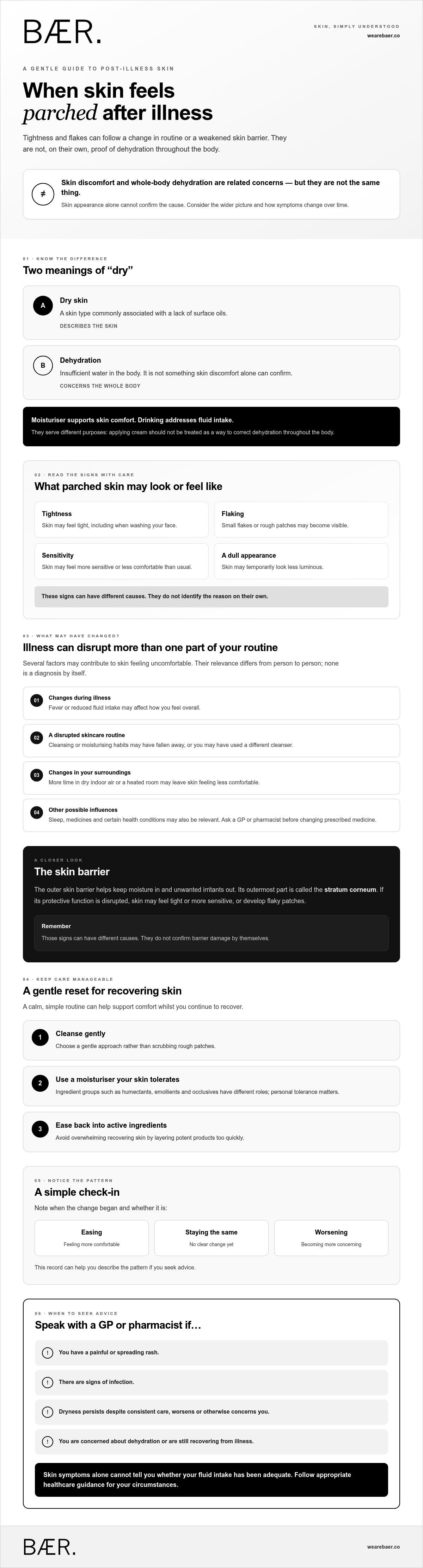
How to rehydrate parched skin after illness: a gentle step-by-step routine
A pared-back routine makes it easier to notice what feels comfortable whilst your skin settles. Focus on gentle cleansing, a familiar moisturiser and avoiding products that cause stinging. Skincare can support surface comfort, but it doesn’t replace advice about fluid intake or recovery from illness.
What should a simple morning and evening routine include?
Adjust these steps to your needs. If cleansing feels uncomfortable, a gentle rinse may be enough. Avoid scrubbing and very hot water.
- Cleanse or rinse gently. Use a mild cleanser you already tolerate, or rinse with lukewarm water if that feels more comfortable. Pat skin dry rather than rubbing it.
- Apply moisturiser. Smooth on a familiar, tolerated moisturiser while skin is slightly damp. Use an amount that feels comfortable, and avoid layering several new products.
- Consider daytime sun protection. If you’ll be outdoors, use sun protection that suits your skin and follow its label directions. This is a general skincare measure, not a treatment for parched skin.
That’s enough to begin. You don’t need a separate product for every step. If your usual moisturiser suddenly stings or feels unpleasant, stop using it for now and consider seeking advice, especially if the discomfort continues.
When should you bring products back into your routine?
Wait until your skin feels settled before considering optional actives such as retinoids or exfoliants. If a product stings, pause it rather than pushing through. When you do reintroduce products, add one at a time and observe how your skin responds before making another change. If you’re unsure, ask a GP or pharmacist, particularly if you have ongoing symptoms or questions about medicines.
Keep whole-body hydration separate from your skincare steps. Follow your clinician’s guidance on fluids during illness or recovery, especially if you’ve been advised to limit or manage your intake in a particular way. Moisturiser can support skin comfort; it can’t address dehydration throughout the body.
Consistency matters more than complexity. If you’d like to explore a considered skincare option for your routine, discover MANTLE The Barrier Cream as one moisturiser to consider, not as a treatment for illness or dehydration. Check the current product details and choose only what feels appropriate for your skin.
How long does post-illness skin dryness last, and when should you seek help?
There isn’t one recovery timeline that applies to everyone. How quickly skin feels comfortable again can depend on what contributed to the change, your usual skin type and how your recovery is progressing. Rather than relying on a fixed number of days, look for the direction of change: is tightness, flaking or sensitivity easing, staying much the same or getting worse?
What changes should you monitor as you recover?
Keep a brief note of when symptoms began and how they develop. Record any new skincare products, changes in your illness or medicines you’re taking, as these details may help if you speak with a healthcare professional. A skincare product seeming to help, or not helping, can’t establish whether you’re dehydrated or identify the cause of a wider health concern.
When is professional advice more appropriate than another product?
Contact a GP or pharmacist if skin symptoms persist, worsen, feel unusual or concern you. Seek medical advice promptly for a painful or rapidly spreading rash, or signs of infection such as swelling or pus. A high fever alongside skin symptoms also warrants medical attention. Don’t keep adding products in the hope of settling symptoms that are getting worse.
Skin appearance can’t reliably show whether your body needs more fluid. The NHS lists signs of dehydration such as dark, strong-smelling urine, peeing less than usual, dizziness, tiredness and a dry mouth. If you’re concerned about dehydration, or you’re unwell and struggling to keep fluids down, follow NHS advice on dehydration and contact NHS 111 for guidance. Call 999 or go to A&E for a life-threatening emergency, such as if someone becomes confused, difficult to wake or loses consciousness. Follow any fluid advice given by your clinician.
Understanding how to rehydrate parched skin after illness includes knowing when skincare is no longer the main concern. If you’ve addressed any health concerns and would like a non-medical skincare experience, explore the skincare edit curated by BÆR. or the MANTLE by BÆR. Bespoke Facial. Neither is a substitute for medical assessment or treatment.
Make recovery gentler with a considered skincare routine
After illness, tight or flaky skin can have more than one possible cause. Remember that surface dryness doesn’t confirm dehydration throughout the body, and skincare and fluid intake play different roles. A simple routine built around gentle cleansing and a moisturiser your skin already tolerates can offer a measured place to begin. Avoid products that sting or irritate.
As you consider how to rehydrate parched skin after illness, pay attention to changes over time rather than expecting a fixed recovery schedule. If symptoms persist, worsen or concern you, speak with a GP or pharmacist. Seek appropriate medical advice for possible dehydration or signs of infection; another skincare product isn’t a substitute for care.
When you’re ready to explore skincare, discover BÆR.’s curated skincare edit, featuring premium brands including MANTLE. For an optional, non-medical skincare experience, the MANTLE by BÆR Bespoke Facial may also be of interest. Explore BÆR.’s skincare edit when you’re ready to choose a considered addition to your routine.
Frequently Asked Questions
Can illness or dehydration make your skin feel parched?
Yes, illness can coincide with skin feeling tight, rough or flaky, and dehydration may be one possible factor. Fever, reduced fluid intake, dry indoor air or changes to your usual skincare routine could also contribute. However, parched skin describes how it feels or looks, not a diagnosis. Its appearance alone can’t confirm dehydration or reveal the cause, so consider your overall health as well as your skin.
How do you rehydrate parched skin after illness?
To understand how to rehydrate parched skin after illness, start simply: rinse or cleanse gently with lukewarm water, pat dry and apply a moisturiser you already tolerate to slightly damp skin. Avoid scrubbing and pause products that sting, including strong exfoliants or retinoids. Introduce unfamiliar products cautiously, one at a time. Skincare supports surface comfort, whilst fluid intake should follow healthcare guidance appropriate to your circumstances.
How long does dry skin last after being ill?
There’s no single timeline for post-illness dryness. How long it lasts can depend on its cause, your usual skin and how your recovery is progressing. Notice whether tightness, flaking or sensitivity is easing, unchanged or worsening, rather than expecting a particular number of days. If symptoms persist, worsen or concern you despite a gentle routine, contact a GP or pharmacist for advice.
Should you stop using retinol or exfoliating acids when your skin feels parched?
Pause retinol, exfoliating acids or other active products if they sting or your skin feels unusually sensitive. A temporary, simpler routine can make it easier to see what your skin tolerates. Once it feels settled, consider reintroducing optional products one at a time, following their directions. Stop if irritation develops. If you’re unsure, or symptoms continue, ask a GP or pharmacist for guidance before experimenting further.
Can moisturiser treat dehydration after an illness?
No. Moisturiser can help support comfort at the skin’s surface, but it doesn’t treat dehydration affecting the whole body. Drinking fluids addresses fluid intake, and the right approach can depend on your health and circumstances. Follow advice from your clinician, particularly if you’ve been told to manage your fluid intake. If you suspect dehydration or feel unwell, seek appropriate healthcare advice rather than relying on a skincare product.
When should I seek medical advice for dry skin after illness?
Contact a GP or pharmacist if dryness persists, worsens, feels unusual or concerns you. Seek prompt medical advice for a painful or rapidly spreading rash, signs of infection such as swelling or pus, or a high fever. Possible dehydration also needs attention, especially if you’re peeing less than usual or feel dizzy. In the UK, contact NHS 111 for urgent advice; call 999 for a life-threatening emergency, such as loss of consciousness.