
Could exfoliating be keeping the redness you’re trying to fade in view? If a breakout or irritation has settled but pink or red marks remain, it’s understandable to reach for a stronger active. Yet sensitive skin may need less, not more. Learning how to treat post inflammatory erythema without harsh acids starts with calming and protecting the skin, rather than repeatedly exfoliating it.
Post-inflammatory erythema (PIE) is lingering redness after inflammation, while post-inflammatory hyperpigmentation (PIH) appears as brown or grey marks. They can look similar at a glance, but have different causes, so an acid-led routine may not be the right response. A gentle approach can help you care for your skin without adding unnecessary irritation, although fading takes time and results vary.
This guide explains how to distinguish redness from pigmentation, build a simple barrier-conscious routine and use daily sun protection. You’ll also learn when persistent, changing or uncertain symptoms call for advice from a GP or dermatologist. The aim is a calm, considered approach, not a quick fix.
Key Takeaways
- Learn how to treat post inflammatory erythema without harsh acids by keeping your routine simple and avoiding exfoliation that leaves skin uncomfortable.
- Build a gentle morning and evening routine around cleansing and moisturising, with daily sun protection in the morning.
- Introduce new products one at a time so you can notice how your skin responds, and pause anything that causes persistent discomfort.
- Consider the trade-offs between exfoliating acids and a barrier-conscious approach; acids aren’t essential for every routine.
- Simplify, protect and observe before cautiously reintroducing products, and seek medical advice if symptoms persist or change.
What Is Post-Inflammatory Erythema, and Why Does Redness Linger?
Post-inflammatory erythema (PIE) is lingering redness after skin inflammation, often noticed once a breakout or irritation has settled. The mark may look pink, red or purplish, while post-inflammatory hyperpigmentation (PIH) more often appears brown or grey. These are useful visual clues, not a diagnosis: marks can vary with skin tone, and colour alone can’t confirm what’s happening.
The distinction matters because PIE is associated with changes in small blood vessels, whereas PIH involves excess melanin. The overview of post-inflammatory hyperpigmentation (PIH) and postinflammatory erythema (PIE) explains this contrast. In practice, redness and pigmentation can be difficult to tell apart, particularly as a mark changes or appears alongside active spots. Understanding what you’re seeing is a helpful first step in how to treat post inflammatory erythema without harsh acids, but appearance alone can’t establish its cause.
How post-inflammatory erythema differs from post-inflammatory pigmentation
Red or pink colouring can suggest PIE; brown or grey colouring can suggest PIH. Skin tones and individual marks vary, however, so the distinction isn’t always clear in a mirror. A healing blemish may also be mistaken for active acne if there’s still a raised area, tenderness or a new spot nearby. If you’re unsure what a mark is, or it changes in appearance, seek an assessment from a GP or dermatologist rather than treating it based on colour alone.
Why marks can remain after a breakout has settled
Inflammation can leave the skin looking flushed after the original trigger has eased. The visible colour reflects a lingering response in the affected area, and it may take time to become less noticeable. There isn’t one reliable recovery timetable for everyone, so avoid judging progress by a fixed deadline.
Picking, friction or irritating skincare may keep the area unsettled and prolong visible inflammation. That doesn’t mean any one of these is necessarily the cause of your mark; an assessment can help clarify what’s behind a particular change. For now, a measured approach is more useful than trying to scrub away redness. Notice the overall pattern without checking constantly, and seek clinical advice if the mark remains unclear, changes or causes concern.
A Gentle Routine for Post-Inflammatory Erythema Without Harsh Acids
A calm routine can make daily skincare more comfortable while marks settle, but it can’t guarantee that redness will disappear. Focus on reducing avoidable irritation and protecting skin, rather than trying to scrub or peel a mark away. A paper available through the National Library of Medicine helped formally describe the condition; practical care begins with a simple routine you can tolerate consistently.
What to use in the morning when skin looks red
Start gently. If your skin feels comfortable, rinse with lukewarm water; otherwise, use a mild cleanser that doesn’t leave it feeling tight or stripped. Follow with a moisturiser that feels comfortable, then apply broad-spectrum sunscreen of at least SPF 30. Sunscreen helps limit UV exposure, but it won’t remove existing marks. Choose a formula you can wear reliably and that suits your skin’s tolerance.
Keep the sequence uncomplicated:
- Cleanse or rinse without scrubbing.
- Moisturise with a product that feels comfortable on your skin.
- Protect with broad-spectrum SPF 30 or higher.
How to keep an evening routine calm and consistent
In the evening, gently remove makeup and daily residue with a cleanser, using your fingertips rather than a rough cloth. Rinse without vigorous rubbing, then apply a comfortable moisturiser. If you’re trying something unfamiliar, introduce one product at a time and consider testing it on a small area first. A patch test can help you notice irritation, though it can’t guarantee how your skin will respond elsewhere.
While skin feels reactive, avoid layering several new active ingredients or adding exfoliants simply to speed up fading. If a product causes persistent stinging, burning or discomfort, pause it rather than pushing through. Apply the same principle to routine changes: make one adjustment, then give yourself time to see how your skin feels.
Keep the routine gentle: cleanse without friction, moisturise for comfort and use daily sun protection. This is a supportive approach, not a promise of a particular result. If you’re refining your skincare choices, explore BÆR’s considered skincare edit, including options such as MANTLE The Barrier Cream. A product can complement a routine, but shouldn’t be presented as a cure for erythema.
Gentle Skincare vs Harsh Acids: What Should You Choose?
Exfoliating acids can have a place in some skincare routines, but adding one isn’t an automatic answer to lingering redness. PIE is associated with visible changes in small blood vessels, while exfoliation works on the skin’s surface. That difference matters: an acid-led routine may address other concerns, but it shouldn’t be assumed to clear erythema directly.
If you’re considering how to treat post inflammatory erythema without harsh acids, a simple, barrier-conscious routine is a reasonable choice. Acids aren’t essential for everyone, and they aren’t all inherently harmful. How a product feels can depend on the ingredient, formulation, frequency of use and individual skin tolerance. Stronger or more frequent exfoliation may irritate some people, particularly when skin already feels reactive.
| Approach | Purpose | Potential irritation | When to pause |
|---|---|---|---|
| Simple, barrier-conscious care | Keep cleansing and moisturising gentle, and avoid unnecessary routine changes. | Usually involves fewer active steps, though any product may cause discomfort for an individual. | If a product causes persistent discomfort, stop using it and reassess. |
| Exfoliating acids | Exfoliate the skin’s surface for selected skincare concerns. | May cause irritation, especially if introduced too often or alongside other active products. | Pause if stinging, tightness or irritation persists; seek professional advice if symptoms concern you. |
Do acids treat post-inflammatory erythema?
Exfoliation and vascular-looking redness are not the same concern. An acid may be used for particular skin goals, but that doesn’t establish that it treats PIE directly or suits every complexion and routine. Check ingredient-specific advice against reliable dermatology guidance, especially if you’re unsure what the mark is. Avoid treating an uncertain diagnosis by escalating exfoliation.
When a simpler routine may be the more comfortable choice
Persistent stinging or tightness can be a cue to simplify and reassess, rather than push through or replace several products at once. Change one variable at a time so it’s easier to notice what your skin tolerates. For further context on signs that may warrant a closer look, read Signs of a Damaged Skin Barrier.
There’s no need to add an exfoliant simply because redness remains. Choose a routine that feels manageable, and pause products that cause ongoing discomfort. If you can’t tell whether a mark is redness, pigmentation or something else, or it changes, seek advice from a GP or dermatologist.
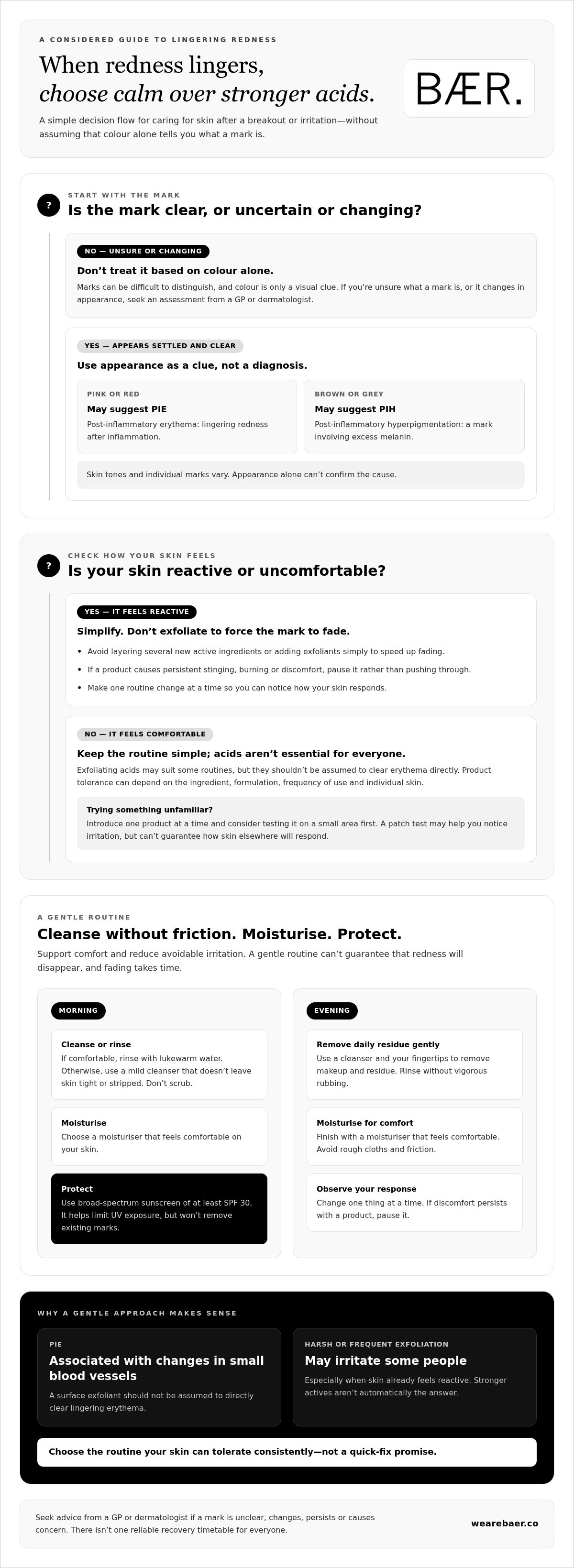
How to Adjust Your Routine and Know When to Seek Advice
If redness is lingering, resist the urge to overhaul your skincare all at once. A measured sequence makes it easier to see what feels comfortable and when a concern needs more than home care: simplify your routine, protect your skin, observe changes, then reintroduce products cautiously if your skin feels settled.
- Simplify: pause optional products that may be irritating and keep to gentle cleansing and moisturising.
- Protect: continue daily sun protection and avoid picking or rubbing the area.
- Observe: make a brief note of relevant changes or possible triggers, such as a new product or recurring irritation.
- Reintroduce: add products back one at a time, only if your skin feels comfortable.
A simple note is enough. Record when you introduced a product and whether discomfort followed. There’s no need to inspect the area repeatedly or document every small fluctuation. This calm approach can help you make considered decisions about how to treat post inflammatory erythema without harsh acids, while recognising that skincare alone can’t establish what a mark is.
How to reintroduce products without overwhelming sensitive skin
Choose one new product and follow its directions rather than combining several unfamiliar formulas. A patch test may help you notice a reaction, but it can’t guarantee that the product won’t cause irritation elsewhere or later. If you develop sustained burning, swelling or worsening irritation, stop using it. If symptoms are severe or concerning, seek medical advice rather than trying another product.
When redness needs more than an at-home skincare routine
Arrange an assessment with a GP or dermatologist if the redness persists, worsens, is painful or remains unexplained. For stubborn vascular marks that do not respond to gentle at-home care, specialised clinics such as Couture Dermatology & Laser Beverly Hills can provide clinical evaluation and discuss professional options. Seek prompt medical advice for sudden swelling, significant pain or possible signs of infection, especially if the area is becoming increasingly tender, hot or unwell-looking. Changes that are difficult to interpret also deserve a professional opinion.
A skincare routine or cosmetic facial can offer a considered experience, but it can’t diagnose a skin condition or replace medical assessment. For a more personalised skincare experience, explore the MANTLE by BÆR Bespoke Facial. It’s a skincare service, not medical care for erythema; persistent or changing symptoms should be assessed by a qualified medical professional.
A Considered, Barrier-Conscious Approach to Post-Inflammatory Erythema
There’s no need to build an elaborate routine around a lingering mark. Consistency, daily sun protection and avoiding products that irritate can offer a calmer foundation while your skin settles. If you’re considering how to treat post inflammatory erythema without harsh acids, focus on what your skin tolerates rather than pursuing a quick fix or adding steps simply because redness remains.
What to look for in supportive skincare
Choose products that feel comfortable and fit naturally into the routine you already follow. Read the directions, introduce unfamiliar products one at a time and note any ingredients or formulas that have previously caused discomfort. A polished routine needn’t be complicated. MANTLE The Barrier Cream is one option in BÆR’s curated skincare edit, alongside a selection of modern beauty brands.
Give changes time. If a product repeatedly leaves your skin uncomfortable, pause it rather than layering more products in an attempt to counteract that feeling. Keep using sun protection you can tolerate as part of your daytime routine. These choices support a considered approach to skincare, but can’t guarantee that a mark will fade or establish what caused it. If redness is persistent, worsening or uncertain, seek medical advice.
Where a bespoke skincare experience fits
A curated selection can make it easier to explore skincare options with intention, without treating a product as a cure. The MANTLE by BÆR Bespoke Facial is a professional skincare experience centred on modern skincare. It isn’t medical aesthetics, a diagnosis or medical treatment for erythema. If you have a changing or concerning skin issue, a GP or dermatologist is the right person to assess it.
For lingering redness, a thoughtful routine is often less about adding more and more about choosing carefully, staying consistent and knowing when to seek advice. To discover considered skincare options, explore BÆR’s considered skincare edit.
Choose a Calmer Path for Lingering Redness
Post-inflammatory erythema can take time to fade, and it isn’t the same as darker post-inflammatory pigmentation. A gentle routine, daily sun protection and avoiding products that cause discomfort can support skin without making harsh acids a requirement. If a mark persists, worsens or remains uncertain, seek advice from a GP or dermatologist.
Understanding how to treat post inflammatory erythema without harsh acids starts with consistency, not a crowded routine. Choose products that feel comfortable, introduce changes gradually and remember that skincare can support comfort without guaranteeing that redness will disappear.
BÆR’s curated selection of premium skincare brands includes MANTLE, including MANTLE The Barrier Cream. The MANTLE by BÆR Bespoke Facial offers a professional skincare experience, not medical aesthetics, diagnosis or treatment for erythema. To discover considered skincare options, explore BÆR’s considered skincare edit.
Be patient with your skin and thoughtful with each change. A calm, consistent approach is a meaningful place to begin.
Frequently Asked Questions
Is post-inflammatory erythema the same as hyperpigmentation?
No. Post-inflammatory erythema usually describes red or pink marks left after inflammation, whilst post-inflammatory hyperpigmentation refers to darker marks. The difference isn’t always easy to judge by appearance alone, and marks can look different across skin tones. If a mark is changing, persistent or difficult to identify, speak with a GP or dermatologist rather than assuming it’s harmless pigmentation.
Can post-inflammatory erythema fade without acids?
Yes, it may improve over time without exfoliating acids, although the course varies between individuals and causes. If you’re considering how to treat post inflammatory erythema without harsh acids, a gentle routine can help you avoid adding unnecessary irritation. No cleanser or moisturiser can guarantee that marks will disappear. Choose skincare that feels comfortable, use sun protection, and seek medical advice if redness worsens, persists or comes with other concerning symptoms.
How do you treat post-inflammatory erythema naturally?
There’s no natural remedy proven to remove post-inflammatory erythema for everyone. Keep your routine simple: avoid picking or scrubbing, use a comfortable moisturiser and protect your skin from sun exposure. Be cautious with homemade treatments and essential oils, as these may irritate some people. If redness persists or you’re unsure what a mark is, discuss it with a GP or dermatologist instead of relying on a home remedy.
How long does post-inflammatory erythema take to fade?
There’s no reliable timeline that applies to everyone. How long redness remains can depend on its cause, your skin and whether irritation continues. Avoid products that repeatedly sting or worsen discomfort, and don’t judge progress by comparing your skin with someone else’s. If marks are worsening or remain a concern, ask a GP or dermatologist for advice tailored to your symptoms.
Should I stop using exfoliating acids if my skin is red?
If an exfoliating acid causes persistent stinging, burning or worsening redness, pause it and simplify your routine rather than adding more active products. Redness can have different causes, so stopping one product doesn’t establish a diagnosis. Follow product directions, and seek medical advice if symptoms are severe, persistent or unclear. If discomfort settles, reintroduce products cautiously, one at a time, only if your skin feels comfortable.
Does sunscreen help with post-inflammatory erythema?
Sunscreen helps protect exposed skin from ultraviolet (UV) radiation, which may affect the appearance of some post-inflammatory marks. Think of it as a protective step, not a treatment guaranteed to remove redness. Choose a broad-spectrum product that feels comfortable and follow its directions. If sunscreen or other skincare repeatedly causes irritation, pause the product and seek professional advice about your symptoms and what may suit your skin.
Can a moisturiser get rid of post-inflammatory erythema?
No moisturiser can be promised to remove post-inflammatory erythema. A comfortable moisturiser may support skin comfort and help with dryness, but it shouldn’t be treated as a medical intervention or cure for redness. Choose one that fits your routine and stop using it if it causes persistent discomfort. If redness is worsening, painful, persistent or difficult to distinguish from another condition, seek advice from a GP or dermatologist.