
What if the very products you have carefully curated for your ritual are suddenly the ones causing your complexion to recoil in protest? It is a frustrating paradox to experience a sharp stinging sensation from a trusted moisturiser or to find yourself battling unpredictable breakouts alongside persistent, rough dry patches. Recognising the subtle signs of a damaged skin barrier is the first step in moving away from the noise of a crowded market and towards genuine skin health. When the stratum corneum is compromised, the skin loses its ability to retain moisture and defend itself, leading to a cycle of irritation and persistent dullness.
We believe that a reactive complexion requires a calm, expert hand rather than a complex array of harsh actives. This guide will help you decode the specific SOS signals your skin is sending and provide a professional path to restoration. You will gain a clear understanding of your skin's protective layer and a definitive checklist to confirm if your barrier is truly damaged. We also present a minimalist recovery plan that prioritises high-performance results through a curated, evidence-first approach. By following this expert guidance, you can restore the integrity of your skin and reclaim a luminous, resilient glow.
Key Takeaways
- Identify the subtle and overt signs of a damaged skin barrier, from persistent dehydration to the sharp stinging sensation caused by previously safe products.
- Understand the fundamental "brick and mortar" structure of the stratum corneum and how a loss of essential lipids compromises your skin’s natural defence.
- Uncover the modern culprits behind chronic irritation, including the hidden dangers of over-exfoliation and the moisture-depleting effects of the UK climate.
- Master a professional restoration protocol that prioritises a minimalist "skin fast" to allow the epidermis the space it needs to heal.
- Discover how to curate a recovery routine using high-performance staples, such as MANTLE The Barrier Cream, to replenish and stabilise a reactive complexion.
Understanding the Skin Barrier: Your Body’s Invisible Shield
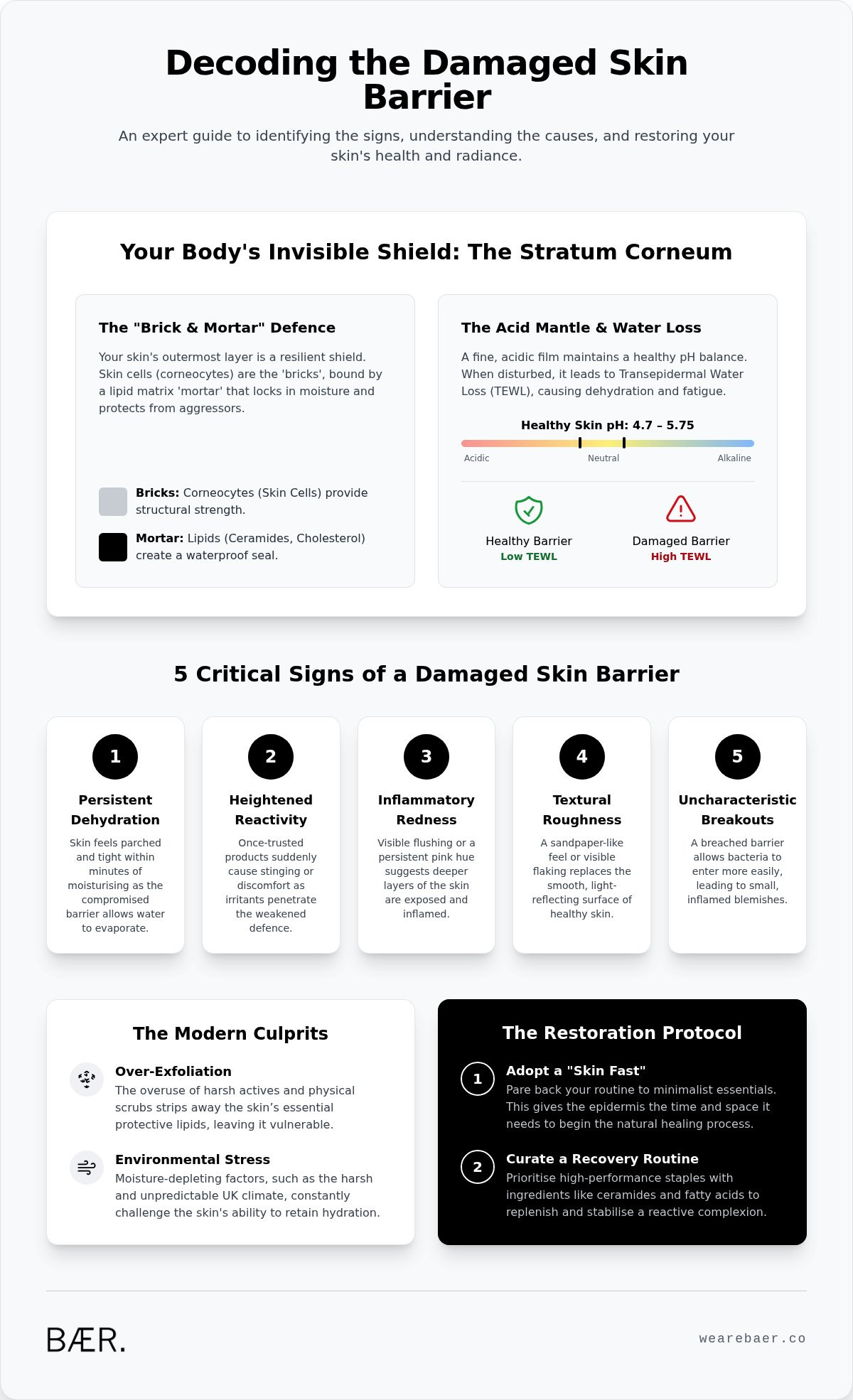
To identify the signs of a damaged skin barrier, one must first appreciate the architectural brilliance of the stratum corneum. This outermost layer of the epidermis serves as your body’s primary interface with the world. Professionals often describe this structure using a brick and mortar analogy. Your skin cells, known as corneocytes, act as the bricks that provide structural strength. The mortar is a complex matrix of lipids that binds these cells together into a cohesive, resilient shield. When this mortar is rich and intact, your skin remains supple, hydrated, and shielded from external aggressors.
Beyond this physical structure lies the acid mantle. This fine, slightly acidic film on the skin’s surface maintains a pH balance typically between 4.7 and 5.75. This acidity is essential for healthy enzyme activity and a balanced microbiome. When this delicate equilibrium is disturbed, the most immediate consequence is Transepidermal Water Loss (TEWL). This scientific measure tracks the rate at which water evaporates from the body into the atmosphere. Elevated TEWL is the silent architect of dehydration, causing the skin to feel tight and look fatigued long before visible irritation appears.
The Biological Function of Lipids and Ceramides
The efficacy of your skin’s protective mortar relies on a specific ratio of ceramides, cholesterol, and free fatty acids. These lipids work in harmony to create a waterproof seal that locks in vital moisture whilst simultaneously repelling environmental pollutants and microscopic irritants. Without this lipid-rich protection, the deeper layers of the epidermis are left vulnerable to inflammation and oxidative stress. The lipid bilayer is the essential foundation of skin health, ensuring that the internal environment remains stable regardless of external conditions.
Why a Healthy Barrier is Non-Negotiable for Radiance
The coveted "lit-from-within" glow is not merely a result of high-performance serums; it is the visual evidence of an intact barrier. When the surface is smooth and hydrated, it reflects light evenly across the face. Conversely, a compromised barrier creates an uneven texture that scatters light, resulting in a dull, greyish appearance. This is why any investment skincare UK ritual must prioritise protection as its first step. Even the most potent active ingredients cannot work effectively if they are applied to a broken surface. Instead of delivering transformative results, they often exacerbate the signs of a damaged skin barrier by causing further stinging and redness. True luxury in skincare begins with the quiet confidence of a strong, healthy shield.
5 Critical Signs of a Damaged Skin Barrier
Identifying the signs of a damaged skin barrier requires an attentive eye and a willingness to listen to the skin’s sensory feedback. It is the critical distinction between a temporary surface reaction and a systemic failure of the stratum corneum. When the protective seal is broken, your complexion no longer behaves with its usual resilience. Instead, it enters a state of perpetual defence. This manifest in several distinct ways that often overlap, creating a complex profile of irritation and instability.
- Persistent Dehydration: You may find yourself applying layers of rich creams, yet your skin feels parched and tight within minutes. This occurs because the "mortar" is missing, allowing water to evaporate freely.
- Heightened Reactivity: Products that were once staples in your ritual suddenly cause immediate discomfort. This increased sensitivity is a clear indicator that the barrier is no longer filtering out potential irritants.
- Inflammatory Redness: Visible flushing or a persistent pink hue, particularly after cleansing, suggests that the deeper layers of the epidermis are exposed to the environment.
- Textural Roughness: A sandpaper-like feel or visible flaking replaces the smooth, reflective surface of healthy skin. This lack of natural bounce is a direct result of depleted lipid levels.
- Uncharacteristic Breakouts: When the barrier is breached, bacteria enter more easily. This often leads to small, angry bumps or "maskne" in areas that are usually clear.
Distinguishing Stinging from Active "Tingle"
There is a fine line between the purposeful activity of a clinical treatment and the distress of a breached barrier. A healthy active response, often felt with high-performance Vitamin C or certain acids, is a fleeting, manageable warmth. In contrast, stinging during the application of a basic, bland moisturiser is the ultimate red flag. This sensation indicates an inflammatory cascade where substances reach nerve endings that should remain protected. To effectively repair and care for your skin barrier, you must learn to recognise these urgent sensory warnings as a plea for rest rather than a sign of efficacy.
The Paradox of Oily but Dehydrated Skin
Many individuals misinterpret a sudden surge in oiliness as a permanent shift in their skin type. In reality, this is frequently a survival mechanism. When the barrier cannot retain water, the skin overcompensates by producing excess sebum to try and seal the surface manually. This creates a frustrating paradox where the skin feels greasy to the touch yet looks flaky and fatigued underneath. Falling into the trap of over-cleansing to remove this oil only deepens the damage. At BÆR., we often guide our clients through this exact paradox, helping them to restore their natural equilibrium through curated, lipid-rich solutions.
The Modern Culprits: Why Your Barrier is Compromised
The failure of the stratum corneum is rarely the result of a single event. It is more often a cumulative response to modern habits and environmental pressures that overwhelm the skin’s natural resilience. Over-exfoliation remains the primary culprit. The widespread availability of potent Alpha Hydroxy Acids (AHAs) and Beta Hydroxy Acids (BHAs) has encouraged a culture of over-use. Whilst these ingredients offer transformative results when applied with precision, using them with excessive frequency often leads to the overt signs of a damaged skin barrier. Physical scrubs and high-frequency chemical peels strip the surface of its protective vigour, leaving the epidermis unable to regenerate its essential lipid seal.
Beyond chemical intervention, the method of cleansing plays a pivotal role in barrier integrity. Aggressive, high-pH foaming cleansers are frequently marketed for their "deep clean" capabilities. However, they often dissolve the very lipids that form your skin’s mortar. This disruption is further compounded by internal physiological factors. Elevated cortisol levels, triggered by chronic stress, actively inhibit the skin’s ability to self-repair. This ensures that minor irritations, which would usually resolve quickly, instead evolve into persistent states of inflammation and distress.
The Danger of "Skincare Maximalism"
The contemporary trend of complex, 10-step routines has introduced a phenomenon known as "active ingredient fatigue." Layering multiple high-strength serums, such as retinoids alongside various acids, creates a state of chronic inflammation. This maximalist approach often ignores the biological limits of the epidermis. We believe in a curated, high-performance approach that respects the skin’s natural rhythm. It is far more effective to utilise a few expertly formulated products than to overwhelm the complexion with a chaotic array of conflicting active ingredients that only serve to deepen the signs of a damaged skin barrier.
External Aggressors and the British Climate
The UK environment presents a unique set of challenges for skin health. In many regions, particularly across southern and eastern urban centres, hard water contains high concentrations of minerals that disrupt the skin’s natural pH balance. This is exacerbated by the phenomenon of "thermal shock." Moving between the biting cold of a British winter and the dry, intense heat of indoor central heating causes rapid moisture depletion. This cycle weakens the lipid seal and leaves the skin feeling parched and vulnerable. Furthermore, microscopic pollution particles in city environments contribute to oxidative stress, further accelerating the breakdown of the barrier’s defensive capabilities.
The Restoration Protocol: How to Heal Your Skin
Once you have identified the signs of a damaged skin barrier, the path to recovery requires a disciplined, methodical retreat. This is not the time for innovation or experimentation. Instead, it is a period for restoration. We recommend a "skin fast." This involves stripping your routine back to the absolute essentials for a period of fourteen to twenty-one days. Temporarily remove all chemical exfoliants, retinoids, and high-strength Vitamin C. By doing so, you allow the stratum corneum to focus its energy on repair rather than processing aggressive actives.
- Switch to a Gentle Cleanser: Utilise a non-foaming cream or oil-based cleanser to preserve the existing lipids.
- Prioritise Humectants: Apply hyaluronic acid to damp skin to draw moisture into the epidermis.
- Seal with Occlusives: Use a rich moisturiser to mimic the missing mortar and prevent water loss.
- Targeted Repair: Introduce ceramides and niacinamide to help rebuild the lipid bilayer.
- Mineral Protection: Finish with a mineral-based SPF to shield the vulnerable surface from UV stress.
The cleansing step is critical. Aggressive surfactants often dissolve the very lipids your skin is trying to replenish. Following this, a layered approach to hydration is essential. Start with humectants to hydrate the cells, then immediately seal this with an occlusive layer. This "seal" acts as a temporary shield, preventing Transepidermal Water Loss whilst your natural barrier slowly regains its structural integrity.
The Role of CBD and Adaptogens in Repair
Modern barrier repair has been transformed by the inclusion of CBD and adaptogens. CBD interacts directly with the skin’s endocannabinoid system to soothe deep-seated redness and quieten the inflammatory cascade. MANTLE’s signature formulations utilise these high-performance ingredients to provide immediate relief to a distressed complexion. Adaptogens further support this process by helping the skin resist the environmental stressors that often exacerbate signs of a damaged skin barrier during the healing phase.
When to Seek a Professional Treatment
If you are ready to transition from reactivity to resilience, explore our curated restoration essentials.
Curating Your Recovery: High-Performance Solutions at BÆR.
Recovering from the visible and sensory signs of a damaged skin barrier requires more than just generic hydration; it demands a precise selection of ingredients that mirror the skin's natural composition. At BÆR., we act as a knowledgeable guide in a crowded market, vetting the landscape to present only the most efficacious solutions. Our focus remains steadfastly on skin health over medical aesthetics, prioritising long-term resilience and a refined, luminous finish. We believe that the path to restoration shouldn't be aggressive. Instead, it should be a methodical return to balance through the use of professional-grade, lipid-rich formulations.
We have identified MANTLE as the gold standard for those seeking to stabilise a reactive complexion. This Swedish innovator has redefined barrier health by combining high-performance biotech with soothing botanicals. By focusing on the biological needs of the epidermis rather than chasing temporary trends, MANTLE ensures that your recovery is both swift and sustainable. For those who find their skin is in a state of perpetual distress, a bespoke consultation at our centre provides the clarity needed to move forward with confidence.
A Focus on MANTLE The Barrier Cream
The MANTLE The Barrier Cream UK is a high-performance moisturiser that has earned its status as a cult favourite amongst beauty editors and skin experts alike. It features a sophisticated, cloud-like texture that provides immediate comfort without any sense of heaviness. This lipid-rich formula is specifically designed to counteract the harsh effects of the British climate, replenishing the ceramides and fatty acids that form your skin's vital mortar. It is a masterclass in efficacy. It doesn't just sit on the surface; it actively works to stabilise the stratum corneum, making it an essential staple for anyone currently experiencing the signs of a damaged skin barrier.
The BÆR. Philosophy: Modern Beauty, Expertly Curated
Explore our curated collection of barrier-repair essentials.
Reclaiming Your Skin’s Natural Resilience
The journey from a reactive, compromised complexion to one of enduring health begins with a single, mindful shift in perspective. By learning to identify the signs of a damaged skin barrier, you have already moved beyond the noise of a crowded market and towards a more intentional, evidence-first ritual. We have explored the importance of respecting the stratum corneum’s delicate architecture and the necessity of stripping back to high-performance essentials when distress signals arise. True skin health isn't about the quantity of products on your vanity, but the efficacy and quality of the ingredients within them.
At BÆR., we remain dedicated curators of high-performance niche brands that prioritise skin health and longevity over temporary trends. Our focus is consistently placed on the transformative power of quality, ensuring your complexion receives the precise lipid support it craves. Ready to restore your glow? Shop the Barrier Repair Edit at BÆR. and discover a curated selection of essentials expertly vetted for their results. Your skin possesses an incredible capacity for recovery; it simply requires the right environment to flourish once more.
Frequently Asked Questions
How long does it take to repair a damaged skin barrier?
It generally takes between two to four weeks to see a significant improvement in barrier function. This timeline aligns with the skin's natural desquamation cycle, which typically lasts around twenty-eight days. During this period, it's essential to remain consistent with a minimalist routine and avoid the temptation to reintroduce aggressive actives too early. Patience is a fundamental component of professional skin restoration.
Can I use Vitamin C if my skin barrier is damaged?
It is best to pause the use of Vitamin C until your skin has fully recovered. High concentrations of L-ascorbic acid can be highly irritating to a compromised surface. These potent actives often exacerbate the signs of a damaged skin barrier, leading to increased redness and a sharp stinging sensation. Once the stratum corneum is resilient again, you can slowly reintroduce these antioxidants into your ritual.
Will a damaged skin barrier cause acne?
A compromised barrier frequently results in uncharacteristic breakouts and persistent inflammation. When the protective seal is breached, acne-causing bacteria can penetrate the epidermis more easily. This vulnerability, combined with the skin’s overproduction of sebum to compensate for water loss, creates an environment where "maskne" and small, angry bumps flourish. Restoring the lipid bilayer is often the most effective way to clear these specific types of breakouts.
Is hyaluronic acid good for a compromised barrier?
Hyaluronic acid is an excellent humectant for providing deep hydration to parched cells. However, it must always be applied to damp skin and immediately followed by a rich occlusive, such as MANTLE The Barrier Cream. Without this protective seal, the humectant can actually draw moisture out of the deeper layers of the epidermis, potentially worsening dehydration in a compromised environment. It is a tool for hydration, not a standalone repair solution.
What is the best cleanser for a damaged skin barrier?
The most effective choice is a gentle, non-foaming cream or oil-based cleanser. These sophisticated formulations are designed to lift away environmental pollutants and debris without stripping the essential lipids that constitute your skin's mortar. Avoiding traditional soaps and high-pH foaming agents is vital for maintaining the acid mantle's integrity. A professional-grade cleanser should leave your complexion feeling soft and calm rather than tight or stripped.
Can I wear makeup whilst my skin barrier is healing?
You can wear makeup, but it is wise to opt for breathable, mineral-based products during the healing phase. Heavy, silicone-rich foundations can sometimes trap heat and bacteria against a vulnerable surface, potentially slowing the repair process. If you don't need full coverage, consider a lighter alternative. Ensure you are double-cleansing with an oil-based formula in the evening to remove every trace of product without causing further mechanical irritation to the epidermis.
How often should I use a barrier repair cream?
You should apply a dedicated repair cream twice daily as the final step in your morning and evening rituals. This consistent application provides a continuous protective shield that mimics the function of a healthy barrier. During the day, this layer defends against environmental aggressors; at night, it supports the skin’s natural regenerative processes. Regular use is key to stabilising the complexion and preventing further Transepidermal Water Loss.
Does hard water damage the skin barrier?
Hard water is a significant environmental stressor that can disrupt the skin’s delicate pH balance. The high concentration of minerals, such as calcium and magnesium, reacts with cleansers to form a residue that can clog pores and strip away natural oils. This often results in the "tight" feeling and persistent dryness common in many UK regions. Utilising a pH-balanced toner after cleansing can help neutralise these effects and restore the acid mantle.