
The instinctive response to sudden dullness is often a stronger exfoliating acid, yet aggressive resurfacing actively works against delicate, hormonal skin. When oestrogen drops, natural lipid production plummets and moisture escapes rapidly, leaving the skin's surface fragile and exposed. Adopting a deliberate barrier boosting skincare routine for menopausal skin changes is no longer merely an option; it is the vital foundation required to cultivate lasting comfort and true cellular resilience.
If previously tolerated active ingredients now trigger stinging redness, or if persistent tightness and flaky patches leave your complexion feeling uncomfortably parched, you are experiencing acute trans-epidermal water loss. You shouldn't have to tolerate chronic sensitivity. Discover how to fortify your lipid barrier and restore deep comfort against hormonal dryness with an expert-led routine tailored to this biological transition. Ahead, explore a clear morning and evening application blueprint, paired with refined, barrier-replenishing formulations to restore suppleness, ease, and enduring radiance in 2026.
Key Takeaways
- Understand how declining oestrogen depletes essential ceramides, transforming previously resilient complexions into moisture-deprived, highly reactive surfaces.
- Master an intentional barrier boosting skincare routine for menopausal skin changes, combining conditioning cleansers with deeply replenishing humectant layers.
- Discover why bio-identical physiological lipids structurally restore depleted intercellular mortar, whilst simple inert occlusives merely provide temporary surface coverage.
- Learn proactive strategies to defend your lipid matrix against the dehydrating evaporative effects of sudden hot flushes and nocturnal temperature spikes.
- Explore how pairing refined restorative topical formulas with professional bespoke facial treatments cultivates sustained barrier resilience and lasting comfort.
Understanding How Menopausal Hormonal Shifts Compromise the Skin Barrier
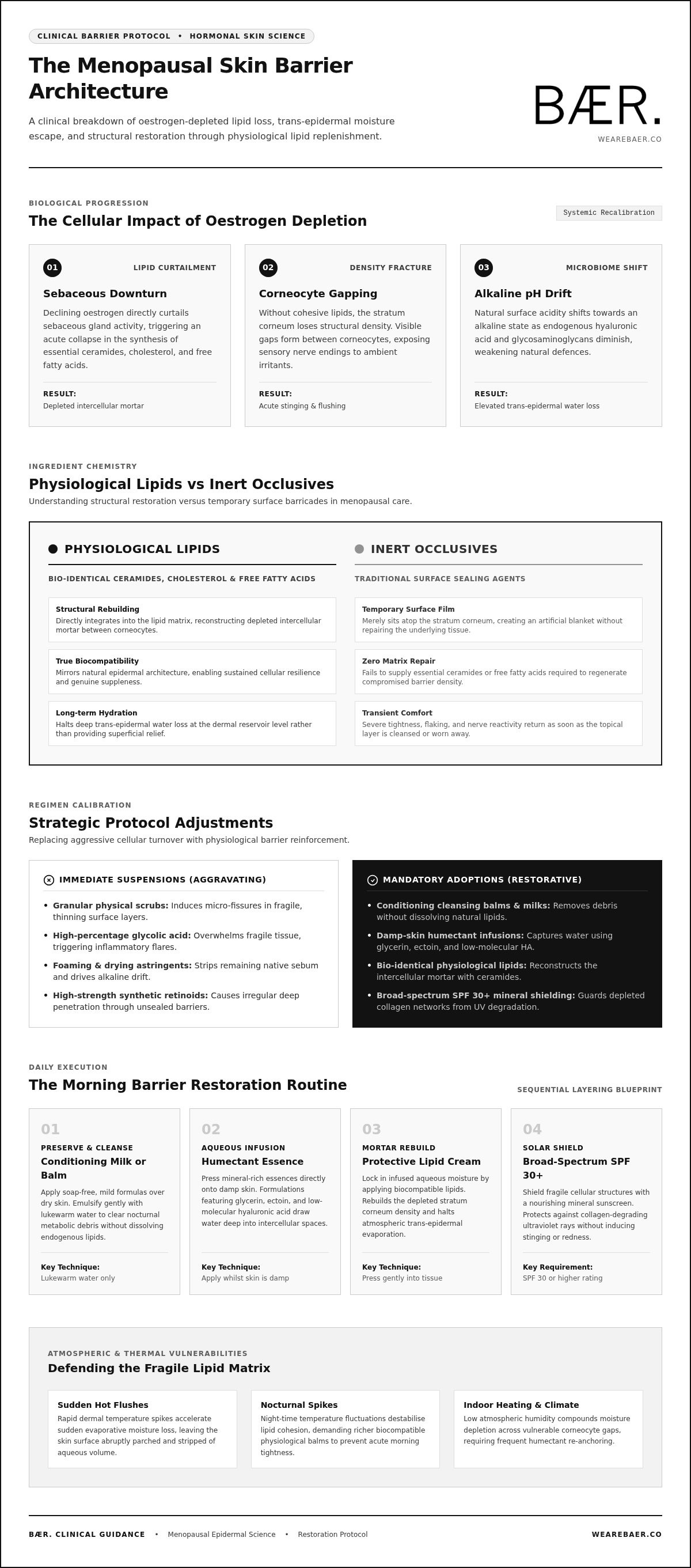
Menopause represents a profound biological recalibration rather than simple chronological ageing. Declining oestrogen alters skin mechanics at a cellular level, swiftly curtailing sebaceous gland activity and the synthesis of essential ceramides, cholesterol, and free fatty acids. Without these cohesive lipids, the stratum corneum (the skin barrier) loses its protective density. Gaps form between individual corneocytes, accelerating trans-epidermal water loss and leaving sensory nerve endings exposed to ambient irritants. This lipid depletion directly explains why sudden tightness, flushing, and stinging sensations occur during daily cleansing. Recognising the signs of a damaged skin barrier is vital before applying potent active treatments; committing to a targeted barrier boosting skincare routine for menopausal skin changes must come first.
The Interplay Between Oestrogen Loss and Epidermal Moisture
Oestrogen receptors directly govern the production of endogenous hyaluronic acid and glycosaminoglycans within dermal structures. As oestrogen tapers, dermal water reserves decline, sharply lowering natural moisturising factors across the surface. At the same time, surface pH drifts from its naturally acidic baseline toward a slightly alkaline state. This subtle shift disrupts the cutaneous microbiome and weakens natural defences, leaving the skin unusually susceptible to atmospheric stress, dry indoor heating, and rapid dehydration.
Why Traditional Anti-Ageing Protocols Often Aggravate Menopausal Sensitivities
Faced with sudden firmness loss or fine lines, the conventional instinct is to turn to aggressive resurfacing acids and high-strength synthetic retinoids. On menopausal skin, this approach frequently backfires. Without a resilient lipid seal, potent actives penetrate irregularly and excessively, igniting an inflammatory cascade that compounds redness and accelerates surface flaking.
Active cellular stimulation must pause until structural integrity recovers. Replenishment is the true prerequisite for youthful vitality:
- Cease harsh abrasion: Suspend granular scrubs, high-percentage glycolic acid, and drying astringents.
- Transition cleansing rituals: Replace foaming washes with conditioning, lipid-protective textures.
- Rebuild the intercellular matrix: Prioritise bio-identical lipids that mirror natural skin architecture.
Adopting an intentional barrier boosting skincare routine for menopausal skin changes shifts the focus from forceful turnover to deep lipid restoration, delivering sustained comfort and enduring radiance.
The Daily Barrier Boosting Skincare Routine: A Step-by-Step Blueprint
Restoring a compromised lipid architecture demands a precise sequence of replenishment. Rather than overwhelming fragile tissue with complex steps, an effective routine focuses on biocompatible layering: infusing aqueous moisture, rebuilding cellular lipids, and sealing against atmospheric evaporation. Implementing a deliberate barrier boosting skincare routine for menopausal skin changes allows depleted cells to recover their natural elasticity and tactile softness.
The Morning Ritual: Hydration, Defence, and Environmental Shielding
Daylight defence begins with preservation. Forgo traditional foaming cleansers, as dermatologists recommend mild, soap-free cleansing formulations that respect natural hydration reserves. Smooth a conditioning milk or creamy balm over dry skin, emulsifying gently with lukewarm water to remove overnight metabolic debris without dissolving vital lipids.
Immediately after rinsing, whilst your face remains lightly damp, press a mineral-rich humectant essence or serum into the skin. Ingredients like glycerin, ectoin, and low-molecular hyaluronic acid draw water deep into intercellular spaces, instantly easing tight sensations. Follow with a protective lipid cream to lock in that hydration, and finish every morning with broad-spectrum SPF 30 or higher. A nourishing mineral sunscreen shields depleted skin from collagen-degrading ultraviolet rays without inducing stinging or surface heat.
The Evening Recovery Ritual: Intensive Repair and Lipid Infusion
Nighttime offers the ideal window for deep biological repair. Because natural moisture loss peaks while you sleep, your evening regimen should focus on profound replenishment and soothing inflammation:
- Conditioning First Cleanse: Melt away mineral sunscreen and daily pollutants with an unfragranced lipid cleansing balm. Rinse with tepid water; hot water strips delicate surface oils.
- Calming Botanical Comfort: Apply a restorative, anti-inflammatory serum rich in centella asiatica, bisabolol, or colloidal oatmeal to quench vascular flushing and soothe daytime heat spikes.
- Restorative Matrix Seal: Generously press an intensive lipid-rich formulation such as MANTLE The Barrier Cream across your face, neck, and décolletage. Its dense, biocompatible texture blankets delicate skin, preventing water loss and strengthening structural cohesion overnight.
If you wish to explore meticulously curated, restorative formulations designed to transform depleted skin, you can discover a bespoke selection at BÆR., where high-performance independent beauty meets barrier-first expertise.
Consistency is key. Committing to this morning and evening sequence forms the ultimate barrier boosting skincare routine for menopausal skin changes, ensuring your complexion remains serene, thoroughly cushioned, and supple throughout seasonal fluctuations.
Evaluating Key Barrier Ingredients: Physiological Lipids vs. Inert Occlusives
Selecting formulas for hormonal dryness requires understanding how different emollients interact with depleted tissue. For decades, traditional advice leaned heavily on inert occlusives like petrolatum and heavy paraffin waxes. While these petroleum derivatives form a static clingfilm over the epidermis to halt water loss, they remain biologically inactive. They sit atop the skin. They cannot repair damaged cellular architecture. A truly effective barrier boosting skincare routine for menopausal skin changes relies instead on physiological lipids, bio-identical compounds that slip into the stratum corneum, seamlessly integrating into depleted intercellular spaces to rebuild lost defences from within.
The Role of Bio-Identical Ceramides, Fatty Acids, and Cholesterol
Your lipid matrix relies on a balanced trio: ceramides, cholesterol, and free fatty acids. Ceramides act as the structural mortar binding corneocytes together, retaining critical hydration. Plant-derived squalane and essential fatty acids nourish parched layers, improving elasticity. Cholesterol plays a crucial role in maintaining membrane fluidity; without it, skin turns rigid, taut, and prone to micro-fissuring. Replenishing these physiological lipids in balanced proportions repairs structural damage, restoring natural suppleness and elasticity.
Balancing Soothing Botanicals and Calming Actives
Because menopausal skin frequently exhibits neurosensory sensitivity, selecting the right base texture matters just as much as active repair. Heavy petrolatum traps heat, frequently aggravating vasomotor flushing episodes and leaving an uncomfortably suffocating residue. Elegant, physiological lipid emulsions melt effortlessly into the skin without smothering pores:
- Centella Asiatica: Calms underlying vascular inflammation, mitigating sudden redness and reinforcing weakened tissue walls.
- Bisabolol: Delivers bio-compatible anti-irritant support to soothe acute itching and tightness.
- Clean, Unscented Bases: Eliminating synthetic fragrances and volatile drying alcohols prevents neurosensory stinging on compromised surfaces.
Cultivating a barrier boosting skincare routine for menopausal skin changes around physiological lipids ensures long-term cellular resilience, transforming parched surfaces into calm, luminous skin.
Navigating Lifestyle Triggers, Hot Flushes, and Temperature Variations
Sudden vasomotor episodes represent far more than momentary internal heat. During an acute hot flush, rapid capillary dilation floods facial tissues with blood, creating thermal micro-stress across depleted cellular walls. As nocturnal perspiration rapidly evaporates from the surface, it leaches critical water-binding factors from the stratum corneum. This cycle of sudden overheating followed by accelerated evaporation leaves delicate facial zones tight, sensitive, and visibly unsettled. Integrating smart lifestyle adjustments into your barrier boosting skincare routine for menopausal skin changes preserves vital baseline stability.
Managing Sudden Vasomotor Flushing Without Stripping Surface Lipids
When intense heat arrives, instinct often drives people to splash freezing water or vigorously towel down their faces. Rubbing wet skin with coarse terrycloth shears fragile lipid seals and inflames hyper-reactive nerve endings. Instead, gently press a soft muslin or pure silk square against the skin to blot perspiration without friction.
For immediate relief, mist lightly with mineral-rich thermal water, then immediately press the droplets into the skin rather than letting them evaporate and dehydrate the surface. Avoid extreme ice compresses; severe cold shocks tissue into a rebound vasodilation that intensifies redness. At night, prioritise breathable, non-comedogenic lipid formulas that seal the barrier without trapping suffocating heat.
Environmental Adaptations for Central Heating and Cold Climates
External climate shifts present equal challenges to fragile tissue. The combination of brisk outdoor winds and desiccating indoor radiators accelerates moisture loss exponentially. Running an ambient ultrasonic humidifier in your bedroom counters the drying pull of central heating, maintaining ambient moisture levels that protect vulnerable complexions overnight.
Before facing cold air, shield exposed facial zones with a protective lipid emulsion to create a physical buffer against biting wind chill. Adjusting your daily rituals to accommodate thermal stress ensures your barrier remains resilient, supple, and composed throughout hormonal transitions. Shop the expertly curated barrier repair edits at BÆR. to discover comforting formulas designed to defend against environmental stress.
Elevating Your Barrier Care: Bespoke In-Studio Treatments and Curated Regimens
A disciplined topical regimen forms the backbone of skin recovery, yet pairing daily home care with targeted professional treatments unlocks deeper cellular renewal. Professional skin analysis pinpoints subtle lipid deficiencies and regional sensitivity patterns across delicate complexions. Skilled hands apply precise tactile stimulation, encouraging gentle lymphatic flow and easing underlying muscle tension without creating friction against fragile epidermal layers. Incorporating mindful facial massage at home, such as the rituals shared by Mono Skincare, can similarly support healthy microcirculation and release tension without pulling fragile tissue. Uniting in-studio care with a dedicated barrier boosting skincare routine for menopausal skin changes elevates basic maintenance into an immersive restorative ritual.
The Transformative Synergy of the MANTLE by BÆR Bespoke Facial
Specialised hands-on techniques dramatically enhance the skin's reception of lipid-dense formulations. During the MANTLE by BÆR Bespoke Facial, gentle contouring strokes and purposeful pressure techniques awaken sluggish circulation, allowing hero emollient formulas like MANTLE The Barrier Cream to cushion the epidermis completely. The serene environment lowers systemic stress, quieting cortisol surges that otherwise impair barrier regeneration and heighten skin reactivity. You leave the studio with an immediate sense of cutaneous calm and lasting structural suppleness.
Curating a Cohesive Luxury Skincare Wardrobe
Countering hormonal depletion does not require an overwhelming array of products. Cluttering your vanity with dozens of active bottles increases the risk of negative interactions and sensitising flare-ups. Discerning curation from independent beauty houses delivers superior ingredient purity, replacing mass-market fillers with potent, biocompatible actives that truly respect hormonal skin biology. Platforms such as aroota.co, for instance, champion an Ayurvedic approach designed to support women through every stage of life, emphasising gentle, botanical nourishment and systemic harmony.
- Select Multipurpose Formulations: Choose elegant restorative creams and nutrient-rich oils that replenish lost lipids while soothing systemic redness.
- Prioritise Purity: Focus on independent brands dedicated to uncompromised sourcing, biocompatible lipid ratios, and skin-comforting botanicals.
- Edit Thoughtfully: Streamline your collection down to core daily essentials that work in absolute harmony.
You can discover an expertly edited selection of formulations at BÆR., where independent luxury and skin-restorative performance converge seamlessly. Investing in refined essentials provides the consistency your complexion requires, ensuring your barrier boosting skincare routine for menopausal skin changes delivers sustained resilience, daily comfort, and enduring luminosity.
Cultivate Lasting Barrier Comfort and Radiance
Navigating midlife hormonal shifts shouldn't mean compromising on radiant, comfortable skin. By pivoting away from aggressive resurfacing and embracing bio-identical ceramides, essential fatty acids, and mindful lifestyle adaptations, you actively restore the stratum corneum's structural integrity. Committing to a targeted barrier boosting skincare routine for menopausal skin changes creates the calm, fortified foundation your complexion deserves.
True cutaneous transformation occurs when disciplined daily care meets professional ritual. From celebrated restorative formulas like MANTLE The Barrier Cream to the deeply soothing touch of the MANTLE by BÆR Bespoke Facial, embracing refined formulas ensures your skin remains supple, cushioned, and luminous through every season. Explore our curated edit of restorative formulations at BÆR. to discover exceptional independent beauty houses chosen for clinical efficacy and pure barrier-renewing performance.
Frequently Asked Questions
Why has my skin suddenly become dry and sensitive during menopause?
Sudden dryness occurs because declining oestrogen sharply curtails sebaceous lipid production and natural ceramide synthesis. Without these structural lipids, the stratum corneum cannot seal moisture effectively, leading to rapid trans-epidermal water loss. This depletion exposes delicate sensory nerve endings, making previously tolerated products feel prickly or reactive. Adopting an intentional barrier boosting skincare routine for menopausal skin changes directly counteracts this deficit by replenishing lost intercellular mortar.
Can I continue using retinol if my barrier feels irritated and tight?
You should pause retinol immediately if your skin shows tightness, stinging, or redness. Applying potent retinoids over a compromised lipid barrier accelerates inflammation, triggering severe flaking and heightened reactivity. Suspend all active cell stimulation until your barrier regains equilibrium, suppleness, and tactile comfort. Once your skin feels resilient and calm, reintroduce gentle vitamin A derivatives buffered over a nourishing barrier cream once or twice weekly.
What is the fundamental difference between dehydrated skin and a damaged barrier?
Dehydrated skin is a temporary condition marked by a lack of water within the epidermis, often resolved with topical humectants. A damaged barrier involves structural lipid loss where intercellular ceramides, fatty acids, and cholesterol are physically depleted. While dehydrated skin simply feels tight and looks dull, a damaged barrier stings upon application, reddens easily, and feels irritated. Repairing this state requires restorative, physiological lipid emulsions.
How long does it take to repair a depleted lipid barrier during perimenopause?
Initial soothing typically occurs within several days of eliminating harsh cleansers and applying biocompatible lipids. However, full stratum corneum structural recovery generally requires two to four weeks, reflecting natural epidermal turnover cycles. Because hormonal fluctuations persist throughout this transition, maintaining a consistent barrier boosting skincare routine for menopausal skin changes is essential for sustained comfort, preventing your complexion from slipping back into chronic sensitivity.
Will a rich barrier cream cause breakouts on menopausal skin?
A well-formulated physiological barrier cream should not trigger breakouts if it avoids heavy pore-clogging waxes. Modern restorative formulas rely on bio-compatible ceramides, plant-derived squalane, and essential fatty acids that absorb cleanly rather than suffocating pores. In fact, replenishing depleted lipids prevents the sebaceous imbalance that often causes reactionary menopausal blemish flare-ups. Look for elegant, non-comedogenic creams specifically engineered for hormonal skin recovery.
How does hot water during cleansing harm the menopausal skin barrier?
Hot water strips away the fragile sebum and intercellular lipids that mature skin already struggles to produce. This intense thermal stress disrupts lipid bilayer cohesion, immediately accelerating trans-epidermal water loss and leaving complexions feeling taut and raw. High temperatures also dilate fragile facial capillaries, prolonging persistent flushing episodes. Always cleanse your face using lukewarm or tepid water to protect surface defences and maintain vital hydration.