
More ingredients don’t necessarily mean more comfort during an eczema flare. When skin feels dry, itchy and easily unsettled, a simple, well-tolerated routine may be a gentler place to start. Understanding the calming skincare ingredients to look for during eczema flare ups can help you assess labels with greater confidence, without assuming that any cosmetic product will treat the condition.
It’s understandable to feel cautious about trying something new, especially when fragrance or unfamiliar actives might aggravate reactive skin. The aim is to support comfort and the skin barrier, not to layer on trend-led formulas or replace medical care.
This guide explains the different roles of moisturising ingredients, why fragrance-free labelling and cautious introductions matter, and how to test a new product. It also covers what to approach carefully and when persistent, worsening or concerning symptoms call for advice from a qualified health professional. A considered routine can begin with fewer, carefully chosen steps.
Key Takeaways
- Learn how to assess calming skincare ingredients to look for during eczema flare ups, including moisturising categories such as emollients and humectants.
- Understand how glycerin may help attract water to the skin, without assuming an ingredient will suit everyone or treat eczema.
- Know why fragrance, essential oils and active ingredients may deserve extra care during a flare, particularly in complex formulas.
- Use a measured approach: review your current routine, check labels and introduce one non-prescribed product at a time.
- Recognise when skincare choices may not be enough and symptoms warrant advice from a qualified health professional.
What happens to skin during an eczema flare, and why does ingredient choice matter?
A flare is a period when eczema symptoms become more noticeable or uncomfortable. Skin may feel dry, itchy, sore or irritated, and its appearance can vary from person to person. These signs can have other causes, so symptoms alone can’t confirm an eczema diagnosis. A qualified health professional can assess them and advise on care. Atopic dermatitis is one form of eczema, associated with changes in the skin barrier that can affect how well it holds moisture.
During a flare, skin may feel more reactive than usual. A cleanser or moisturiser that was previously comfortable might now sting or feel unpleasant. That doesn’t necessarily mean the ingredient is unsuitable for everyone: skin condition, the complete formula and individual triggers can all affect how a product feels. Responses differ, so there’s no single rule that applies to everyone.
Moisturising skincare can help hydrate skin and reduce moisture loss; it is not the same as medical treatment for eczema. Cosmetics may support comfort, but they don’t replace prescribed treatment or advice from your clinician.
Why can skin feel more reactive during a flare?
The skin barrier helps limit moisture loss and provides protection from external irritants. When it’s affected, skin can feel dry and less comfortable, and everyday products may be harder to tolerate. This is a general explanation, not a way to diagnose the cause of a rash. Eczema triggers and personal responses vary, so don’t assume that a product or ingredient will affect everyone in the same way.
What can a skincare ingredient realistically do?
Some skincare ingredients help attract or retain water, while others soften the skin or form a surface layer that slows moisture loss. These cosmetic effects may support comfort, but they don’t establish that a product treats eczema. The result depends on the whole formula, including its other ingredients and texture. An ingredient name alone can’t predict how it will feel on reactive skin.
That distinction matters when searching for calming skincare ingredients to look for during eczema flare ups. Think of skincare as one part of a considered routine, not a substitute for medical care. Follow your clinician’s treatment plan and product advice, and ask for guidance if you’re unsure whether a new cosmetic fits alongside prescribed care.
Which calming skincare ingredients may support dry, flare-prone skin?
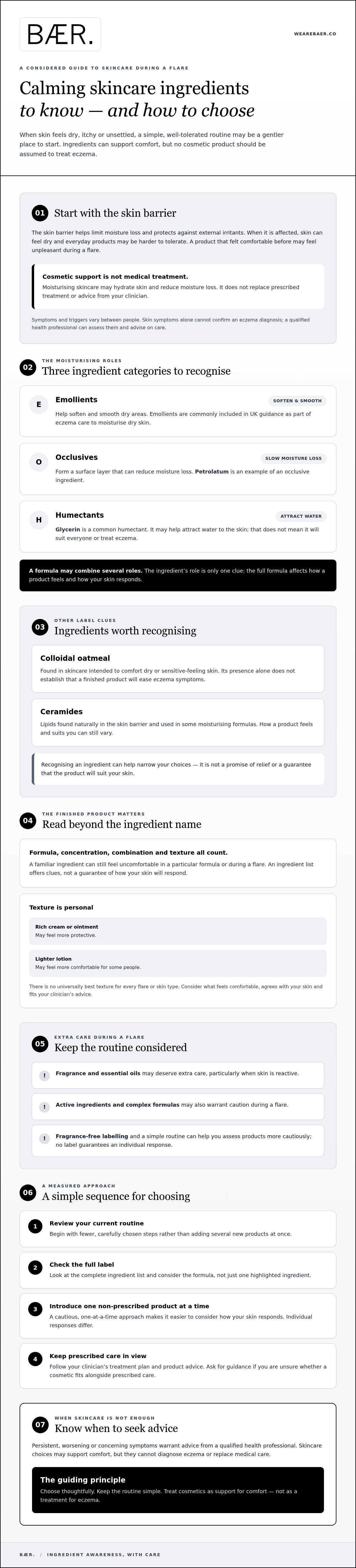
Ingredient labels can offer useful clues, but they’re a starting point, not a guarantee. UK guidance commonly includes emollients as part of eczema care because they moisturise dry skin. Some ingredients attract water, others soften skin or help limit moisture loss. These cosmetic roles may support comfort, but they don’t mean a product will treat eczema or suit everyone.
An ingredient’s role describes what it may do on its own; the finished formula determines how the product feels and how your skin responds. Concentration, texture and the combination of ingredients all matter. Even a familiar ingredient can feel uncomfortable in a particular formula or during a flare.
Emollients, occlusives and humectants: what is the difference?
These terms describe different, sometimes overlapping, ways ingredients can help moisturise skin. Emollients soften and smooth dry areas; occlusives form a surface layer that can reduce moisture loss; humectants attract water. Glycerin is a common humectant, whilst petrolatum is an example of an occlusive ingredient. A formula may combine several roles.
Texture matters in practice. A rich cream or ointment may feel more protective, whilst a lighter lotion may feel more comfortable for some people. There’s no universally best type for every flare or skin type. A texture you find pleasant may also be easier to use consistently, provided it agrees with your skin and fits your clinician’s advice.
Are colloidal oatmeal and ceramides worth looking for?
Colloidal oatmeal appears in skincare intended to comfort dry or sensitive-feeling skin. Ceramides are lipids found naturally in the skin barrier and are used in some moisturising formulas. Both are ingredients worth recognising, but their presence alone doesn’t establish that a finished product will ease eczema symptoms. Effects can vary by product, formulation and individual response.
Searching for calming skincare ingredients to look for during eczema flare ups is best approached as a way to narrow your choices, not as a promise of relief. Check the full ingredient list, consider how the texture feels, and introduce unfamiliar products cautiously. If symptoms persist or worsen, ask a qualified healthcare professional for advice rather than relying on cosmetic skincare alone.
If you’re comparing formulas, explore BÆR.’s curated skincare selection as part of your ingredient research. Check each product’s current label and don’t assume a particular product is suitable for eczema without verified information.
Which ingredients and product claims deserve extra caution during a flare?
A product described as “calming” isn’t automatically right for skin during a flare. Fragrance, essential oils and some active ingredients can bother certain people, though others may tolerate them. The response depends on the person, the skin’s current condition and the complete formula. Likewise, “natural”, “clean” and “hypoallergenic” on the front of a pack shouldn’t be treated as guarantees of personal suitability.
A shorter ingredient list may make it easier to identify what you’ve applied, but simplicity alone doesn’t prove a formula will be comfortable. A product containing several actives may introduce more variables, yet no single ingredient is automatically a problem for everyone. Let your own experience and professional advice guide your choices, rather than relying on broad rules or reassuring-sounding claims.
Should fragrance and essential oils be avoided?
Fragrance is worth checking if your skin is sensitive or has reacted to scented products before. Essential oils can also contribute fragrance and may not suit everyone. This doesn’t mean either will trigger symptoms for every person, or that discomfort confirms an allergy. If you’re unsure, review the full ingredient list rather than relying only on front-of-pack wording.
“Fragrance-free” and “unscented” aren’t interchangeable assurances of personal tolerance. A product described as unscented may have little noticeable smell, but that wording alone doesn’t tell you everything about its ingredients. Look for fragrance-related terms in the ingredient list, such as “parfum”, and check for named essential oils. If a label is unclear, ask the manufacturer or a healthcare professional for guidance.
What about exfoliating acids, retinoids and other actives?
Exfoliating acids and retinoids can feel uncomfortable on already irritated or compromised skin. That’s a reason for caution, not a rule that every active is harmful or must always be stopped. Don’t change prescribed medicines or treatment based on cosmetic advice. If symptoms are active, or you’re uncertain whether to pause or restart a non-prescribed active, ask a clinician.
Use ingredient literacy to make a more considered choice, not to diagnose a reaction yourself. The phrase calming skincare ingredients to look for during eczema flare ups can help frame your search, but no marketing term or single ingredient can promise a comfortable result. If a product causes discomfort, stop using it and seek professional advice if symptoms persist or worsen.
How can you choose and introduce skincare more cautiously during a flare?
A deliberate approach can make it easier to notice how your skin responds. Rather than changing several products at once, review what you already use, check the label of anything new and introduce one non-prescribed cosmetic at a time. Keep the rest of your routine familiar where possible, and pay attention to comfort over the following days.
- Review your current care. Keep following your clinician’s treatment plan, and note any products you already know your skin tolerates.
- Read the full label. Check the ingredients, fragrance details and any personal sensitivities, rather than relying on a front-of-pack claim.
- Introduce cautiously. Try one new non-prescribed product at a time, following its directions.
- Monitor your skin. Notice any new stinging, itching, redness or discomfort, and stop the new cosmetic if it causes a concerning reaction.
Testing a small amount on a limited area may help you notice an immediate response, but it can’t guarantee that the product won’t cause a reaction later or elsewhere. It also doesn’t diagnose an allergy. If you’re unsure about a product, especially alongside prescribed care, ask a pharmacist or clinician before using it.
How should you read a skincare label?
Look beyond words such as “calming”, “natural” or “hypoallergenic”. These claims don’t guarantee that a formula will suit your skin or resolve eczema. Check the complete ingredient list for fragrance and ingredients you’ve previously found uncomfortable. Clear, restrained claims are more useful than promises to cure eczema or rapidly make a flare disappear. If you’re uncertain whether an ingredient could affect prescribed care, check with a pharmacist or clinician.
For more context on changes that may affect the skin barrier, read this guide to signs of a damaged skin barrier. It can help you understand what to look out for, but it can’t confirm a diagnosis.
When should you stop a product or seek advice?
Stop using a newly introduced cosmetic if it causes concerning discomfort. Contact a qualified health professional if symptoms persist, worsen or leave you uncertain about what to do. NHS guidance advises seeking urgent help if eczema becomes rapidly worse, painful or blistered, develops crusting or leaks fluid or pus, or if you have a fever or feel unwell. These signs may need prompt assessment.
Use ingredient awareness to make your choices more considered, not to replace clinical advice. If you’re comparing options, explore BÆR.’s curated skincare selection and check each product’s current label; don’t assume a product is suitable for eczema without verified information.
How can a considered skincare edit help without replacing eczema care?
During a flare, a thoughtful edit can mean choosing fewer products and resisting the urge to experiment with every new “calming” launch. Keep your routine simple and comfortable, and let your skin’s response, the full ingredient list and your clinician’s advice guide any changes. Skincare can support everyday comfort, but a retailer’s product selection is not a medical endorsement or a substitute for eczema assessment and treatment.
What should readers expect from a curated skincare retailer?
A curated range can make it easier to explore different skincare options, but selection alone doesn’t confirm that a formula is suitable for eczema or for your individual skin. Check the current ingredient list and product information, particularly if your skin is actively flaring or you have known sensitivities. BÆR. offers curated skincare, not medical eczema assessment or treatment.
MANTLE The Barrier Cream is among BÆR.’s confirmed offerings. Check its current ingredient list before considering any ingredient-specific details, and don’t assume eczema suitability or a treatment benefit. The same care applies to any cosmetic: assess the complete formula rather than relying on a product name or broad claim.
How to assess calming skincare ingredients to look for during eczema flare ups
The phrase calming skincare ingredients to look for during eczema flare ups can help focus your research, but it can’t identify a guaranteed match. If your skin is uncomfortable, prioritise products you already know you tolerate and seek professional guidance before making changes that could affect your care.
What is a sensible next step if symptoms continue?
If symptoms persist, worsen or leave you unsure about what to do, contact your GP, pharmacist or a dermatology professional for advice. Continue prescribed treatment as directed. Don’t stop or alter it because of cosmetic skincare information; ask the clinician advising on your care if you have questions about using a product alongside it.
Thoughtful selection can support a measured routine, while clinical advice remains essential for ongoing eczema concerns. To browse the wider range as a source of product options, explore BÆR.’s curated skincare edit. Check individual formulas carefully, and view skincare as support for your routine rather than treatment for a condition.
Choose a more considered next step for your skincare
During a flare, a simple routine and careful product choices may be more helpful than experimenting with several new actives. Emollients and humectants have different moisturising roles, but no ingredient or cosmetic formula is guaranteed to suit every person. Check the complete label, introduce non-prescribed products cautiously and keep following your clinician’s treatment advice.
Understanding the calming skincare ingredients to look for during eczema flare ups can help you assess options with greater confidence, not replace medical guidance. Seek advice from a qualified health professional if symptoms persist, worsen or leave you unsure what to do.
BÆR. offers a curated selection of premium skincare brands, including MANTLE The Barrier Cream. Check its current ingredient list before drawing conclusions about its formula, and don’t assume it treats or is suitable for eczema.
Explore BÆR.’s considered skincare edit as you continue your product research. Take your time, trust your skin’s individual response and seek professional advice whenever you need it.
Frequently Asked Questions
Which ingredients are best to look for during an eczema flare?
There isn’t one ingredient that’s best for everyone, but moisturising formulas containing emollient ingredients may help ease dryness. Glycerin is a humectant that attracts water, whilst occlusives such as petrolatum help reduce moisture loss. Ceramides and colloidal oatmeal are also used in skincare, though a product’s effect depends on its complete formula and your individual tolerance. Check labels carefully, introduce products cautiously and follow your clinician’s treatment advice.
Can ceramides help eczema-prone skin feel more comfortable?
Ceramides are lipids found naturally in the skin barrier and are included in some moisturisers. A ceramide-containing formula may support moisturising, but the ingredient alone can’t promise comfort or eczema relief. Its effect depends on the whole product and your individual response. If you’re considering a new formula during a flare, check its full ingredient list and introduce it cautiously. Seek advice from a healthcare professional if symptoms persist or worsen.
Is fragrance-free skincare always better for eczema?
Fragrance-free products may be a useful choice if scented skincare has bothered your skin, but they aren’t automatically suitable for everyone. “Unscented” doesn’t necessarily tell you the same thing as “fragrance-free”, so check the complete ingredient list for parfum and named essential oils. Labels such as “natural” or “hypoallergenic” can’t guarantee personal tolerance. If you know a particular ingredient causes discomfort, avoid it and ask a pharmacist or clinician if you’re unsure.
Can I use moisturiser during an eczema flare?
Moisturiser is commonly part of eczema care, and UK guidance recommends emollients to help manage dry skin. Choose a formula that feels comfortable and follow any product advice from your clinician, particularly if you’re using prescribed treatments as well. A cosmetic moisturiser can support hydration, but it doesn’t replace medical treatment. If applying a product causes concerning discomfort, stop using the new cosmetic and seek advice if symptoms continue or worsen.
Should I avoid retinol and exfoliating acids when my eczema is active?
Retinol and exfoliating acids may feel uncomfortable on irritated skin, so it can be sensible to pause non-prescribed active products during a flare until you’ve checked what’s appropriate for you. This isn’t a rule that every active is harmful. Don’t stop or alter prescribed medicines without professional advice. If symptoms are active or you’re uncertain about restarting an ingredient, ask your GP, pharmacist or dermatology professional.
How should I test a new skincare product if I have eczema?
Introduce one non-prescribed product at a time, following its directions, and monitor how your skin feels. You can try a small amount on a limited area first, but this can’t guarantee that a reaction won’t develop later or elsewhere. Keep your other products and prescribed care unchanged where possible, so it’s easier to notice what may be affecting your skin. Stop the new cosmetic if it causes concerning discomfort.
When should I speak to a GP or pharmacist about an eczema flare?
Speak to a GP or pharmacist if symptoms persist, worsen or leave you uncertain about treatment or product use. Seek prompt medical advice if the skin becomes rapidly worse, painful or blistered, develops crusting, or leaks fluid or pus. NHS guidance also advises urgent help if you have a fever or feel unwell. Don’t stop prescribed treatment because of cosmetic skincare advice; contact your clinician if you have concerns about your care.