
What if the very actives you trusted to perfect your complexion are the ones currently compromising its health? It's a common paradox in modern skincare. You seek a luminous glow but find yourself with skin that stings at the mere touch of a basic moisturiser. If you're wondering how to repair damaged skin barrier from over exfoliating, you're certainly not alone. That persistent redness and the unsettling feeling of your skin "leaking" moisture are clear signals that your architectural integrity has been breached.
We understand the frustration of a routine that feels like it's working against you. This guide promises to help you master the sophisticated art of rehabilitating your complexion through a curated, high-performance approach. We'll explore the precise physiological lipid ratios your skin craves. We'll also identify which products to pause and which high-performance ingredients actually work. You'll gain a streamlined, expert-vetted recovery routine designed to restore your skin to a state of calm, resilient luxury.
Key Takeaways
- Understand the "brick and mortar" architecture of your epidermis and why immediate cessation of all exfoliating acids is the essential first step in recovery.
- Discover how to repair damaged skin barrier from over exfoliating by prioritising a "Golden Ratio" of ceramides, cholesterol, and fatty acids rather than relying on simple humectants.
- Learn to identify high-performance repair agents such as Panthenol and Squalane that provide cellular protection without the irritation of mass-market alternatives.
- Implement a methodical seven-day emergency protocol that replaces foaming surfactants with lipid-replenishing cleansers to halt transepidermal water loss.
- Recognise when your complexion requires professional intervention, such as a MANTLE by BÆR Bespoke Facial, to reduce deep-seated inflammation and accelerate cellular turnover.
Understanding the "Acid Trip": What Happens When You Over-Exfoliate
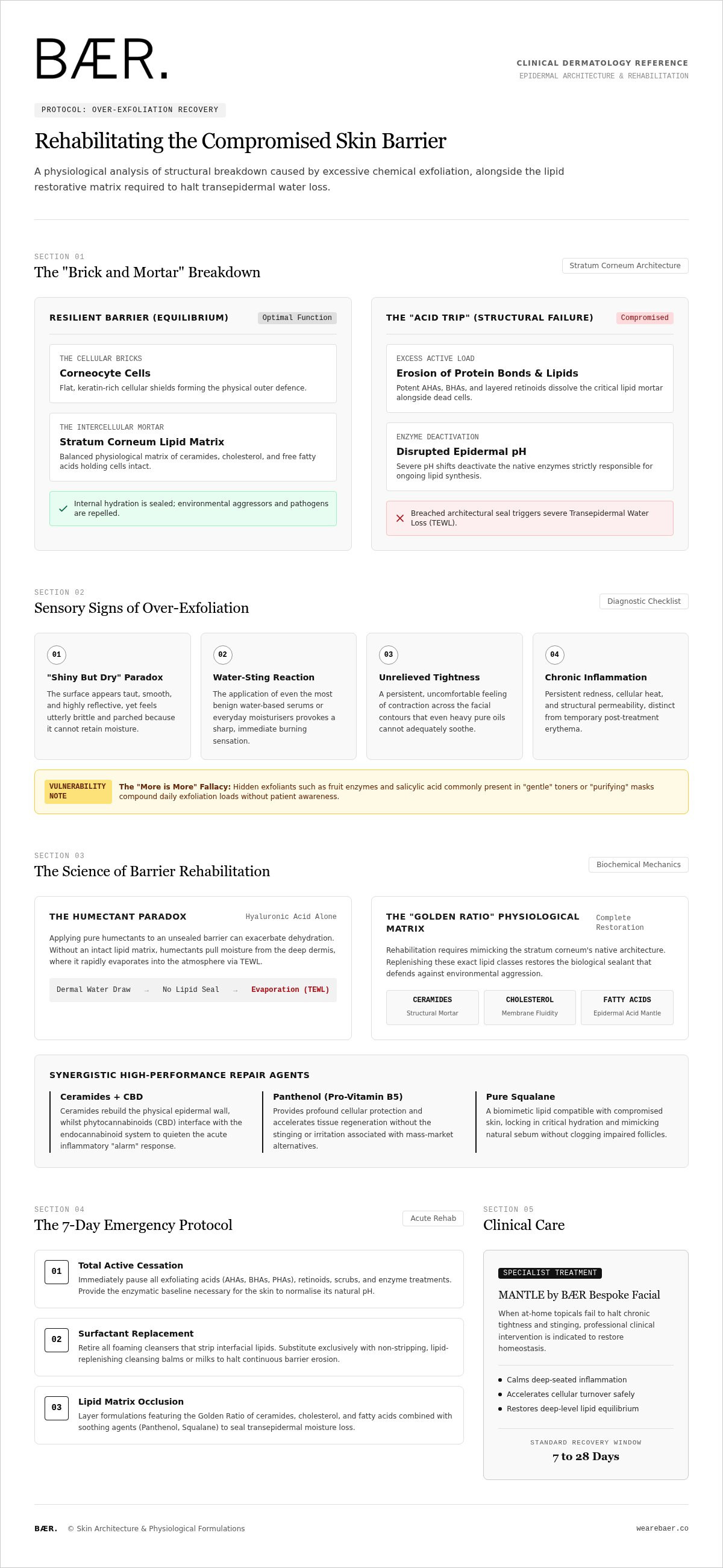
Imagine your skin as a finely tuned architectural marvel. The outermost layer, or stratum corneum, functions as a protective shield that preserves your internal hydration. Experts often describe this as a "brick and mortar" structure. Your skin cells act as the bricks, whilst a rich stratum corneum lipid matrix of ceramides, cholesterol, and fatty acids serves as the essential mortar. When you apply potent chemical exfoliants like AHAs or BHAs, they're designed to dissolve the protein bonds between these cells. However, excessive use doesn't just remove dead skin. It erodes the very mortar holding your complexion together.
This disruption leads to what we call an "acid trip." It's a state where the skin's natural pH is thrown into chaos, deactivating the enzymes responsible for lipid synthesis. Learning how to repair damaged skin barrier from over exfoliating starts with recognising that you haven't just caused surface-level irritation. You've compromised the biological barrier that prevents transepidermal water loss. There's a distinct difference between the temporary pinkness of a successful treatment and a chronic compromised state. The latter is a structural failure that requires a methodical, quiet approach to rehabilitation.
The Sensory Signs of a Damaged Skin Barrier
A compromised barrier communicates through distinct discomfort. You might notice a peculiar "shiny but dry" appearance. The skin looks taut and reflective; yet it feels parched and brittle to the touch. This paradox occurs because the surface is stripped smooth, but it cannot retain water. Applying even the most basic water-based serum might suddenly cause a sharp, burning sensation. If you're experiencing a persistent "tight" feeling that even heavy facial oils won't soothe, you're likely seeing the signs of a damaged skin barrier. This isn't just sensitivity. It's a plea for structural support.
Why Modern Routines Lead to Over-Exfoliation
Skincare culture often prizes intensity over integrity. We're frequently told that "more is more," leading many to layer multiple active-heavy products without considering their cumulative impact. A brightening cleanser, a resurfacing toner, and a nightly retinoid might seem like a comprehensive routine. In reality, they create a relentless assault on the skin's defences. Hidden exfoliants are particularly deceptive. Many "gentle" toners or "purifying" masks contain salicylic acid or fruit enzymes that add to the daily exfoliation load. True luxury in skincare isn't found in the strength of the acid, but in the resilience of the result.
The Lipid Science: Why Your Skin Needs More Than Just Moisture
Moisture isn't enough. When you're researching how to repair damaged skin barrier from over exfoliating, it's tempting to reach for the nearest hyaluronic acid serum. However, applying pure humectants to a compromised barrier can actually worsen dryness. Without a functional lipid seal, these ingredients pull water from the deeper dermis only for it to evaporate into the air. This process, known as transepidermal water loss, leaves the skin more parched and vulnerable than before.
True rehabilitation relies on restoring the physiological "Golden Ratio" of lipids. This specific matrix, consisting of ceramides, cholesterol, and free fatty acids, mimics the skin's natural composition. As noted in Cleveland Clinic's guide to repairing a damaged skin barrier, identifying these physiological fallout signs is the first step toward recovery. By replenishing these specific fats, you aren't just hydrating; you're rebuilding the biological sealant that shields your complexion from environmental aggression.
Ceramides vs. CBD: A Synergistic Approach
Ceramides provide the essential structural "mortar" needed to rebuild the epidermal wall. Yet, structural repair is only half the solution. A damaged barrier is often in a state of chronic inflammation, manifesting as persistent redness, stinging, and heat. This is where phytocannabinoids, specifically CBD, offer a transformative benefit. CBD interacts with the skin's endocannabinoid system to soothe the "alarm" response, allowing the ceramides to work more effectively on a calm canvas. For those seeking this specific synergy, MANTLE skincare UK has pioneered formulations that combine high-performance lipids with premium CBD to calm and reconstruct simultaneously.
The Importance of Molecular Weight in Repair
Effective barrier repair requires more than just surface-level occlusion. Traditional mass-market occlusives often rely on heavy petrolatum which, whilst effective at stopping water loss, can feel suffocating and lack the ability to truly integrate with the skin. High-performance niche brands prioritise biomimetic ingredients with specific molecular weights. These sophisticated formulations are designed to be recognised and absorbed by the skin, moving into the intercellular spaces to repair from within. By utilising skin-identical squalane and refined botanical lipids, luxury products achieve maximum protection whilst maintaining a refined, breathable finish. If your current routine feels inadequate, exploring a curated selection of barrier-restoring essentials can help you find the precision your complexion requires.
The 7-Day Emergency Recovery Protocol
The path to recovery begins with a strategic retreat. Learning how to repair damaged skin barrier from over exfoliating requires a disciplined pause on all "active" interventions. This means an immediate cessation of retinoids, Vitamin C, and any remaining exfoliating acids. Your goal is to shift from a state of aggression to one of deep, restorative nurture. During this acute phase, your skin needs quietude and structural support rather than stimulation.
A non-foaming, lipid-replenishing cleanser is your most vital tool during this time. Traditional foaming agents can strip the few remaining lipids you have left, further compromising the epidermis. Instead, adopt the "Damp Skin" rule. Apply your reparative layers to slightly moist skin. This simple technique locks in hydration more effectively than applying products to a dry surface. Whilst popular online trends often suggest "slugging" with heavy petrolatum, this can trap heat and bacteria in sensitive, reactive skin. A sophisticated approach relies on biomimetic ingredients that breathe whilst they protect.
Sun protection remains a non-negotiable shield. UV rays are primary barrier aggressors, and a compromised epidermis is uniquely vulnerable to solar damage. Opt for a mineral-based formula that sits comfortably on the surface without causing further heat. This creates an artificial barrier, allowing the biological one underneath the space it needs to mend without external interference.
Phase 1: The Cooling Period (Days 1-3)
The first three days are dedicated to reducing heat and calming the "alarm" response of the skin. Friction is the enemy of a compromised barrier. Choose a cream-to-oil cleanser that glides across the skin, dissolving impurities without the need for vigorous rubbing. A gentle, alcohol-free mist can help rebalance your skin's pH whilst providing a cooling sensation that alleviates the "tight" feeling typical of this stage. Avoid cotton pads; use your fingertips to press products in with a feather-light touch.
Phase 2: The Rebuilding Period (Days 4-7)
Once the initial heat has subsided, you can begin the architectural work of rebuilding. This is the ideal time to introduce MANTLE The Barrier Cream. Its high-performance lipid profile and soothing CBD work to reconstruct the stratum corneum with precision. To seal these reparative layers, apply a few drops of a refined facial oil, such as those from Raaw Alchemy. These oils provide a breathable, protective veil that mimics your natural sebum. Watch for the return of the "bounce"—that resilient, elastic quality that signals your barrier is once again functioning as a formidable shield.
Comparing Repair Ingredients: What Actually Works?
Selecting the right ingredients is the difference between immediate relief and prolonged irritation. When you are navigating how to repair damaged skin barrier from over exfoliating, your focus must shift from resurfacing to replenishment. Not all "soothing" ingredients are created equal. Some provide a temporary film, whilst others actively stimulate the biological repair mechanisms within your cells. True rehabilitation requires a blend of humectants that draw moisture in and emollients that seal it effectively.
Panthenol, or Pro-Vitamin B5, is a cornerstone of barrier rehabilitation. It functions as both a humectant and an anti-inflammatory agent, drawing moisture into the epidermis whilst calming the "stinging" sensation typical of over-exfoliated skin. Squalane is another essential inclusion. As a skin-identical emollient, it mimics the natural lipids in your sebum, providing a weightless veil of protection that never feels suffocating. For structural support, low-percentage Niacinamide (around 2 to 5 per cent) can be beneficial. It encourages the skin to produce its own ceramides, though caution is required; higher concentrations can often prove too stimulating for a compromised surface.
The Problem with Essential Oils in Barrier Repair
The "Clean Beauty" movement has popularised the use of plant-derived ingredients, but "natural" does not always equate to "safe" for a broken barrier. Volatile essential oils, such as lavender, peppermint, or citrus, are common sensitisers. On healthy skin, they may offer a pleasant sensory experience. On a compromised barrier, they act as irritants that can trigger contact dermatitis. We prioritise therapeutic botanical extracts. These are ingredients that have been refined to remove volatile components whilst retaining their healing properties. This ensures your skin receives the botanical benefit without the risk of an inflammatory flare-up.
Niche vs. Mass Market: Is Premium Worth It?
The distinction between niche luxury and mass-market skincare lies in the purity of the formulation. High-performance brands like Danessa Myricks or Monday Muse avoid the "cheap" fillers, such as mineral oil or paraffin, that often dominate entry-level products. These fillers can sit heavily on the skin, trapping heat and potentially causing congestion. In contrast, luxury curation focuses on high-performance actives that the skin recognises and absorbs. Because these formulas are more concentrated and bioavailable, you often require a significantly smaller amount of product to achieve superior results. To discover a more refined approach to your recovery, explore our curated collection of high-performance barrier essentials.
Professional Intervention: When to Seek a Bespoke Facial
Whilst home care forms the baseline of your recovery, certain levels of epidermal distress require the discerning eye of a specialist. A professional assessment at BÆR. can identify the subtle distinctions between surface-level irritation and deep structural damage that might lead to permanent sensitivity. Expert intervention ensures your rehabilitation is precise, avoiding the common pitfalls of self-treatment where layering even "soothing" products can sometimes overwhelm a truly compromised surface.
Professional treatments provide a level of lipid infusion that home care cannot always replicate. By utilising specialised techniques, an expert can drive reparative ingredients into the skin's layers whilst physically reducing inflammation. This is frequently achieved through professional-grade lymphatic drainage, which encourages the removal of metabolic waste and alleviates the heat associated with a compromised state. It marks the transition from urgent repair to true skin optimisation.
The MANTLE by BÆR. Bespoke Facial
The MANTLE by BÆR. Bespoke Facial is an immersive sanctuary for reactive complexions. It isn't a standard treatment; it's meticulously tailored to the specific level of over-exfoliation your skin is enduring. We utilise high-performance tools and chilled applicators to tranquillise the skin's inflammatory response and calm the nervous system. This treatment prioritises the delivery of concentrated CBD and biomimetic lipids, ensuring your barrier is reconstructed in a controlled, luxurious environment.
Long-Term Barrier Maintenance
Once your skin has regained its resilience, the focus shifts to a sustainable maintenance programme. The goal is to avoid a relapse by adopting a "Barrier-First" philosophy, a core tenet of our luxury beauty store. When you eventually choose to reintroduce acids, do so with extreme caution. Start with a single application once a week, monitoring closely for any return of the reflective, parched texture discussed earlier.
Curating a future-proof routine involves selecting niche brands that value integrity over intensity. High-performance offerings from Monday Muse or Raaw Alchemy provide the efficacy you desire without the aggressive fillers found in mass-market alternatives. Understanding how to repair damaged skin barrier from over exfoliating is a vital skill, but the ultimate success lies in building a routine that respects the biological limits of your skin whilst delivering transformative results.
Reclaiming Your Complexion's Resilience
Restoring a compromised barrier is a journey of patience and clinical precision. You've discovered that the "acid trip" of over-exfoliation requires an immediate pause on harsh actives and a dedicated shift toward lipid-dense restoration. By prioritising the "Golden Ratio" of ceramides, cholesterol, and fatty acids, you provide the structural mortar your skin needs to heal. Whether you follow a disciplined home protocol or seek professional intervention like the MANTLE by BÆR. Bespoke Facial, the focus remains on calm, high-performance results.
Mastering how to repair damaged skin barrier from over exfoliating isn't about finding a single miracle product; it's about curating a routine that respects your skin's biological integrity. Ready to rehabilitate your routine? Discover the curated Barrier Repair Edit at BÆR. Our specialists have selected only the finest niche brands, including MANTLE and Monday Muse, to ensure your path to recovery is as luxurious as it is effective. Your skin possesses a remarkable ability to mend. With the right expert guidance and refined ingredients, you'll soon see the return of a healthy, resilient glow.
Frequently Asked Questions
How long does it take to repair a damaged skin barrier from over-exfoliating?
Initial functional recovery begins within 24 to 72 hours as your skin secretes preformed lamellar bodies to seal the immediate breach. However, achieving full architectural renewal of the stratum corneum requires a complete epidermal turnover cycle. For most adults, this process takes between 28 and 30 days. If you are learning how to repair damaged skin barrier from over exfoliating, patience is your most potent tool during this month-long biological mend.
Can I still use Vitamin C while repairing my skin barrier?
You should temporarily pause your Vitamin C applications during the acute recovery phase. Most potent serums are formulated with a low pH to ensure stability and penetration, which can cause significant stinging on a compromised surface. Whilst Vitamin C is vital for long-term radiance, its acidic nature can exacerbate existing inflammation. Wait until your skin no longer reacts to basic moisturisers before reintroducing this specific active into your morning routine.
Is "slugging" with petrolatum good for over-exfoliated skin?
Whilst "slugging" provides a heavy occlusive seal, it isn't always the most sophisticated choice for reactive complexions. Petrolatum can trap heat and bacteria, potentially triggering the "barrier breakouts" discussed earlier. A more refined approach involves using biomimetic lipids that integrate with your skin's natural structure. These high-performance formulas, available at BÆR., offer a breathable protective veil that encourages repair without the risk of congestion or overheating.
Will a damaged skin barrier cause acne or breakouts?
A compromised barrier frequently leads to persistent breakouts. When the "brick and mortar" structure is breached, the skin becomes more susceptible to bacterial infiltration and environmental pollutants. This triggers an inflammatory response that often manifests as small, red bumps or "sensitised acne." Restoring your lipid matrix is essential to calm this reaction and prevent the cycle of post-inflammatory hyperpigmentation that often follows barrier-related congestion.
What is the best moisturiser for a compromised skin barrier in the UK?
MANTLE The Barrier Cream is widely regarded as the gold standard for rehabilitation. It features a precise physiological ratio of ceramides, cholesterol, and fatty acids to reconstruct the epidermal wall. For those researching how to repair damaged skin barrier from over exfoliating, the MANTLE by BÆR. Bespoke Facial offers a professional-grade infusion of these lipids. This dual approach ensures your skin receives both daily structural support and professional calming.
How do I know if my skin barrier is finally healed?
Your barrier is healed when the sensory "red flags" have entirely vanished. You will notice that the "shiny but dry" reflective look has been replaced by a soft, natural luminosity. Most importantly, your skin will no longer sting or flush when you apply water-based serums or basic creams. Once your complexion feels resilient and "bouncy" for several consecutive days, you can carefully begin the transition from repair to optimisation.
Can I use a face oil instead of a moisturiser to fix my barrier?
A face oil should be used in conjunction with a moisturiser, not as a total replacement. Oils are excellent emollients that soften the skin and provide a protective seal, but they don't provide the humectants needed to draw moisture into the cells. To effectively mend the barrier, you must first apply a lipid-rich cream to hydrate and repair, then layer a refined oil to prevent water from "leaking" out.
What ingredients should I absolutely avoid when my skin is stinging?
Avoid all alpha-hydroxy acids (AHAs), beta-hydroxy acids (BHAs), and retinoids until your skin is fully resilient. These ingredients accelerate cellular turnover, which is counterproductive when your barrier is already thin and reactive. Additionally, steer clear of denatured alcohols and volatile essential oils, as these can act as potent sensitisers. Focusing on fragrance-free, high-performance lipids is the most direct way to soothe the stinging and accelerate the mending process.