
What if a fresher-looking complexion came from using less, not more? When skin appears flat despite a shelf of carefully chosen products, it’s tempting to add another active or reach for a stronger exfoliant. Yet a calm, consistent morning skincare routine for tired dull skin can be a gentler place to begin, especially if your complexion feels dry or easily irritated.
A few considered steps can help your skin feel comfortable and hydrated whilst preparing it for the day. You don’t need a crowded line-up: a gentle cleanse or rinse, moisturiser and daily sun protection can form a practical foundation, with choices tailored to your skin and routine.
This guide explains what each step is for, how to layer morning skincare and where exfoliation may fit without overwhelming your skin. You’ll also learn when a simpler approach makes sense, and when persistent or sudden changes in your complexion may warrant professional advice. Fresh-looking skin starts with care that feels considered, not complicated.
Key Takeaways
- Understand why tired-looking skin can have several influences, without treating dullness as a diagnosis.
- Build a simple morning skincare routine for tired dull skin, with clear roles for cleansing, moisturising and sun protection.
- Choose between prioritising hydration and adding exfoliation according to your skin’s needs and comfort.
- Use a measured troubleshooting approach when your complexion still looks tired, and recognise changes that may need professional advice.
- Discover why a consistent, considered routine can be more useful than a crowded shelf of products.
Why does tired, dull skin need a gentler morning routine?
“Dull” describes how skin looks, not a diagnosis or proof of one underlying cause. A complexion that seems flat or less luminous in the morning may reflect dryness, disrupted sleep, weather, daily habits or a recent change in skincare. These influences can overlap, so a crowded routine isn’t necessarily the answer. A morning skincare routine for tired dull skin is best approached as support for comfort and appearance, guided by general skin care principles, rather than as a way to treat every possible cause.
Set a gentle, realistic aim: skin that feels comfortable and looks hydrated, rather than an overnight transformation. Skincare can help care for the skin’s surface, but it can’t replace restorative sleep or resolve every factor that may affect your complexion. If your skin feels tight or sensitive, prioritise comfort before adding more steps.
What can make skin look tired or lacklustre in the morning?
When skin is dry or dehydrated, its surface may look less supple and light may appear less even across it. A night of disrupted sleep, a shift in weather or time spent in heated indoor air may also coincide with a less refreshed appearance. Daily habits and recent routine changes can play a part, too. These are possible influences, not a way to diagnose the cause or promise that a particular product will fix it.
When should a simple skincare routine take priority?
A comfortable skin barrier is a sensible foundation. If your skin is already unsettled, adding exfoliating or potent products may make it harder to judge what feels suitable. Keep your routine simple while you observe how your skin responds. If irritation continues, the appearance changes suddenly or a concern persists, seek suitable professional advice. Our guide to signs of a damaged skin barrier can help you recognise changes that may call for extra care.
A temporary lack of radiance may vary from one morning to another; persistent redness, discomfort or a sudden change deserves closer attention. In the meantime, favour consistency over intensity. A gentle start gives you a clearer sense of what your skin needs before you consider optional additions to your morning routine.
How to build a morning skincare routine for tired, dull skin
A useful routine doesn’t need to begin with a long list of products. For a morning skincare routine for tired dull skin, start with a few considered steps and let comfort guide what you keep. Harvard Health Publishing also outlines three simple steps for daily skincare, a reminder that consistency can matter more than complexity.
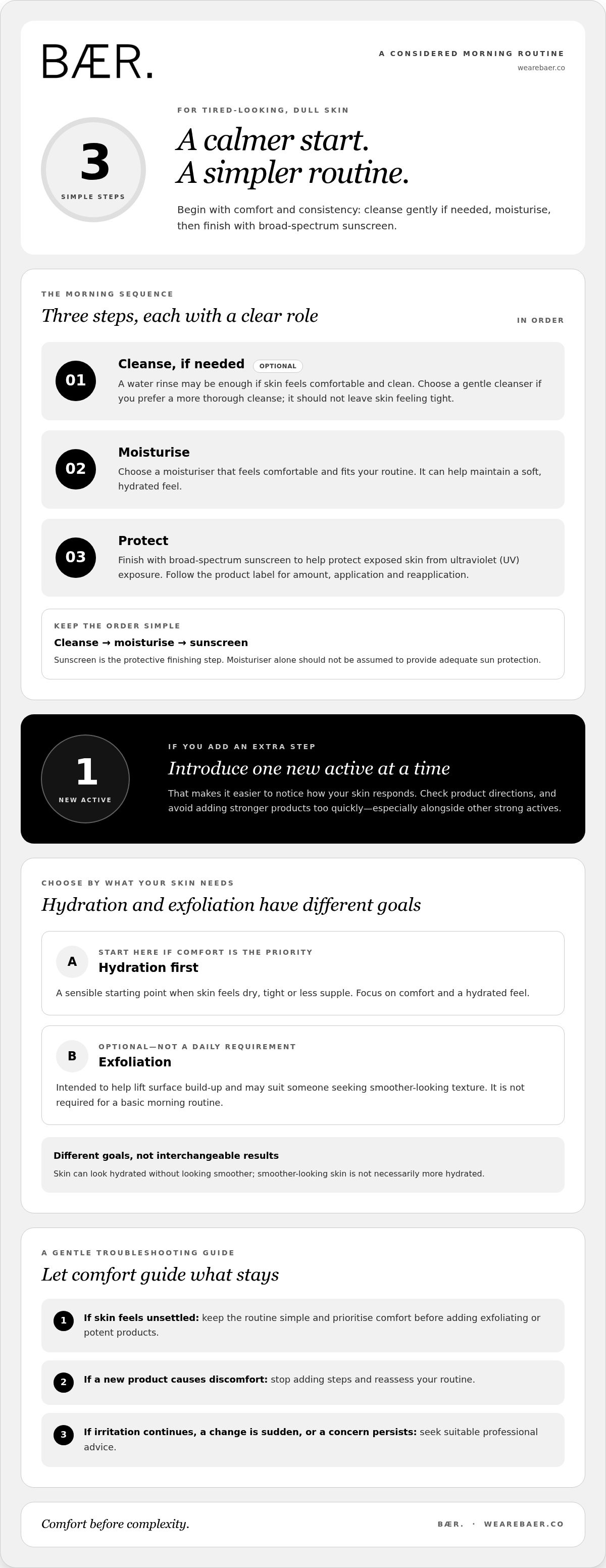
In order, cleanse gently if needed, apply moisturiser, then finish with broad-spectrum sunscreen. Each step has a distinct purpose:
- Cleanse, if needed: Rinse away surface residue or use a gentle cleanser when your skin feels as though it needs more than water.
- Moisturise: Apply a moisturiser that leaves your skin feeling comfortable, helping to maintain a soft, hydrated feel.
- Protect: Finish with broad-spectrum sunscreen to help protect exposed skin from ultraviolet (UV) exposure.
Which cleansing and hydration steps make sense first thing?
A morning cleanser isn’t essential for everyone. If your skin feels comfortable and clean, a water rinse may be enough; if it feels oily or you prefer a more thorough cleanse, choose a gentle product that doesn’t leave it feeling tight. There’s no single moisturiser texture that suits every complexion, so choose one that feels comfortable and fits easily into your routine. If you’re making changes, introduce them one at a time so you can notice how your skin responds.
MANTLE The Barrier Cream is one moisturiser in BÆR.’s curated skincare selection. Consider it as an option to explore, rather than a guaranteed answer to dullness. Exfoliating acids and other stronger active ingredients are optional additions, not requirements for a basic morning routine. Keep the foundation comfortable first, then consider whether an extra step suits your skin.
Why should sunscreen be the final morning skincare step?
Broad-spectrum sunscreen is the protective finishing step, helping shield skin from ultraviolet exposure during the day. Apply it after moisturiser, and follow the product label for the amount to use, when to apply it and how often to reapply. Don’t assume that moisturiser alone provides adequate sun protection; use a sunscreen for this step.
Keep the sequence uncomplicated and repeatable. To explore options for a considered routine, browse BÆR.’s curated skincare.
Hydration, exfoliation or brightening: which approach suits your skin?
Choose an approach according to what you want to address. Hydration-first care is a sensible starting point if your skin feels dry or tight; an exfoliant is intended to help lift surface build-up and may suit someone seeking a smoother-looking texture. These are different goals. Skin can look hydrated without looking smoother, and smoother-looking skin isn’t necessarily more hydrated.
Daily exfoliation isn’t a requirement for restoring radiance. Adding acids or brightening products too quickly, particularly alongside other strong actives, can leave skin uncomfortable. Check each product’s directions and introduce only one new active at a time, so you can more easily notice how your skin responds.
| Approach | When it may suit | When to simplify |
|---|---|---|
| Hydration first | Your skin feels dry, tight or less supple, and comfort is your priority. | If a new product causes discomfort, stop adding steps and reassess your routine. |
| Add an exfoliant | You’re focused on a smoother-looking surface and your existing routine feels comfortable. | If you notice tightness, visible irritation or discomfort, pause the new active and return to basic care. |
| Try a brightening active | You have a specific tone-related goal and are ready to introduce another targeted step cautiously. | Avoid starting it alongside several other strong actives; simplify if your skin becomes uncomfortable. |
Is exfoliation necessary for a brighter-looking complexion?
No. Exfoliation is optional, and whether it makes sense depends on your skin’s tolerance, the product directions and what else is already in your routine. More frequent use doesn’t automatically mean a fresher appearance. If you experience tightness, discomfort or visible irritation after adding an exfoliant, pause the new active and return to a simple routine that feels comfortable. Seek suitable professional advice if concerns persist.
How can you choose hydration without overloading your skin?
Start with a straightforward moisturiser that feels comfortable and suits your preferred texture. You don’t need to layer several hydrating products simply because skin looks dull. MANTLE The Barrier Cream is one option in BÆR.’s skincare selection, not a promise of a brighter complexion. For a morning skincare routine for tired dull skin, give any new product time to show how it feels in your routine before adding another. Comfort is useful feedback, not a reason to chase a complicated line-up.
How to adjust your morning routine when skin still looks tired
If your complexion hasn’t changed as you hoped, resist the urge to add several new products at once. First, look back at recent changes: a new cleanser, exfoliant or active might be affecting how your skin feels. Then simplify your routine, observe comfort and make any next adjustment gradually. Change one variable at a time. This makes it easier to notice what suits your skin and what may be contributing to discomfort.
A temporary lack of glow can come and go. Persistent redness, discomfort, a sudden change in appearance or symptoms that are severe or worsening call for suitable professional advice rather than more experimentation. Follow each product’s directions consistently before deciding whether a routine change is helpful, unless discomfort gives you reason to stop using it.
What should you change if your skin feels tight or irritated?
If tightness or irritation began after adding an exfoliant or another active, pause that new step and return to the basics that feel comfortable. Keep cleansing gentle, and avoid trying to correct discomfort with several new products. Pay attention to how your skin responds over time. If symptoms persist, worsen or feel severe, seek appropriate professional advice.
How can you make a low-effort routine feel more polished?
On a rushed morning, keep only the steps that make sense for your skin: a water rinse or gentle cleanse if needed, moisturiser if it feels comfortable, and broad-spectrum sunscreen. Follow sunscreen directions, and don’t treat makeup or moisturiser as a substitute for sun protection. If you choose to wear complexion products, let your skincare settle first, then apply makeup as an optional finishing touch.
The Water Powder Serum review offers makeup-adjacent reading, rather than a skincare step. A pared-back morning skincare routine for tired dull skin should feel easy to repeat, not like another task to perfect.
If you’re considering a more tailored approach to skincare, explore BÆR.’s curated skincare selection as a starting point for finding options that fit your routine.
Make your morning skincare routine personal, simple and consistent
A useful routine is one you can repeat without leaving your skin feeling overwhelmed. Keep the sequence simple: cleanse gently if needed, moisturise, then apply broad-spectrum sun protection. The right balance depends on your skin and your day, so consistency and comfort matter more than filling your shelf with extra steps. Carefully selected skincare can help you explore options, but no product can guarantee a brighter-looking complexion.
As your needs shift, keep the steps that feel worthwhile and remove products that add complexity without improving comfort. Follow each product’s directions, and introduce changes gradually so you can notice how your skin responds. There’s no need to keep an active ingredient in your routine simply because it’s popular; a pared-back approach can be a considered choice.
When might a bespoke facial complement your home routine?
If you’d value a more personal skincare experience, the MANTLE by BÆR. Bespoke Facial offers professional in-store care alongside your home routine. It may suit someone looking for thoughtful, tailored care and a chance to focus on their skincare preferences. A facial is an optional professional skincare experience, not a treatment for medical conditions, and it doesn’t promise a particular result or suit every skin type.
BÆR. brings together a curated beauty selection that includes MANTLE skincare, with the bespoke facial as another way to explore a more personal approach. Whether you’re choosing a moisturiser or considering an in-person experience, let how your skin feels and what fits your routine guide you.
How do you keep a routine sustainable over time?
Think of your routine as a few dependable choices, not a checklist to expand. Keep the cleanser that feels gentle, the moisturiser that feels comfortable and the sun protection you’ll use according to its label. If you want to try something new, add one change at a time and give yourself room to assess it before making another. That makes it easier to recognise what belongs in your routine and what doesn’t.
For a considered next step, explore BÆR. skincare and the bespoke facial. A well-chosen routine can feel personal without becoming complicated.
Keep your morning routine calm and considered
A fresher-looking complexion doesn’t call for a crowded shelf. Build your morning skincare routine for tired dull skin around gentle cleansing if needed, moisturiser and broad-spectrum sun protection. Let comfort guide your choices, introduce changes gradually and treat exfoliation or brightening products as optional additions, not daily essentials.
Consistency gives you a clearer sense of what suits your skin, whilst realistic expectations keep the routine grounded. Hydration may support a comfortable, supple-looking appearance, but persistent irritation or sudden changes deserve more attention than another product. Carefully selected skincare can help you explore suitable options without promising a particular result. BÆR.’s curated selection includes MANTLE The Barrier Cream, and the MANTLE by BÆR Bespoke Facial offers a professional in-store skincare experience for those seeking a more personal approach.
For a considered next step, explore BÆR.’s curated skincare and bespoke facial experience. Keep it simple, listen to your skin and let a comfortable routine become a steady part of your morning.
Frequently Asked Questions
What is the best morning skincare routine for tired, dull skin?
The best morning skincare routine for tired dull skin is a simple one that feels comfortable and is easy to repeat. Rinse or cleanse gently according to how your skin feels, apply a suitable moisturiser, then finish with broad-spectrum sunscreen. You can consider optional products later, but they aren’t essential starting steps. Introduce changes one at a time, follow product directions and simplify if your skin becomes uncomfortable.
Can I skip cleansing in the morning if my skin feels dry?
Yes, you can skip cleanser if your skin feels dry and comfortable with a water rinse. A morning cleanser isn’t essential for everyone. If you prefer to cleanse, choose a gentle product and notice whether your skin feels comfortable afterwards rather than tight. Follow with a moisturiser that suits your preferences, then apply sunscreen. If dryness or irritation persists, or suddenly worsens, seek suitable professional advice.
Should I exfoliate every morning to improve dull skin?
No, daily exfoliation isn’t necessary to address dull-looking skin and may be too much for some people. Exfoliation is an optional step, not a basic requirement. Consider it only if your skin feels comfortable with your existing routine, and follow the product’s directions. Avoid introducing several strong actives at once. If you notice tightness, discomfort or visible irritation, pause the new exfoliant and return to simple, comfortable skincare.
How can I make my skin look brighter without irritating it?
Start by keeping your routine gentle and consistent rather than layering multiple brightening products. Use a moisturiser that leaves your skin feeling comfortable, and apply broad-spectrum sunscreen as directed. If you decide to try a targeted active, introduce one new product at a time and follow its label. Hydrated-looking skin and smoother-looking skin are different goals, so choose an approach based on what you want to support.
What should I apply first in a morning skincare routine?
Cleanse gently first if your skin needs it; otherwise, rinsing with water may be enough. Apply moisturiser afterwards, then finish with broad-spectrum sunscreen. This order keeps the routine clear without treating every step as essential for every complexion. Check product directions for application guidance, particularly for sunscreen. If you use an optional active, follow its label and add it gradually rather than changing several products together.
Can sleep or dehydration make skin look dull?
Yes, disrupted sleep or dehydration may coincide with skin looking less fresh, although dullness alone can’t identify its cause. Dry or dehydrated skin may appear less supple, while sleep, weather and daily habits can also influence how your complexion looks. Skincare can support surface comfort and appearance, but it can’t replace sleep or address every possible factor. Persistent discomfort or a sudden change merits suitable professional advice.
How long does it take for a morning skincare routine to make a difference?
There’s no single timeline, because results depend on your skin, the products used and what you mean by a difference. A moisturiser may make skin feel more comfortable after application, but that doesn’t guarantee a lasting change in appearance. Keep the routine consistent and follow product directions before assessing a change, unless discomfort develops. Add products gradually so you can tell which steps your skin seems to tolerate.
Is sunscreen necessary when my main concern is dull-looking skin?
Yes, sunscreen is an important part of a morning routine, even if dullness is your main concern. Broad-spectrum sunscreen helps protect skin from ultraviolet exposure; it won’t necessarily make a dull complexion look brighter straight away. Apply it as the final skincare step and follow the label for amount, timing and reapplication. Don’t rely on moisturiser alone for sun protection unless its product directions specifically establish that role.