
The "squeaky clean" sensation you've been taught to chase isn't a sign of purity; it's a clinical distress signal. You likely know the feeling: that uncomfortable, pulling sensation that makes you reach for moisturiser the second you pat your skin dry. If you're wondering why does my face feel tight after washing, the answer lies in a compromised acid mantle. When harsh surfactants dissolve the vital lipids that hold your skin cells together, your face physically shrinks. It's a literal contraction of the skin surface that triggers your nerves to send a warning.
We understand the frustration of following traditional advice only to be left with redness or visible flakiness. This guide will help you decode these signals and transition to a high-performance cleansing ritual that restores your barrier. You'll discover the science behind transepidermal water loss and learn how to select sophisticated alternatives, such as MANTLE's lipid-rich formulations, to achieve a supple, luminous complexion. We've curated the essential knowledge you need to move from reactive damage control to proactive, luxury skin health.
Key Takeaways
- Recognise that post-wash tightness is a physical manifestation of lipid depletion rather than a sign of true cleanliness.
- Identify why does my face feel tight after washing by understanding the impact of harsh surfactants and alkaline pH levels found in many mass-market cleansers.
- Discover how transepidermal water loss (TEWL) accelerates when the barrier is breached, potentially leading to inflammation and premature ageing.
- Learn the art of the gentle cleanse, transitioning to sophisticated oil or balm textures that honour your skin's delicate natural equilibrium.
- Explore how professional interventions, such as the MANTLE by BÆR. Bespoke Facial, provide a curated reset for a compromised and thirsty complexion.
Tightness is Not Cleanliness: Decoding Your Skin’s Distress Signal
Many individuals mistake the pulling sensation after a morning cleanse for evidence of a thorough routine. In reality, that tautness is a physical manifestation of lipid depletion. When you ask why does my face feel tight after washing, you're observing the moment your skin's protective oils have been stripped away, leaving the surface vulnerable and dehydrated. Post-wash tightness is a clinical indicator of surfactant-induced barrier disruption.
This sensation signals a breach in the acid mantle, the fine, slightly acidic film on the skin's surface that acts as a primary interface between you and the environment. A healthy mantle ensures comfort and resilience. Its absence leads to the very discomfort you're experiencing. When the acid mantle is compromised, the skin loses its ability to defend itself against external stressors, resulting in a cycle of irritation that can be difficult to break without a curated intervention.
The "Squeaky Clean" Myth
Decades of mass-market advertising have conditioned us to equate a "squeaky" texture with purity. This is a profound misconception. A truly clean complexion should feel supple, hydrated, and calm. The sensory difference is stark. Stripped skin feels like parchment, whilst a high-performance ritual leaves the face feeling velvety and elastic. Modern, luxury skincare focuses on refined efficacy. It ensures that debris is removed without compromising the skin's structural integrity. Quality over aggression. This is the cornerstone of a sophisticated skincare philosophy.
Recognising the Signs of Distress
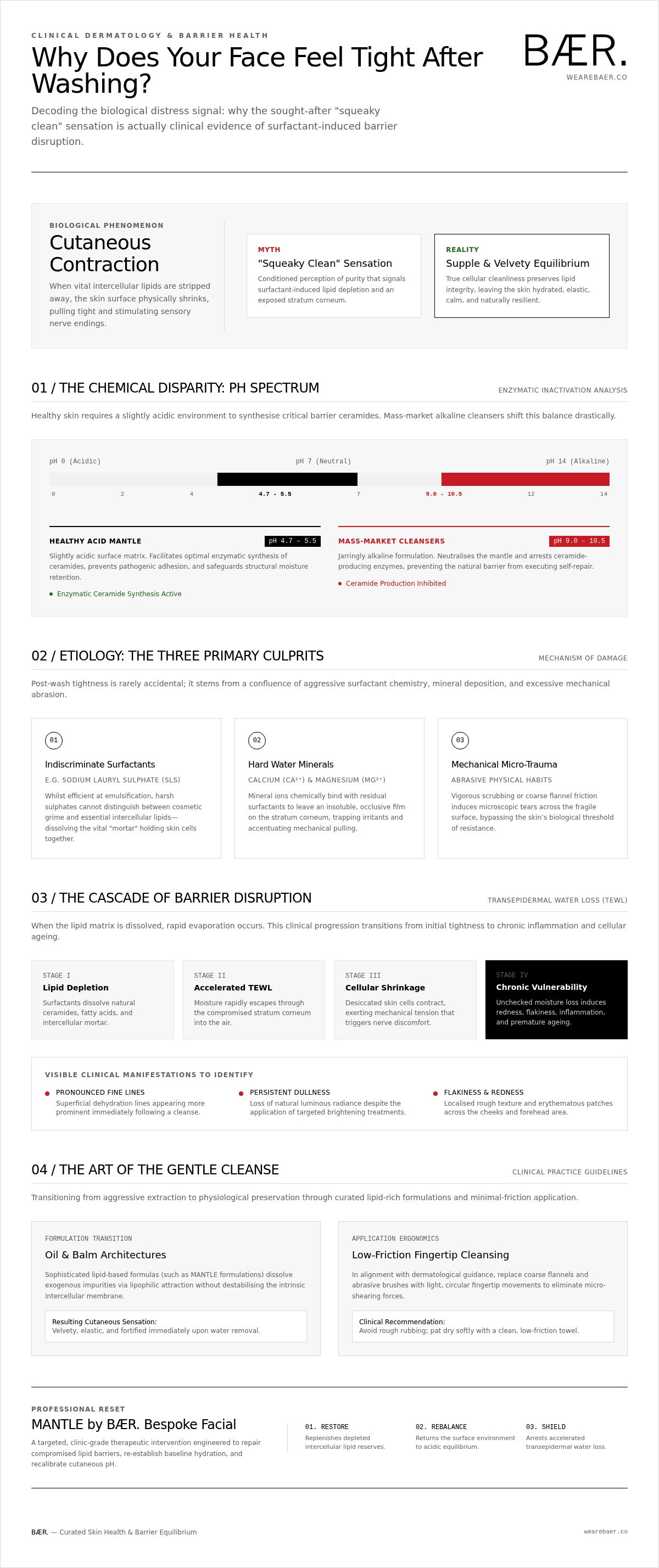
Tightness often acts as the first domino in a cascade of irritation. Whilst immediate pulling is the most common symptom, you might also notice delayed sensitivity or a sudden onset of redness. These are signs of a damaged skin barrier that require immediate attention. When the barrier is compromised, moisture escapes rapidly through transepidermal water loss (TEWL), causing the cells to shrink and the skin to lose its natural radiance.
Other visible indicators include:
- Fine lines that appear more pronounced immediately after cleansing.
- Dullness that persists despite using brightening products.
- Rough patches or subtle flakiness on the cheeks and forehead.
Understanding why does my face feel tight after washing allows you to pivot your strategy. It's an invitation to swap aggressive agents for curated, barrier-supportive solutions that honour your skin's biological needs. Supple skin is the ultimate goal. Achieving it requires a departure from the stripping habits of the past.
The Primary Culprits: Why Your Cleanser is Stripping Your Skin
Understanding why does my face feel tight after washing requires a closer look at the chemistry within your basin. Most mass-market cleansers are formulated with an alkaline pH, often ranging between 9.0 and 10.5. Since healthy skin maintains a slightly acidic mantle around 4.7 to 5.5, this disparity is jarring. It disables the very enzymes responsible for ceramide synthesis, leaving the barrier unable to repair itself. This chemical imbalance is frequently worsened by the presence of hard water minerals. Calcium and magnesium ions react with surfactants to create a film that sits on the surface, trapping irritants and heightening the sensation of physical pulling.
Aggressive physical habits also play a role. Vigorous scrubbing or the use of abrasive flannels creates micro-tears in the stratum corneum. Following the American Academy of Dermatology's cleansing guidance, professionals suggest using fingertips and gentle, circular motions to avoid unnecessary trauma. For those seeking a more refined approach, our curated collection of high-performance cleansers offers a path to cleanliness without the cost of irritation.
Surfactants and the Lipid Barrier
Surfactants like Sodium Lauryl Sulphate (SLS) are incredibly effective at emulsifying oils. However, they're indiscriminate. They dissolve the essential intercellular lipids, the "mortar" between your skin cells, along with daily grime. This leaves the skin's structural integrity compromised. If you find yourself questioning why does my face feel tight after washing, consider that your choice of surfactant might be the primary offender. Sophisticated, niche brands avoid these industrial-strength detergents. Instead, they utilise non-ionic surfactants or oil-rich bases that honour the lipid barrier. By prioritising the health of the stratum corneum, these formulations ensure that the skin remains resilient and calm long after you've finished your ritual.
The Temperature Factor
Water temperature is a silent catalyst for dehydration. Whilst a steaming shower feels indulgent, hot water physically liquefies the protective sebum that keeps your complexion supple. This "melting" effect allows moisture to escape at an accelerated rate. Lukewarm water is the professional standard. It's warm enough to effectively emulsify a balm or oil cleanser without stripping the skin's inherent moisture. Maintaining a temperate environment also preserves the efficacy of high-performance ingredients, ensuring that botanical extracts and fermented actives remain stable and transformative during application. Quality over aggression. It's a delicate balance that defines the modern cleansing experience.
Beyond the Surface: The Impact of Lipid Depletion and TEWL
If you have ever wondered why does my face feel tight after washing, the answer lies in the silent acceleration of transepidermal water loss (TEWL). Whilst the immediate sensation is one of discomfort, the physiological reality is far more significant. Surfactants that strip away the skin's lipid "mortar" leave the underlying cells exposed to the air. Without the protective seal provided by ceramides and free fatty acids, moisture evaporates into the atmosphere at an alarming rate. This rapid dehydration causes the stratum corneum to contract, firing nerve signals that your brain interprets as a pulling sensation.
This process often triggers a counterproductive biological response. Dehydrated skin frequently overcompensates by producing excess sebum, leading to the frustrating "oily-dehydrated" cycle. You may find your skin feels parched and tight after cleansing, only to become excessively shiny by midday. This reactive oil production is a desperate attempt by your body to re-establish a barrier that has been chemically dismantled. Breaking this cycle requires a shift in perspective, moving away from aggressive degreasing towards lipid replenishment.
The Science of TEWL
A healthy epidermal barrier consists of approximately 50% ceramides. These lipids are essential for locking in hydration and maintaining structural integrity. When a ritual deviates from dermatologist-recommended cleansing practices, these lipids are often the first casualty. High-performance serums and restorative creams become non-negotiable at this stage. They don't just sit on the surface; they provide the bio-identical components necessary to re-establish the seal and halt the evaporative process, ensuring the skin remains plump and resilient against the environment.
Inflammaging and Barrier Health
Chronic tightness is not merely a temporary inconvenience. It is a precursor to "inflammaging," a state of low-grade, persistent inflammation that accelerates the breakdown of collagen and elastin. When your barrier is compromised, it becomes a porous gateway for environmental pollutants and allergens. These irritants trigger an immune response that, over time, leads to premature ageing and a loss of structural resilience. The skin loses its ability to bounce back, resulting in a duller, more fatigued appearance.
Transitioning to a gentle cleansing ritual is the foundational step in any serious anti-ageing programme. We vet every formulation to ensure it respects this delicate biological balance. As one of the best niche beauty stores uk, BÆR. focuses on luxury curation that prioritises barrier integrity. By choosing products that honour your skin's natural architecture, you prevent the cycle of inflammation before it begins, ensuring a complexion that remains luminous, calm, and youthful.
The Art of the Gentle Cleanse: Restoring Equilibrium to Your Ritual
If you are still wondering why does my face feel tight after washing, the answer often lies in the aggressive nature of your current formula. Transitioning from high-foaming detergents to sophisticated cream, oil, or balm textures is the most effective way to restore your skin's natural architecture. This shift reflects a modern "Less is More" philosophy. It prioritises the preservation of your skin's biological integrity over the temporary, and often damaging, sensation of a "deep" clean. The ideal post-wash state is a complexion that feels plump, cool, and comfortably elastic.
Adopting a gentler approach does not mean compromising on efficacy. It simply means choosing a formula that works in harmony with your skin's chemistry rather than against it. By removing the harsh surfactants that cause physical contraction, you allow your barrier to remain intact. This preservation is the foundation of long-term skin health and resilience.
Choosing the Right Texture
Oil cleansers are transformative for those with compromised barriers. They utilise the principle of "like dissolves like" to lift sebum, pollutants, and long-wear pigments without disrupting the delicate lipid seal. For those prone to immediate pulling sensations, cream cleansers remain the gold standard for daily maintenance. They provide a velvety cushion that protects the surface whilst delivering active nourishment. When vetting your options, look for high-performance ingredients such as squalane, which mimics the skin's natural sebum, or botanical oils rich in essential fatty acids. These components ensure the cleansing process becomes a restorative treatment rather than a stripping event. It is about choosing a formula that respects the stratum corneum whilst effectively refining the skin's texture.
The Modern Cleansing Protocol
Executing a double cleanse requires a methodical approach to ensure you aren't over-stripping. The first step involves an oil-based balm or liquid to gently dissolve makeup and SPF. This should be followed by a second, water-based cleanse using a pH-balanced milk or cream to address any remaining impurities. This dual approach ensures a thorough result without the need for aggressive friction or high-foaming agents. Timing is equally critical to the success of your ritual. To prevent the onset of transepidermal water loss, adopt the "3-second rule" for product application. Apply your hydrating serums whilst the skin is still slightly damp. This locks in moisture before it has the chance to evaporate into the atmosphere. You can explore our curated cleansing edit to find the perfect high-performance ritual for your skin type.
Elevating Your Routine: High-Performance Solutions at BÆR.
At BÆR., we approach beauty with a quiet confidence and a steadfast commitment to high-performance results. We act as a knowledgeable guide, vetting the landscape to present only the finest niche options. If you've spent months asking why does my face feel tight after washing, it's time to move beyond the noise of the crowded market and embrace a ritual that actually honours your biology. Our focus is consistently placed on quality and the transformative nature of our offerings, ensuring your skin receives the bespoke care it deserves.
A compromised barrier requires more than just a thicker cream. It demands a systemic shift in how you treat your skin. By choosing products that prioritise barrier health, such as MANTLE The Barrier Cream, you provide your skin with the bio-identical lipids it needs to thrive. This restorative step is essential for halting the cycle of dehydration and physical pulling that defines a damaged stratum corneum.
Professional Barrier Support
The MANTLE by BÆR Bespoke Facial serves as the ultimate reset for a compromised barrier. Unlike a standard, one-size-fits-all treatment, this luxury experience is tailored to your specific needs. It provides the deep nourishment required to soothe a chronically tight complexion. We use advanced techniques to infuse the skin with restorative lipids, reversing the damage caused by aggressive cleansing. This sensory journey doesn't just address surface symptoms; it rebuilds the skin's resilience from within, leaving you with a complexion that feels plump and thoroughly rejuvenated. Professional intervention is often the catalyst needed to break the cycle of sensitivity and restore a sense of calm expertise to your skin health.
The Curated Edit
Building a high-performance routine requires a meticulous selection of products. We choose niche brands like MANTLE and Raaw Alchemy because they prioritise skin health over mass-market trends. These formulations are designed to work with the skin's natural architecture rather than stripping it for temporary results. For those who require a refined finish without sacrificing hydration, the danessa myricks water powder serum offers a modern solution. It supports skin prep whilst maintaining a soft-focus effect, ensuring your complexion remains supple throughout the day.
By focusing on a curated edit, you bypass the noise and invest in efficacy. Our role is to provide the calm expertise needed to navigate your journey toward a balanced, luminous complexion. Every product in our boutique has been selected for its ability to deliver visible, physical rejuvenation whilst respecting the delicate equilibrium of your skin barrier. Achieving a comfortable, elastic complexion is not a matter of chance; it is the result of a carefully selected, high-performance programme.
Restoring Suppleness: Your Path to Barrier Resilience
Moving beyond the "squeaky clean" myth allows you to prioritise the biological integrity of your skin. We've decoded the distress signals, showing that lipid depletion and accelerated water loss are the true culprits behind that uncomfortable pulling sensation. Understanding why does my face feel tight after washing is the essential first step in reclaiming a complexion that feels plump and resilient. By swapping aggressive surfactants for sophisticated, oil-rich textures, you honour the acid mantle whilst achieving a refined, luminous result.
At BÆR., we act as your authoritative curator, vetting the global market to present only high-performance niche brands like MANTLE. Whether you seek the restorative power of The Barrier Cream or the transformative reset of a MANTLE by BÆR Bespoke Facial, our focus remains on luxury, efficacy, and barrier health. You deserve a ritual that feels like a sanctuary rather than a chore. Discover our curated edit of high-performance skincare at BÆR. and begin your journey toward a supple, comfortably elastic complexion today.
Frequently Asked Questions
Why does my face feel tight after washing even if I use a "gentle" cleanser?
Even if a product is marketed as gentle, it may still possess an alkaline pH or include surfactants that are too aggressive for your specific barrier. The term "gentle" isn't a clinical standard. If you're still wondering why does my face feel tight after washing, the issue might be the water temperature or the minerals in your local supply. These factors work together to strip the delicate lipid seal that keeps your complexion supple.
Is post-wash tightness a sign of dry skin or dehydrated skin?
Tightness is typically a hallmark of dehydration, which is a lack of water in the stratum corneum, rather than dry skin, which lacks oil. Whilst dry skin is a genetic type, dehydration is a temporary condition caused by environmental factors or harsh products. You can have oily skin that feels incredibly tight if your cleansing ritual is too stripping. Restoring hydration requires both humectants and a lipid-rich seal to prevent evaporation.
How can I tell if my skin barrier is damaged from over-cleansing?
A damaged barrier often presents as persistent redness, increased sensitivity, and a rough texture that doesn't improve with standard moisturisers. If you notice a stinging sensation when applying products that usually feel comfortable, your protective seal is likely breached. Chronic pulling sensations are another major indicator. When you understand why does my face feel tight after washing, you can begin to identify these secondary symptoms of over-cleansing and shift towards a more restorative routine.
Can hard water cause my face to feel tight after washing?
Hard water is a significant factor for many in the UK, as the high mineral content can exacerbate skin distress. Minerals like calcium and magnesium react with even the mildest surfactants to create a residue that sits on the skin. This film interferes with the natural acid mantle and pulls moisture from the cells. Using a pH-balanced, non-foaming cleanser or installing a water softener can help mitigate this specific type of post-wash discomfort.
Should I stop washing my face if it feels tight and uncomfortable?
You shouldn't stop cleansing entirely, as removing environmental pollutants and SPF is vital for skin health. Instead, you should refine your ritual to focus on barrier preservation. Swap foaming gels for a rich cleansing balm or milk that leaves a protective film behind. Reducing your cleansing frequency to once an evening can also help. This allows your skin's natural oils to accumulate and repair the barrier whilst you sleep, preventing that parched sensation.
What ingredients should I look for in a cleanser to prevent tightness?
Look for skin-identical lipids such as ceramides and squalane, which help to replenish the "mortar" between your skin cells. Botanical oils like jojoba or oat oil are also excellent for providing a velvety cushion during the cleansing process. Avoid products containing Sodium Lauryl Sulphate (SLS) or high concentrations of denatured alcohol. These ingredients are notorious for dissolving the very lipids that prevent post-wash discomfort from becoming a chronic, daily issue.
How long does it take for the skin barrier to recover from stripping?
A compromised barrier typically takes between two to four weeks to fully recover, depending on the severity of the damage. This timeline aligns with the natural turnover of your skin cells. You can accelerate this process by using high-performance restorative products, such as MANTLE The Barrier Cream. Consistent use of lipid-rich formulations helps to re-establish the seal quickly, providing immediate relief from the physical pulling sensations that occur after a stripping wash.
Can a bespoke facial help fix a chronically tight and dry complexion?
Professional intervention is often the most efficient way to reset a chronically stressed and dehydrated complexion. A MANTLE by BÆR Bespoke Facial is specifically designed to infuse the skin with deep nourishment that standard home routines might miss. These treatments focus on modern beauty solutions that rebuild barrier integrity and restore suppleness. It's an investment in your skin's long-term health, providing a curated environment where your barrier can finally heal and thrive.